Acid Neutralizer Filters Raise pH
- Acid Well Water? Low pH?
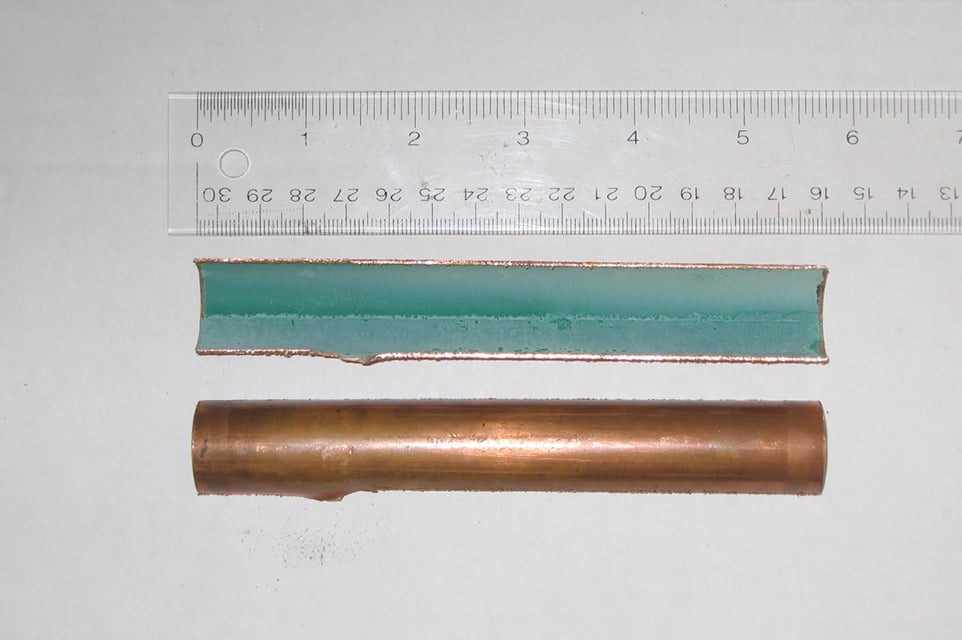
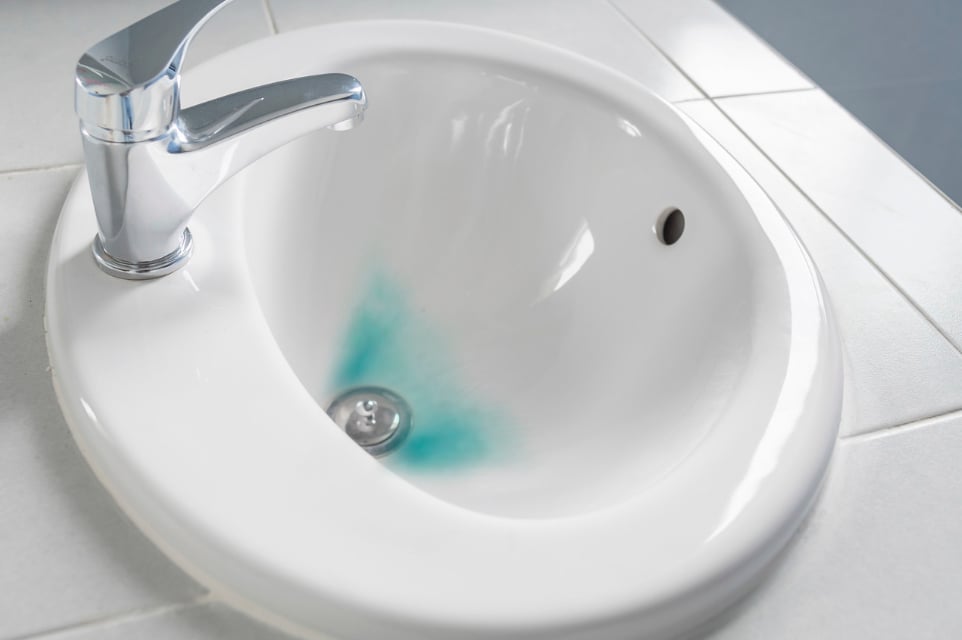
- Blue stains from acid water?
- Are pinhole leaks threatening to
- destroy your house with expensive leaks?
Now you can eliminate copper corrosion and stop blue stains with a Calcite Neutralizer!


Frequently Asked Questions:
Q. What is the Difference Between the 5900-BT, Manual Backwash, 7500 and Upflow Series Neutralizers?
A. The 5900-BT and 7500 types are backwashing and self-cleaning neutralizers. The Upflow type does not backwash and will not remove sediment. The 7500 uses a maintenance free ceramic disc for backwashing, whereas the 5900-BT is able to be tracked and controlled on your smart phone with the free Bluetooth app. Each type uses the same type of filter tank and calcite media. The backwashing type generally works better because a periodic backwash helps to clean the calcite and let it dissolve more evenly, and is less maintenance than the upflow type.
Q. What are the advantages of the 7500 Neutralizer?
A. The 7500-Rev4 is full 1-inch inlet and outlet for higher flow rates and less pressure drop. It has a higher backwash ability for larger filter systems and uses a heavy-duty Ceramic Disc instead of the traditional piston requiring no maintenance.
The ceramic disc valve lasts around 10 years and does not require servicing, or changing of seals or pistons, unlike the standard type piston and seal valves.
The control valve also has other built-in features normally found only on commercial valves, such as remote control, and relays for controlling pumps and solenoid valves, and can be outfitted with a flow sensor. It can be set to backwash every 1 to 30 days.
Q. How often does it backwash?
Q. How often does it backwash?
A. It can be set to backwash from 1 up to every 30 days, but generally, we recommend it be set to backwash once a week.
Q. What about the Upflow Neutralizers, how do they work?
A. Upflow neutralizers do not backwash, and the calcite media is not cleaned or washed. The water simply flows up through the calcite media.
Down-Flow neutralizers have backwashing control valves and the calcite media is backwashed and rinsed periodically.
In a standard downflow neutralizer, the water enters the top of the tank and flows down through the media and up the distributor tube.
The down-flow type neutralizer removes sediment and can be back-washed, which cleans & re-classifies the calcite, preventing channeling. During backwash, the water flow is reversed and water flows down the distributor tube and up through the media, lifting and expanding the calcite media. During the backwash the calcite is cleaned by the action of the water flowing through it.
Q. Up-Flow Calcite Neutralizers Do Not Use or Need a Backwash Control Valve
A. In an upflow calcite neutralizer the water always flows down the distributor tube and up through the calcite media.
Upflow neutralizers have no backwash control valve and are not backwashed, because the water is always flowing up through the calcite so there is no need for a backwash. This type works well in some applications and prevents the need for any backwash drain connection.
Q. What does CF mean?
A. Neutralizers are sold based on the size of the tank. 1.0 CF means 1 cubic foot of calcite is included.
Q. What does a flow sensor do?
A. Optional built-in flow sensor allows the neutralizer to backwash based on gallons used. Generally not needed or recommended for neutralizers, but some folks get them if their water usage fluctuates a lot such as for summer cabins or vacation homes.
Q. What is the difference between Calcite and Calcite Blend?
A. Use Calcite neutralizers if your water pH is between 6.0 and 6.9. Use Calcite Blend type if your pH is less than 6.0.
Q. Should I use plain calcite or a blend of calcite and corosex?
A. Generally plain calcite works in most applications (which are in the range of 6.0 to 6.9 pH). if in doubt of your acidic water pH, start with plain calcite.
Q. What about the Upflow Neutralizers, how do they work?
A. Upflow neutralizers do not backwash, and the calcite media is not cleaned or washed. The water simply flows up through the calcite media.
Down-Flow neutralizers have backwashing control valves and the calcite media is backwashed and rinsed periodically.
In a standard downflow neutralizer, the water enters the top of the tank and flows down through the media and up the distributor tube.
The down-flow type neutralizer removes sediment and can be back-washed, which cleans & re-classifies the calcite, preventing channeling. During backwash, the water flow is reversed and water flows down the distributor tube and up through the media, lifting and expanding the calcite media. During the backwash the calcite is cleaned by the action of the water flowing through it.
Q. Up-Flow Calcite Neutralizers Do Not Use or Need a Backwash Control Valve
A. In an upflow calcite neutralizer the water always flows down the distributor tube and up through the calcite media.
Upflow neutralizers have no backwash control valve and are not backwashed, because the water is always flowing up through the calcite so there is no need for a backwash. This type works well in some applications and prevents the need for any backwash drain connection.
Q. What does CF mean?
A. Neutralizers are sold based on the size of the tank. 1.0 CF means 1 cubic foot of calcite is included.
Q. What does a flow sensor do?
A. Optional built-in flow sensor allows the neutralizer to backwash based on gallons used. Generally not needed or recommended for neutralizers, but some folks get them if their water usage fluctuates a lot such as for summer cabins or vacation homes.
Q. What is the difference between Calcite and Calcite Blend?
A. Use Calcite neutralizers if your water pH is between 6.0 and 6.9. Use Calcite Blend type if your pH is less than 6.0.
Q. Should I use plain calcite or a blend of calcite and corosex?
A. Generally plain calcite works in most applications (which are in the range of 6.0 to 6.9 pH). if in doubt of your acidic water pH, start with plain calcite.
However, if you know your pH is less than 6.0, in the range of 5.0 to 6.0, then use a blend of 90% calcite and Flomag (same as Corosex). This will work in 90% of the applications. In some rare cases if the water is very cold, or if the flow rate is high (a lot of water being used daily) it is OK to use the 80% calcite and 20% Flomag.
Q. What is the problem with using a lot more Flomag?
A.Too much Flomag can over-correct the pH and raise the pH up above 8.5. Generally most corrosive water applications (such as for correcting acidic well water for homes with copper pipe etc) work best if the pH is raised to 7.0 to 7.5, which is the most desirable range. It is OK if the pH is up near 8.0 after the neutralizer but not necessary for correcting corrosive water.
Q. Is there any other problem with using too much Flomag?
A. Yes, if too much Flomag is used, the media can cement together and form solid balls of Corosex in the neutralizer. If that happens, the Corosex filter media will not dissolve properly.
Q. What if i add only calcite and find out later that I need to raise my pH to a higher level?
A. This is not a big problem because some Flomag can be added on top of the existing calcite. As long as you don't fill the tank higher than about 2/3rds full it is OK.
Q. How much calcite or calcite-Flomag blend media should I buy?
A. Generally, it is rare for most families or home applications to use more than about 50 to 100 lbs a year. If you open up your neutralizer and find it is half-full, just add enough media to raise it to the 2/3rds level and backwash thoroughly.
Q. Does the media go bad? What if I have some left over?
A. No. The media does not go bad. Try to keep it dry and it will keep for many years. Even if its gets wet, it can still be used in most situations.
Q. What is Calcite made of?
A. Calcite is a high grade of pure crushed and screened white marble limestone media which can inexpensively be used to neutralize acidic or low pH waters to a neutral, less corrosive effluent. Calcite is a naturally occurring calcium carbonate media.
Q. What is the advantage of calcite?
A. One of the advantages of Calcite is its self-limiting property. When properly applied, it corrects pH only enough to reach a non-corrosive equilibrium. It does not overcorrect under normal conditions.
Q. What is Flomag (Corosex)?
A. Flomag is a highly reactive magnesium oxide, and is used most effectively where pH correction is substantial or high flow conditions are in use. Flomag can be effectively combined with Calcite to combine the high flow neutralization properties of Flomag along with the slower reacting low flow properties of Calcite, reducing potentially high basic properties due to over-correction.
Q. What is the advantage of Corosex?
A. On a per-weight basis, magnesium oxide can neutralize much more acidity than can calcium carbonate, (five times as much). This results in greatly reduced chemical usage for the same pH correction. Please note, under certain low flow conditions, Flomag may overcorrect and create a highly basic (high pH) condition. It is better to use it in a 90% calcite to 10% Flomag or 80% calcite to 20% blend.
Q. Are either Calcite or Flomag toxic?
A. No, neither calcite nor Corosex are toxic and are widely used in drinking water. They have been tested and independenlty certified to ANSI/NSF Standard 60.
Q. Is the more expensive Vortech tank necessary?
A. No, the standard heavy-duty neutralizer tank is what we recommend. Vortech tanks have a built-in inner distributor, which you cannot remove. If anything happens to it, or if you accidentally damage it, you have to replace the tank. The standard distributor tube is in our regular neutralizer tanks, and we recommend those.
Q. What is the problem with using a lot more Flomag?
A.Too much Flomag can over-correct the pH and raise the pH up above 8.5. Generally most corrosive water applications (such as for correcting acidic well water for homes with copper pipe etc) work best if the pH is raised to 7.0 to 7.5, which is the most desirable range. It is OK if the pH is up near 8.0 after the neutralizer but not necessary for correcting corrosive water.
Q. Is there any other problem with using too much Flomag?
A. Yes, if too much Flomag is used, the media can cement together and form solid balls of Corosex in the neutralizer. If that happens, the Corosex filter media will not dissolve properly.
Q. What if i add only calcite and find out later that I need to raise my pH to a higher level?
A. This is not a big problem because some Flomag can be added on top of the existing calcite. As long as you don't fill the tank higher than about 2/3rds full it is OK.
Q. How much calcite or calcite-Flomag blend media should I buy?
A. Generally, it is rare for most families or home applications to use more than about 50 to 100 lbs a year. If you open up your neutralizer and find it is half-full, just add enough media to raise it to the 2/3rds level and backwash thoroughly.
Q. Does the media go bad? What if I have some left over?
A. No. The media does not go bad. Try to keep it dry and it will keep for many years. Even if its gets wet, it can still be used in most situations.
Q. What is Calcite made of?
A. Calcite is a high grade of pure crushed and screened white marble limestone media which can inexpensively be used to neutralize acidic or low pH waters to a neutral, less corrosive effluent. Calcite is a naturally occurring calcium carbonate media.
Q. What is the advantage of calcite?
A. One of the advantages of Calcite is its self-limiting property. When properly applied, it corrects pH only enough to reach a non-corrosive equilibrium. It does not overcorrect under normal conditions.
Q. What is Flomag (Corosex)?
A. Flomag is a highly reactive magnesium oxide, and is used most effectively where pH correction is substantial or high flow conditions are in use. Flomag can be effectively combined with Calcite to combine the high flow neutralization properties of Flomag along with the slower reacting low flow properties of Calcite, reducing potentially high basic properties due to over-correction.
Q. What is the advantage of Corosex?
A. On a per-weight basis, magnesium oxide can neutralize much more acidity than can calcium carbonate, (five times as much). This results in greatly reduced chemical usage for the same pH correction. Please note, under certain low flow conditions, Flomag may overcorrect and create a highly basic (high pH) condition. It is better to use it in a 90% calcite to 10% Flomag or 80% calcite to 20% blend.
Q. Are either Calcite or Flomag toxic?
A. No, neither calcite nor Corosex are toxic and are widely used in drinking water. They have been tested and independenlty certified to ANSI/NSF Standard 60.
Q. Is the more expensive Vortech tank necessary?
A. No, the standard heavy-duty neutralizer tank is what we recommend. Vortech tanks have a built-in inner distributor, which you cannot remove. If anything happens to it, or if you accidentally damage it, you have to replace the tank. The standard distributor tube is in our regular neutralizer tanks, and we recommend those.
Any other questions? Please email us or call us toll-free at 888-600-5426.
Need a new calcite acid pH neutralizer? See our advanced neutralizers here.
Read our report: "How to Treat Acid Well Water" using calcite neutralizers
Read our report: "How to Treat Copper Pipe Corrosion"
See our page on Acid Well Water and Low pH