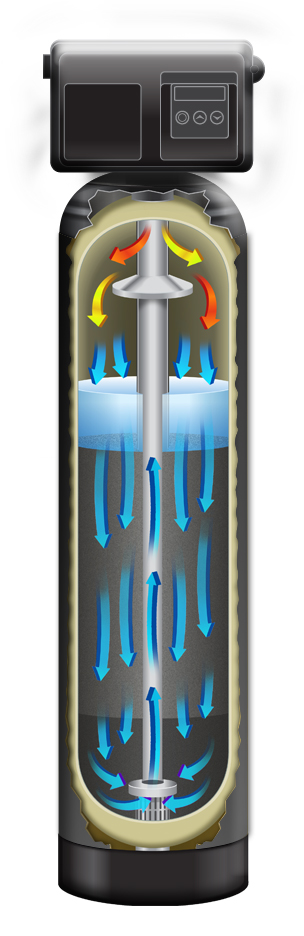
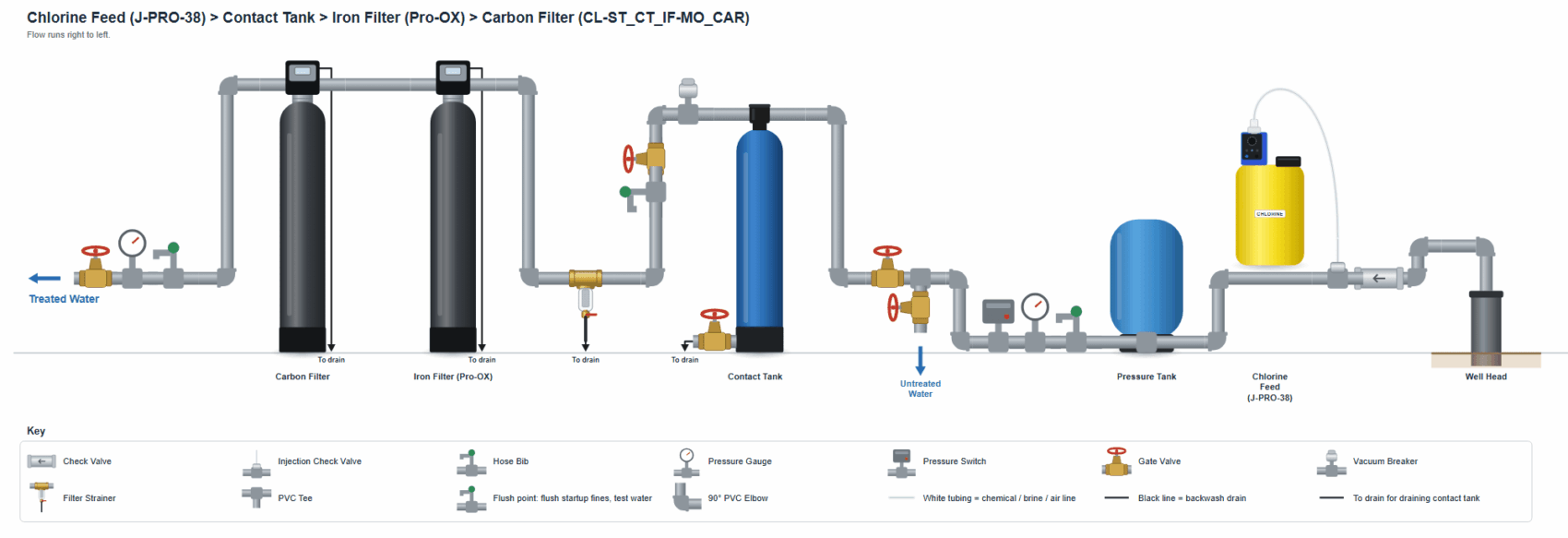
A homeowner on well water recently contacted us. They had purchased a Filox iron filter online and were told by the supplier that it would remove the iron, manganese, and hydrogen sulfide odors without the use of chemicals. However, proper setup requires access to a 110V electrical outlet and a drain. Technical support is crucial to assist customers during the installation process. It worked for one week, and then their water turned bad again, full of iron, manganese, and odors. Based on the water chemistry, we recommended installing a chlorinator ahead of the iron filter to ensure proper operation.
Iron water filters are a crucial component of a comprehensive water filtration system, designed to remove iron and other contaminants from your water supply. These filters are particularly beneficial for households relying on well water or municipal water supplies that contain high levels of iron, hydrogen sulfide, or manganese. By installing a whole-home iron filter, you can ensure that clean, safe water is available throughout your entire home.
One of the primary advantages of iron water filters is their ability to eliminate the metallic taste and rotten egg smell often caused by hydrogen sulfide. Additionally, these filters help reduce unsightly iron stains on fixtures, sinks, and toilets, preserving the appearance of your home.
When selecting an iron water filter, it is essential to consider factors such as flow rate, frequency of filter changes, and purchase price to find the best solution for your specific water supply needs. With the right iron water filter, you can enjoy improved water quality and peace of mind.
Water filtration systems are designed to remove impurities and contaminants from your water supply, ensuring it is safe for drinking, cooking, and other household uses. These systems can be installed at the point of entry, treating the entire home’s water supply, or at the point of use, treating water at a specific faucet or appliance. For households dealing with iron issues, a whole-house iron filter system is an excellent choice, providing comprehensive filtration and protection against iron stains, corrosion, and other related problems.
Water filtration systems utilize various technologies to address specific concerns related to water quality. These can include oxidation, aeration, and the use of manganese dioxide, each designed to target different contaminants. Regular maintenance, including filter changes and monitoring water usage, is essential to ensure the system’s optimal performance and effectiveness. By understanding the different components and functions of water filtration systems, you can make informed decisions to improve your home’s water quality.
When installing an iron filter, several key considerations should be taken into account to ensure optimal performance. First, it’s essential to determine the type and level of iron contamination in your water supply through a water test. This information will help you select the ideal filter for your specific needs. Next, consider the flow rate and filter changes required for the system, as well as the purchase price and any additional costs, such as maintenance and replacement parts.
It is also important to ensure that the system is certified to meet NSF/ANSI standards for water quality and is designed for residential use. Features such as a smart control valve body can enhance the system’s functionality and ease of use. Additionally, consider the level of support provided by the manufacturer, as this can be crucial for troubleshooting and maintenance. Finally, consulting with a professional can help determine the best installation location and ensure the system is properly installed and maintained.
It is best to obtain a comprehensive water analysis before selecting your iron filter.
If your tap water has started smelling or tasting a little "off" this week: earthy,…
If your water pressure has been weaker than usual this month, you're not imagining it.…
Is Your City Testing for This? Every year, your water utility sends out a report.…
Article last updated July 2026 If your well water is acidic, with a pH below…
Most homeowners come to us knowing something is wrong with their water. The smell, the…
If you are on city water and dealing with chlorine taste and odor, chemical smell…