Are you concerned about Chlorine and Chloramines in your water?
Considering a whole-house chlorine and chloramine water filtration system for your family?
These water treatment systems are particularly useful if you are on city water, as chlorine has long been the preferred disinfection method in municipal treatment systems. Chloramine, which is formed by mixing chlorine with ammonia, is also used to treat water in many municipal water systems and remains stable throughout distribution systems.
Understanding your water system and the chemical compounds used to treat your water is important for ensuring water quality and safety.
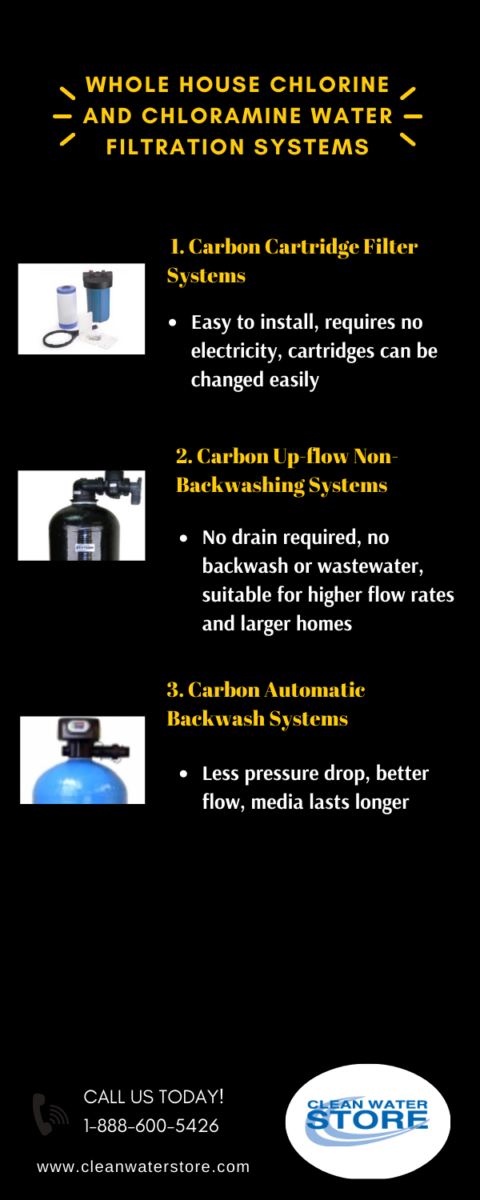
There are three primary chlorine/chloramine removal methods in water treatment. All filtration systems use a type of activated carbon and remove chlorine tastes and odors. These methods are specifically designed to address chemical compounds like chloramine that are present in distribution systems.
Ensuring safe tap water is a top priority for water utilities. Drinking water disinfection kills harmful microorganisms to prevent waterborne diseases. Most facilities use chlorine as a primary disinfectant and add chloramine—a mix of chlorine and ammonia—as a secondary disinfectant. Chloramine is more stable, maintaining protection throughout the distribution system until water reaches your tap. Both disinfectants are effective but differ in properties and byproducts. The EPA sets safe levels to keep your drinking water clean and safe. Understanding these disinfectants helps you choose the right home filtration system.
Pros: Easy to install, no electricity needed, cartridges are easy to replace, and lower initial costs. Carbon filtration is commonly used to remove chlorine and chloramine from water.
Cons: May reduce water flow and pressure, not ideal for large homes or high water use, higher long-term costs due to frequent cartridge replacements, and potential for cartridge fouling and bacterial growth.
While filter cartridges are initially inexpensive, ongoing replacement costs can exceed those of backwash or upflow carbon filters. We recommend Big Blue radial carbon filters for effective chlorine filtration.
To remove chloramines, use filters with catalytic carbon, as standard activated carbon is less effective and requires longer contact time. Catalytic carbon cartridges effectively reduce chloramines, chlorine, and unpleasant tastes and odors.
For comprehensive filtration, consider the Pentek Chlorplus chloramine removal system, which filters down to 1 micron and outperforms regular granular carbon media in chloramine reduction.
Pros: No drain required, no backwash or wastewater, suitable for higher flow rates and larger homes, lower costs due to much less expensive bulk carbon used instead of filter cartridges. These systems are also effective for chloramine reduction in household water supplies.
Cons: Media can get fouled if sediment is present, best when used with a prefilter. Can develop tastes and odors if chlorine levels in city water are low and Chlorine Water Filtration is not used daily.
With this type of system, water flows down a center distributor tube and up through the carbon. Carbon upflow non-backwashing methods are preferred for removing toxic chemicals (not usually found in treated municipal water) such as pesticides and herbicides.
Pros: Less pressure drop, better flow, and longer media life. Weekly backwash and rinse cycles keep the carbon clean by stirring and flushing out residue. These systems use large volumes of carbon media, increasing contact surface area for improved chloramine and contaminant removal.
Cons: Requires a drain connection (though backwash water can sometimes be used outdoors). Higher upfront costs than upflow or cartridge filters.
A backwashing carbon filter on your main water line removes chlorine, sediment, rust, and odors from city water with minimal maintenance—media replacement every 4 to 5 years.
In downflow filters, water flows top to bottom through the media; during backwash, the flow reverses to clean the media automatically.
If you need to remove chlorine, coconut-shell-based carbon media works well and removes odors. However, to remove both chlorine and chloramines (formed by mixing chlorine and ammonia), catalytic carbon is best. Chloramine is more stable than chlorine, lasting longer as water travels through distribution systems and reaching your tap as residuals.
Unlike chlorine, chloramine doesn’t evaporate easily and requires specialized media like catalytic carbon for removal. Water utilities use chlorine or chloramine for disinfection, with chloramine use increasing due to its stability and ability to maintain residuals. Monitoring chloramine levels is important to ensure safe drinking water and prevent pipe corrosion that can release harmful substances.
Removing chloramine is crucial for dialysis water and aquarium use, as residual chloramine can harm patients and sensitive pets. While chloramine-treated water helps prevent infectious diseases, it must be managed to avoid health risks. Boiling water is not very effective for chloramine removal, so proper filtration is key.
Catalytic carbon is a highly active granular carbon made from coconut shell charcoal, effective at removing chloramines, hydrogen sulfide, and chlorinated by-products like trihalomethanes (THMs).
Regular maintenance is key to keeping your whole-house chlorine and chloramine filtration system effective. Follow manufacturer guidelines for changing filter cartridges or replacing carbon media—cartridge filters every few months, and carbon media every few years. Check for leaks, wear, or reduced water pressure that may indicate issues. Monitor your water’s taste, odor, or appearance as signs your system needs attention. Staying on top of maintenance ensures safe, clean drinking water free from chlorine, chloramine, and harmful disinfection byproducts, while extending your system’s lifespan.
If your tap water has started smelling or tasting a little "off" this week: earthy,…
If your water pressure has been weaker than usual this month, you're not imagining it.…
Is Your City Testing for This? Every year, your water utility sends out a report.…
Article last updated July 2026 If your well water is acidic, with a pH below…
Most homeowners come to us knowing something is wrong with their water. The smell, the…
If you are on city water and dealing with chlorine taste and odor, chemical smell…