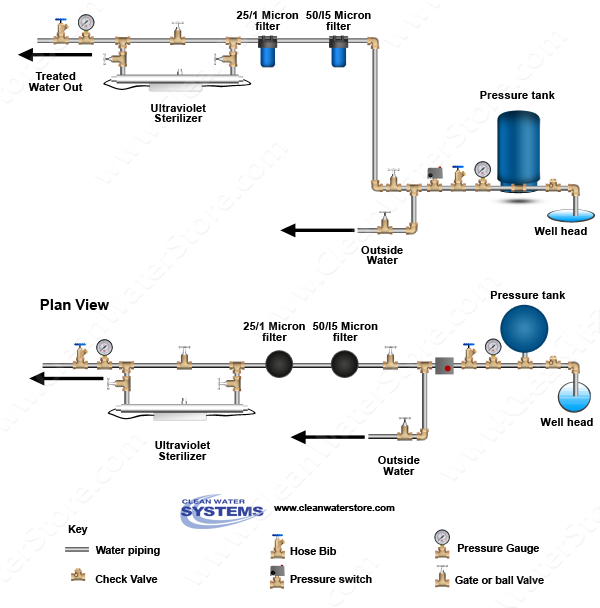
Adding a UV disinfection system is a powerful way to sterilize your water, but when should you install it? Here are a few simple guidelines to help you get the most out of your setup.
First, water treated by UV light should be clear and low in minerals. If the hardness exceeds 5–10 grains per gallon, use a water softener first.
If you have a water softener, install the UV sterilizer last, after the softener.
The water must be treated first if it is cloudy or high in turbidity. UV light works best when the UV Transmission level (“UVT”) is high enough for the rays to penetrate. At minimum, use a 5-micron filter for pretreatment.
If the well is influenced by surface water, it may contain parasites like Giardia. In this case, use a 1-micron absolute filter before the UV sterilizer, or consider an ultra-filtration system.
UV water treatment systems are a popular choice for homes and businesses. They use ultraviolet light to neutralize harmful microorganisms, offering a chemical-free, eco-friendly alternative to traditional methods. By using UV systems, you can eliminate bacteria, viruses, and other pathogens, ensuring your drinking water stays safe and clean. This article explores how UV systems work, their effectiveness, and their safety features.
UV light systems target and destroy harmful microorganisms like bacteria, viruses, and parasites. A UV lamp emits ultraviolet light, which passes through the water and disrupts the DNA of microorganisms. This prevents them from reproducing and causing illness. UV treatment offers high-level purification without chemicals or additives.
UV water treatment uses ultraviolet light to eliminate microorganisms in water. It is effective against bacteria, viruses, and parasites and offers a chemical-free, eco-friendly alternative to traditional disinfection methods. UV systems help ensure your water supply is safe, providing peace of mind and protecting your health.
UV systems are highly effective against bacteria, viruses, and parasites. They are also safe because they produce no byproducts or waste. UV disinfection is a physical process that does not change the water’s taste, odor, or chemical makeup. However, UV systems do not remove non-biological contaminants like heavy metals or chemicals. Pair UV treatment with other filtration methods, such as reverse osmosis systems, for full protection.
This method uses ultraviolet radiation to disinfect water by targeting microorganisms like bacteria, viruses, and protozoa—without using chemicals.
The system exposes harmful microbes to a specific wavelength of light as water flows through, disrupting their DNA and stopping them from reproducing.
No. This system targets only microbial disinfection. It doesn’t filter out contaminants like chlorine, iron, or heavy metals, which is why many users pair it with a separate filtration system.
Yes. It’s a proven, chemical-free solution for making well or municipal water microbiologically safe to drink, without affecting taste or odor.
Replace the lamp annually and clean the quartz sleeve regularly to ensure peak performance. Some models also include alerts to indicate when service is needed.
If your tap water has started smelling or tasting a little "off" this week: earthy,…
If your water pressure has been weaker than usual this month, you're not imagining it.…
Is Your City Testing for This? Every year, your water utility sends out a report.…
Article last updated July 2026 If your well water is acidic, with a pH below…
Most homeowners come to us knowing something is wrong with their water. The smell, the…
If you are on city water and dealing with chlorine taste and odor, chemical smell…