_2.png)
 Request a Call
7 Things You Should Never do with Ozone

We are all familiar with the ozone layer, the protective layer covering the Earth that protects us from the harmful UV rays of the sun. There is a good reason it’s called the ‘ozone layer’ – that is, because it contains high concentrations of ozone. What is ozone or Ozone Water Systems exactly, and what is its relevance to the odors in your home?
Ozone is a pungent gas. It is the interaction of the sun’s UV rays and the oxygen molecules that leads to the production of ozone gas. As ironic as it may seem, despite its sharp smell, it has the power to purify air and water.
Ozone Water Treatment Systems: How Does It Work?
If you’re wondering how it works, think of chlorine. Both are powerful oxidizers offering similar benefits. Ozone (O3) is a triatomic molecule formed when energy, like UV light or electrical discharge, splits oxygen molecules (O2) into oxygen atoms that then combine with other oxygen molecules to form ozone. Benefits include metal oxidation and disinfection. Ozone acts faster and leaves no chemical residue, making it a chemical-free process, unlike chlorination. Compared to other water purification methods, ozone is a fast and effective alternative.
However, ozone must never be used in areas where it can be inhaled, as it poses health risks. For home water systems, ozone eliminates odors, kills bacteria, and oxidizes iron and manganese. It is corrosive, so corrosion-proof tanks are necessary, and it’s not ideal for copper or galvanized piping. Despite this, ozone is very convenient for treating odors.
Introduction to Ozone Treatment
Ozone treatment, also known as ozone water treatment, is an advanced water purification method using ozone gas (O₃) to improve water quality and remove contaminants. Ozone is a strong oxidizing agent that breaks down bacteria, viruses, and other harmful microorganisms.
Ozonated water supports detoxification, reduces inflammation, and may improve gut health. It also boosts the immune system, strengthening the body’s defenses.
Ozone water treatment systems are used in municipal, industrial, and residential settings to provide clean, safe, and great-tasting water. The process generates ozone gas and dissolves it in water, where it destroys contaminants without adding harmful chemicals.
Ozone Generation and Ozone Generators
Ozone generation is the process of creating ozone gas from oxygen molecules (O₂), and it’s a crucial step in any ozone water treatment system. This is typically achieved through several methods, including corona discharge, ultraviolet light ozone generators, and electrolytic or chemical reactions. Ozone generators are specialized devices designed to produce ozone gas for use in water treatment systems.
There are different types of ozone generators—such as electrical (corona discharge), ultraviolet, and cold plasma—each with unique pros and cons depending on the use. Industrial ozone generators are vital for large-scale water treatment, providing safe, high-quality water for municipal, industrial, and commercial needs by improving water safety, taste, and odor. When choosing an ozone generator, consider ozone concentration, system capacity, and operating costs. The right choice ensures efficient ozone generation and effective treatment for residential, municipal, or industrial uses. These generators also produce ozonated water for various applications..
The Ozonation Process
The ozonation process is central to ozone water treatment. Ozone gas is introduced into water, where it quickly breaks down into reactive oxygen species. Ozonation is a multi-step process: ozone is generated, dissolved in water, reacts with contaminants, and then reverts to oxygen. These reactive molecules oxidize contaminants like dissolved organic carbon, bacteria, viruses, and other microorganisms. This makes ozonation an efficient and effective water disinfection method.
A key advantage of ozonation is minimizing harmful byproducts such as haloacetic acids and trihalomethanes, common with chlorine disinfection. Unlike chlorine, ozone leaves no residue in treated water. However, ozonation lacks residual disinfection, so it does not protect against microorganism regrowth after treatment. This makes it a safer, environmentally friendly water disinfection option.
Measurement of Dissolved Ozone
Accurate measurement of dissolved ozone is essential to maintain the effectiveness and safety of ozone water treatment systems. The concentration of dissolved ozone affects water quality by determining how well contaminants are neutralized. Common measurement methods include amperometric sensors, spectrophotometry, and titration. Amperometric sensors are popular due to their precision and ease of use—they detect electrical current generated when ozone reacts at an electrode, indicating ozone concentration.
Dissolved ozone is measured in milligrams per liter (mg/L) or parts per million (ppm). Regular monitoring ensures the process is effective and safe. Maintaining the right ozone level is crucial; too little ozone may not disinfect fully, while too much can be wasteful or harmful. Proper calibration and maintenance of equipment are vital for reliable results and consistent water quality.
What Ozone Can Do (Under Controlled Conditions)
Ozone is a strong oxidizing agent with disinfecting properties, and a variety of industrial and regulated settings use it to help reduce certain contaminants. When applied in accordance with safety guidelines, ozone can:
-
- Assist in water treatment – In municipal and industrial water systems, ozone can help reduce bacteria, viruses, chlorine, iron, and certain odors. Operators conduct these processes under controlled conditions to ensure safety and effectiveness.
- Support surface sanitation – Commercial environments may use ozone to help sanitize food-processing areas or equipment, always following strict safety regulations.
- Enhance food safety in industry – Commercial facilities may treat food like fish, meat, vegetables, poultry, and fruit with ozonated water to help reduce surface bacteria and extend freshness.
Important Safety Note
While ozone can be effective in regulated applications, it must be handled with care. High concentrations of ozone gas can be harmful to people, pets, and indoor air quality.
The U.S. Food and Drug Administration (FDA) has not approved ozone for medical treatment of humans or animals, and it should not be inhaled or used directly on the body without oversight from qualified professionals.
For home water or air treatment, only use EPA- or NSF-certified equipment designed for safe ozone output, and follow manufacturer instructions carefully.
Drinking Water Applications
Ozone water treatment systems are popular for providing safe, clean drinking water in municipal, residential, and industrial settings. Drinking ozonated water supports gut health by promoting good microflora and reducing harmful bacteria and yeast. It also reduces inflammation, aiding digestion and boosting the immune system. Ozone treatment effectively removes bacteria, viruses, and other microorganisms while improving water taste and odor.
This method is favored because it avoids adding chemicals, making it natural and eco-friendly. Although ozone treatment uses significant energy, its benefits—such as solving microbiological issues and enhancing water quality—make it a cost-effective choice.
You can buy ozonated water from bottled water suppliers or produce it at home with an ozone generator for freshness and control over the ozonation process.
Read more:
Ozone Water Treatment For Well Water: The 6 Things You Need to Know First
Ozone Water Treatment Systems: Purify Your Home With Ozone
How can you purify your home with ozone? Some devices use ozone to purify both water and air in your home.
Ozone water treatment generates ozone through electrical discharge or UV light. UV light and electrolytic ozone generators produce lower ozone concentrations, making them ideal for home or small-scale use due to their simplicity and compact size.
In advanced oxidation processes, hydrogen peroxide combines with ozone to create powerful oxidizers like hydroxyl radicals, enhancing the removal of organic contaminants and pollutants. Ozone’s strong oxidizing power makes it effective for wastewater treatment, and water treatment professionals widely use it for disinfection, metal oxidation, and water quality improvement.
Ozone therapy also uses ozonated water for health and wellness. Ozone therapy leverages the antimicrobial, immune-boosting, and healing properties of ozone, and medical and dental professionals apply it in treatments for wound healing, inflammation reduction, and detoxification.
We also design products to treat not just a faucet but your entire home.
Environmental Impact of Ozone Water Treatment
Ozone water treatment is one of the most environmentally friendly water purification methods today. Unlike chlorine and other traditional chemicals, ozone does not produce harmful byproducts like trihalomethanes (THMs) or haloacetic acids (HAAs). After disinfection, ozone breaks down into oxygen, leaving no chemical residue in the water.
This reduces the need for extra chemicals and lowers the risk of contamination in drinking water and wastewater. Ozone effectively removes many pollutants, including pesticides, organic compounds, and some heavy metals, improving water quality and protecting aquatic life. Choosing ozone supports a sustainable, eco-friendly technology that safeguards human health and the environment.
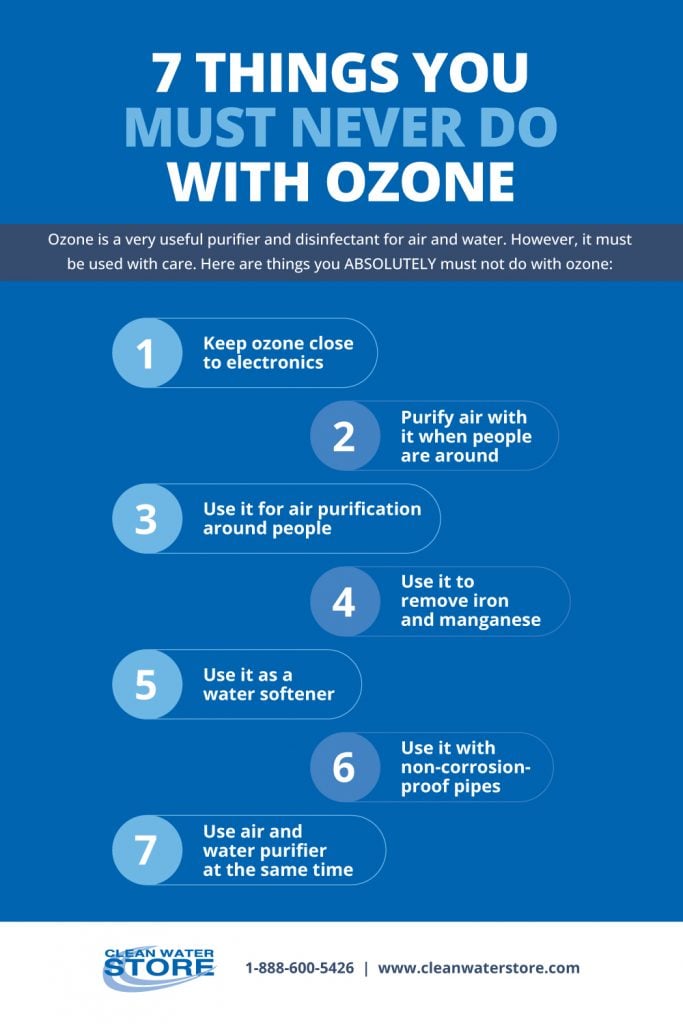
Ozone Water Treatment Disadvantages: What You SHOULD NOT do with Ozone
-
- Keep ozone away from electronics and sockets.
- Never use ozone to purify air when people can inhale it, as it is harmful.
- Don’t use ozone air purifiers in California, where they are prohibited.
- Ozone does not remove iron and manganese, but changes them for easier filtration.
- Ozone is not a water softener and does not remove calcium or hardness.
- Avoid injecting ozone into systems with galvanized or copper pipes or non-corrosion-proof tanks, as ozone is corrosive.
- Don’t use ozone air and water purification simultaneously on devices designed for one at a time.
- When used properly, ozone disinfects effectively and decomposes rapidly, leaving no chemical residues.
Disadvantages of Ozone Water Treatment
While ozone water treatment has many benefits, it also has drawbacks. The equipment and operational costs are high. Ozone is highly reactive and can be toxic if mishandled, requiring regular maintenance and careful system design.
Ozone has a short half-life and rapidly decomposes back into oxygen. It must be generated onsite and used immediately. It may be less effective for some contaminants, sometimes needing additional purification methods. Despite these issues, with proper care, ozone water treatment systems remain effective and popular for water purification.
Maintenance and Repair of Ozone Water Treatment Systems
To keep ozone water treatment systems effective and efficient, regular maintenance and timely repairs are crucial. Key tasks include inspecting and replacing the ozone generator, diffusers, and other parts as needed, and monitoring ozone dosage and contact time. Routine cleaning and descaling prevent mineral buildup, while regular checks catch early signs of wear or malfunction.
When problems occur, qualified professionals should handle troubleshooting and repairs to ensure safety and performance. Proper maintenance extends equipment life and ensures consistent production of high-quality ozonated water for drinking, food processing, and medical uses. Following a maintenance schedule and addressing repairs quickly helps maximize benefits, ensuring reliable operation and reducing downtime or unexpected costs.
Resources:
The EPA clearly states that no federal agency has approved ozone generators for use in occupied indoor spaces, and using them can pose health risks.
US EPA
California Air Resources Board (CARB) – Hazardous Ozone-Generating Air Purifiers: CARB recommends against using ozone generators for home or general indoor air cleaning, highlighting the potential dangers of poorly regulated devices.
California Air Resources Board
FDA Guidance – Use of Ozone for Pathogen Reduction in Apple Juice Processing: The FDA permits ozone use in food processing (like apple juice) only under strictly validated conditions, ensuring safety and achieving a required “5-log reduction” in pathogens.
U.S. Food and Drug Administration


