_2.png)
 Request a Call
Podcast Q&A 8: “I’m looking for a no-salt water softener for our very hard well water”
Podcast: Play in new window | Download
Note: This podcast transcript has been edited for clarity and length.
Hello and welcome again to the Clean Water Made Easy Podcast Q&A. This is Q&A Episode 8. In this episode, I’m going to answer a question about no-salt water softeners for well water.
Actually, they should be referred to as no-salt water conditioners, not softeners—since they do not soften the water.
I’m Gerry Bulfin, a WQA-Certified Master Water Specialist and Water Treatment Contractor here in Northern CA. I have a main podcast where I talk about various well water problems, treatment systems, and solutions.
I also record these quick Question & Answer episodes. Every day, we get a lot of phone calls, emails, and chats through our website. I pick an interesting one and answer it here.
Sheryl’s Question
This one came in through our chat box from Sheryl. She asked:
“Hello, I’m looking for a no-salt water softener for our very hard well water. I can’t find any info on your website about how much hardness each of your models removes. Do you have that information?”
The Truth About No-Salt Systems
Hello Sheryl, great question.
I did another podcast episode (Episode 9) that goes more in-depth about no-salt water softeners—or rather, no-salt water conditioners, as we call them.
Here’s the key point: they don’t actually soften water. Instead, they transform the hardness minerals into a form that won’t build up as scale. This prevents scale build-up, but:
- They do not remove hardness.
- You can test the water before and after—it’s still the same hardness.
They’re popular because people don’t want to deal with salt. Even though modern water softeners use much less salt than older models, softeners still need brine (salt water) to regenerate or clean the resin inside.
So people think: “A no-salt softener sounds better—no salt, no backwash water.” And that’s true in some ways. But it really depends on your expectations.
When They Work (and When They Don’t)
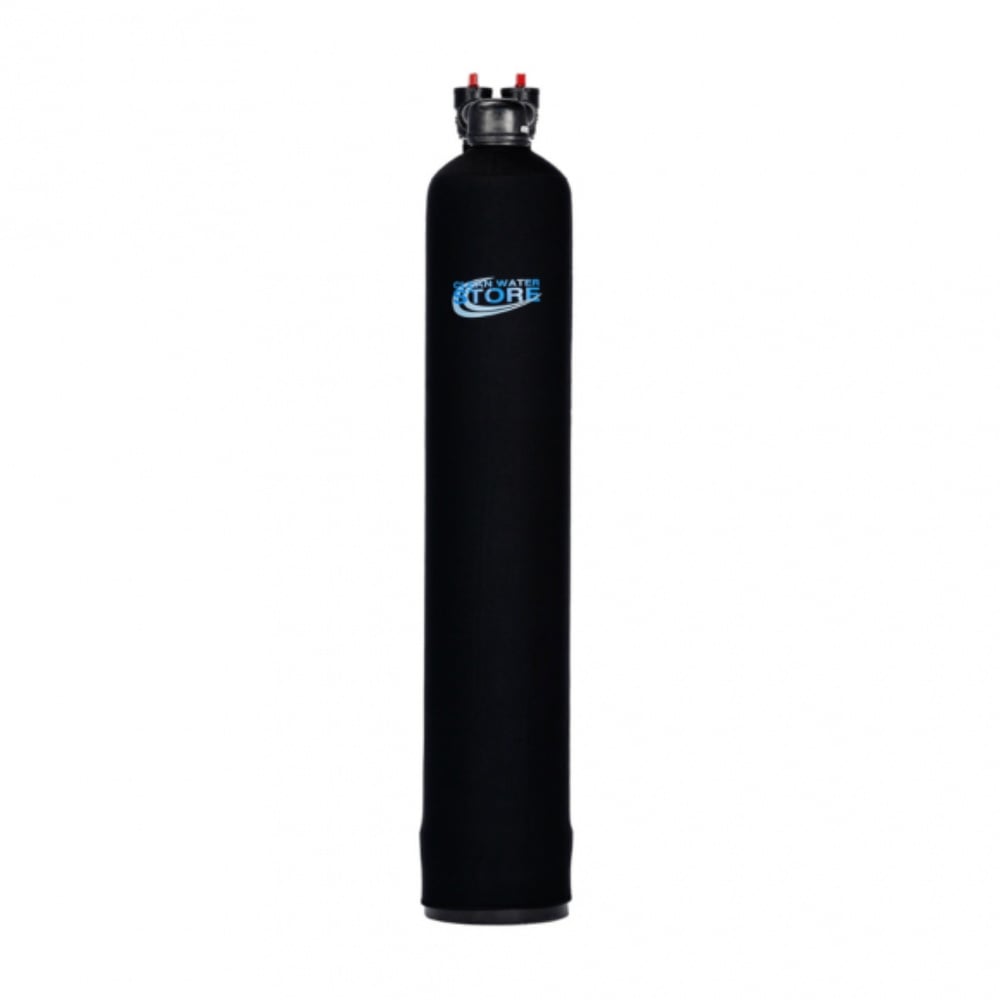
Theoretically, no-salt conditioners will work up to about 50 grains per gallon of hardness. That’s very high. But keep in mind:
- If water evaporates on a surface, you’ll still see mineral deposits.
- In the shower, it will still feel like hard water.
We generally don’t recommend no-salt conditioners for very hard well water. They are best only if:
- You’re mainly trying to protect a water heater, an instant water heater, or a boiler.
- Your well water is clean and hard, meaning no iron, manganese, hydrogen sulfide, or sediment.
If any of those contaminants are present, the TAC resin inside no-salt conditioners can foul very quickly. That becomes expensive and frustrating.
Why a Regular Water Softener Is Usually Better
In most cases, a regular water softener is the better choice. You can optimize it by:
- Dialing it in to use as little salt as possible.
- Partially bypassing the system so only some water is softened. For example, reducing the hardness from 30 grains to 5 grains saves salt and still makes water more manageable.
If you want to cut back on salt use, you can also blend in a little hardness—say, up to 10 grains per gallon.
But in short: we don’t recommend no-salt water conditioners for very hard well water, unless you only want to prevent scale in a heater or boiler.
Closing Thoughts
Thanks again to Sheryl for contacting us—I hope this helps clarify the differences.
Any questions or comments? Are you using a no-salt conditioner or water softener on your well water? Email me and let me know how that’s working for you.