_2.png)
 Request a Call
Sediments, Stains and Water Sediment Filters 101

When your water system uses well water, it is important to do regular water testing to ensure that the water the well supplies is safe. Sometimes, bacteria, stains, and sediments can be found in the water. Water sediment filters won’t always take care of everything. For households reliant on a private well as their primary water source, using a sediment filter is essential to protect appliances and improve water quality.
Unlike city water, which is periodically tested and monitored by authorities, you handle the responsibility of monitoring your well water. When you know what’s in your water, you will be able to figure out the recommended treatment system to take care of it.
Before you try to understand the sediments and stains caused by your water, there are basic steps that you should know about. These are the steps we follow in testing the water. Keep in mind that there may be many steps you need to follow to treat your water before it becomes perfect for your home and family. The steps below cover the basics. These steps include:
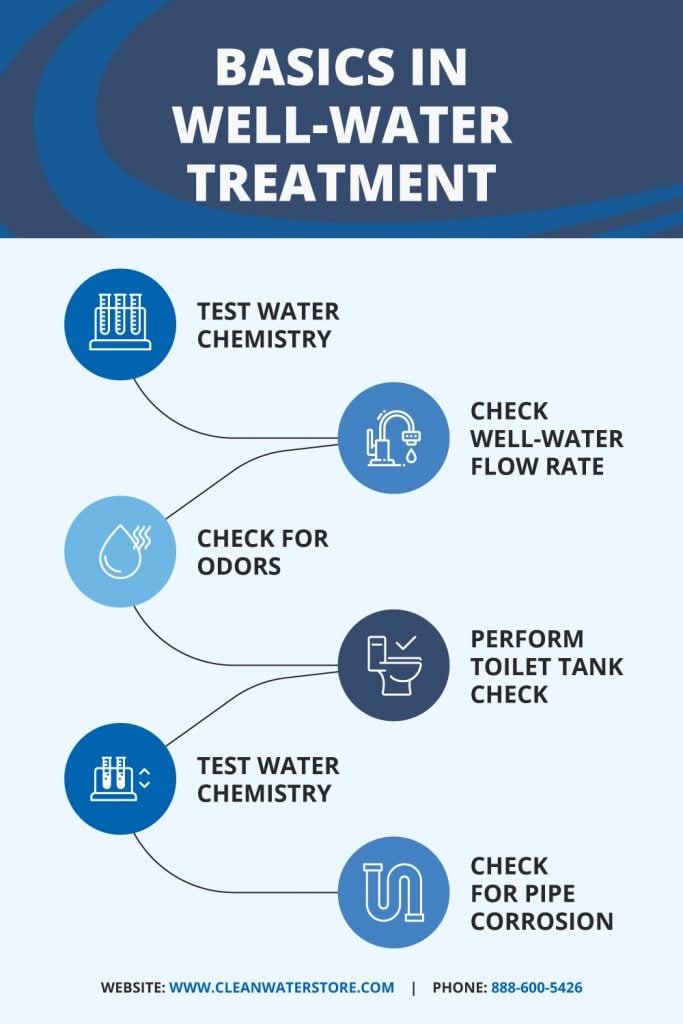
Basic Steps in Well Water Treatment
Test your well water: Check for bacteria and chemical contaminants, especially if you live near a factory, gas station, or agricultural area.
Measure your flow rate: Determine how many gallons per minute your well provides to understand what treatment systems it can support.
Inspect your toilet tank: Sediments and stains in the tank can reveal water quality issues. This simple step offers key clues about your water.
Check your water heater: Because it constantly stores water, it can expose problems like sediment buildup or corrosion.
Smell your water: Note any odors in hot and cold water. Some issues appear only at certain temperatures.
Look for pipe corrosion: Leaks and rust are signs of corrosive water, which can damage plumbing and fixtures.
Check for scale buildup: Scale indicates hard water, which may require a softener or conditioner.
Identify pipe size: Knowing your main pipe size is essential for choosing the right water treatment system.
Read more:
The step we’ll focus on here is Step 3: Inspecting the toilet tank. Like a water heater, it’s a place where water sits continuously, making it a reliable indicator of water issues. Use our guide below to learn what different sediments and stains might mean for your water quality.
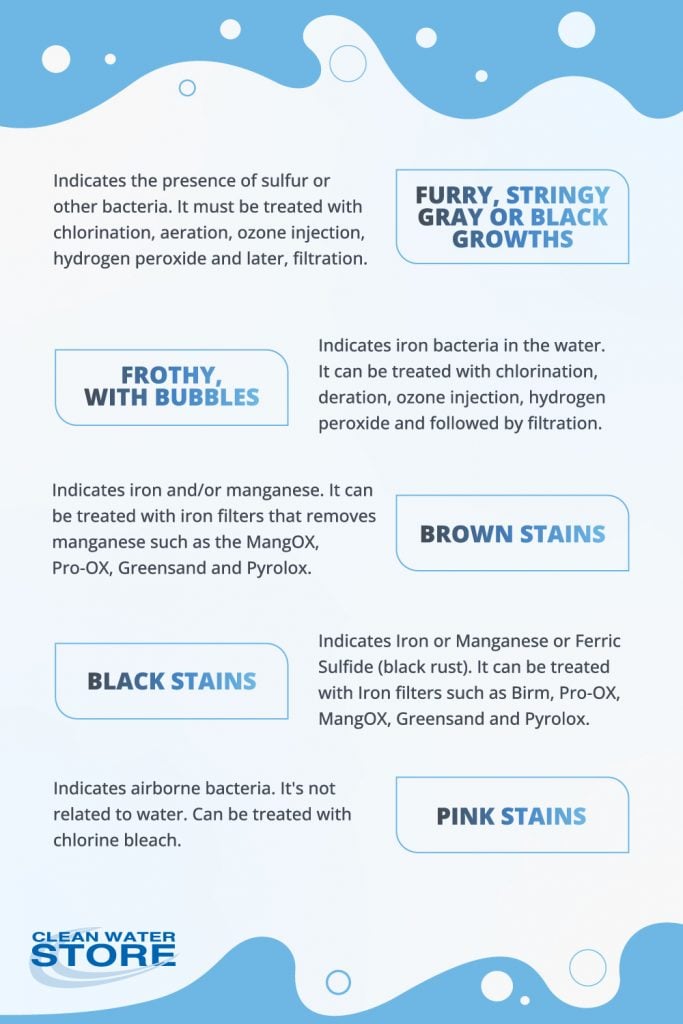
What Sediments and Stains Tell You
-
- Floating white scales: White or gray flakes often mean hard water or high TDS (total dissolved solids). A water softener or salt-free conditioner can help with hardness, while high TDS may require a whole-house reverse osmosis system.
- Rust or sand in the tank: Rust, sand, or black particles may signal corroding galvanized pipes or sediment in your water. Replace old pipes if needed, and install a sediment filter or iron filter based on particle type.
- Blue stains: Usually a sign of acidic water (low pH). A calcite neutralizer or soda ash feeder can fix this.
- Rust stains: Caused by excess iron in water. An iron filter can remove it.
- Red, stringy growths: Likely due to sulfur bacteria. Treat with aeration, ozonation, chlorination, or hydrogen peroxide, followed by proper filtration.
- Frothy water with bubbles: Indicates iron bacteria. Use the same treatment as for red growths.
- Brown stains: Caused by iron, manganese, or both. Use an iron filter that also removes manganese.
- Black stains: May be from iron, manganese, or black rust (ferric sulfide). An iron filter usually solves the issue.
- Pink stains: Often from airborne bacteria, not water. Use chlorine bleach to clean and prevent recurrence.
What is a Sediment Filter?
A sediment filter is a type of water filter designed to remove particulate matter, such as dirt, sand, silt, and rust, from water. It is an essential component of a house sediment filtration system, as it helps to protect household appliances and plumbing from damage caused by sediment buildup. Sediment filters are typically used as a pre-filter to remove larger particles from the water, allowing other filters, such as carbon filters and reverse osmosis systems, to work more efficiently. By capturing these larger particles, sediment filters ensure that your water is cleaner and safer for everyday use, safeguarding your appliances and improving overall water quality.
Read more: When To Use a Sediment Backwash Filter To Remove Sediment From Well Water
How Sediment Filters Work
Sediment filters work by using a physical barrier to block particulate matter from passing through the filter. The filter is designed to capture particles of a certain size, typically measured in microns, and prevent them from entering the water supply. The filter may be made of a variety of materials, including paper, polyester, or polypropylene, and may be designed to capture particles as small as 1 micron. Some sediment filters can also remove other contaminants, such as chlorine and heavy metals, from the water. By effectively filtering out these particles and contaminants, sediment filters play a crucial role in maintaining clean water and protecting your household systems.
Read more: Removing Sand And Sediment From Well Water And The Four Most Effective Systems
Common Types of Water Sediment Filters
Sediment filters help remove dirt, rust, and particles to improve water clarity and protect your plumbing. Here are the most common types:
-
- Backwash Sediment Filters: Automatically remove dirt, rust, and fine particles without restricting flow. Many models filter down to 5 microns and only require media changes every 4–5 years.
- Micron-Rated Filter Cartridges: These cartridges remove particles based on size. For effective filtration, choose a micron rating that matches the sediment in your water.
- Centrifugal Sand Separators: Use centrifugal force to remove up to 98% of particles 74 microns or larger. No cartridges or media are needed, but manual flushing is required.
- Rusco Spin-Down Filters: Use a screen to trap sediments, which requires regular flushing. Choose a coarse mesh for longer filter life. Available in pleated, melt-blown, and string-wound options.
Choosing the Right Sediment Filter for Your House System
Choosing the right sediment filter for your house system depends on several factors, including the size of your household, the type of water supply you have, and the level of contamination in your water. Here are some key considerations:
-
- Micron Rating: The filter’s micron rating determines the size of particles it can capture. A lower micron rating means the filter can capture smaller particles, providing finer filtration.
- Flow Rate: The filter’s flow rate indicates how much water it can handle at one time. A higher flow rate is ideal for larger households or higher water usage.
- Filter Housing: The filter housing is the container that holds the filter. It should be durable and easy to clean, ensuring long-term reliability.
- Certifications: Look for certifications from reputable organizations, such as NSF International, to ensure the filter meets certain quality and performance standards.
Installing a Sediment Filter in Your House Sediment Filtration System
Installing a sediment filter in your house’s sediment filtration system is a relatively simple process. Follow these steps to ensure a successful installation:
Turn off the water supply to the house to prevent any water flow during installation.
Locate the filter housing and carefully remove the old filter.
Install the new filter, making sure it is securely seated in the housing.
Turn on the water supply and check for any leaks around the filter housing.
Test the water quality to ensure the filter works properly and effectively removes sediment.
Following these steps ensures that your sediment filter is correctly installed and functioning as intended.
Read more:
Maintenance and Replacement
Sediment filters require regular maintenance and replacement to continue working effectively. Here are some tips for maintaining and replacing your sediment filter:
-
- Check the filter regularly for signs of wear and tear, such as cracks or holes.
- To maintain optimal performance, replace the filter every 6-12 months or as recommended by the manufacturer.
- Clean the filter housing regularly to prevent the buildup of sediment and debris.
- Consider installing a filter with a built-in bypass valve to allow for easy maintenance and replacement without disrupting your water supply.
By following these tips, you can ensure that your sediment filter continues to provide clean, safe drinking water for your household, protect your appliances, and improve overall water quality.
Read more: How to Identify Well Water Problems With a Physical Inspection

Frequently Asked Questions (FAQs)
1. What is a water sediment filter?
A water sediment filter removes suspended particles like sand, silt, dirt, and rust from your water supply, improving water clarity and protecting plumbing and appliances.
2. How does a water sediment filter work?
Water passes through a filter media—such as pleated paper, spun polypropylene, or mesh—that traps and removes sediment before it reaches your home’s plumbing or water treatment system.
3. Do I need a water sediment filter for my home?
If your water contains visible particles, or if you’re on well water or notice clogged fixtures and appliances, a water sediment filter can help improve water quality and extend equipment life.
4. What types of water sediment filters are available?
Common types include spin-down filters, cartridge filters, and backwashing filters. Each type is suited for different levels of sediment and water flow rates.
5. Where should a water sediment filter be installed?
Water sediment filters are usually installed at the point of entry, where water first enters your home, to protect all downstream fixtures and treatment systems.
6. How often should I replace a water sediment filter?
Filter replacement frequency depends on your water quality and filter type, but most cartridge filters need to be changed every 3 to 6 months. Check the manufacturer’s guidelines.
7. Can a sediment filter remove iron or bacteria from water?
Sediment filters can remove rust particles (ferric iron), but they won’t treat dissolved iron or bacteria. You’ll need an iron filter or disinfection system for those contaminants.
8. Is a water sediment filter safe for drinking water?
Yes, sediment filters are safe and often used as a first stage in drinking water filtration systems to improve clarity and reduce physical contaminants.
9. Can I use a sediment filter with other water treatment systems?
Absolutely. Sediment filters are often paired with carbon filters, reverse osmosis systems, or UV sterilizers to enhance overall water treatment performance.
10. How do I choose the right water sediment filter?
Consider your water source, sediment load, flow rate, and filter micron rating. Smaller micron ratings remove finer particles but may reduce flow if not properly matched to your needs.
Read more:
13 Water Problems Your Toilet Tank Might Tell You About Your Water


