Clean Water Store Account Wish List View Cart Checkout RSS Feed
Home  |  Online Storefront  |  Water Problems  |  Technical Resources  |  Contact Us  |  Company Info 
Sign In

Product Links
City Water Systems
Well Water Systems
Travel & Emergency Purifiers
Filter Cartridges
Filter Tanks & Housings
Filter Media, Chemicals, Control Valves, Parts
Commercial Systems
Water Testing
spacer
Water Problem Links
  Acid - Low pH
  Arsenic
  Bacteria
  Chemicals
  Chlorine
  Cloudy - Turbidity
  Color
  Corrosion
  Fluoride
  Gas Bubbles
  Hard Water
  Iron
  Lead
  Nitrate
  Odors
  Salts - TDS
  Sand - Grit
  Sediment
  Stains
  Tannins
How-To Guides
Frequently Asked Questions
Manuals & Guides

Product Search:


Our 21st year in the water business!

WQA Certified Technicians are here to assist you!
1-831-462-8500


Members of:
Pacific Water Quality Association  
Water Quality Assocation  


better business bureau online seal

Home  >  Water Problem Links  >  Bacteria
Bacteria


According to the USEPA, coliform bacteria are common in the environment and are generally not harmful. However, the presence of these bacteria in well water or spring water usually indicates that the water may be contaminated with germs that can cause disease.

E. coli, is a type of fecal coliform bacteria commonly found in the intestines of animals and humans. E. coli is short for Escherichia coli. The presence of E. coli in water is a strong indication of recent sewage or animal waste contamination. Sewage may contain many types of disease-causing organisms.

E. coli comes from human and animal wastes. During rainfalls, snow melts, or other types of precipitation, E. coli may be washed into creeks, rivers, streams, lakes, or ground water. When these waters are used as sources of drinking water and the water is not treated or inadequately treated, E. coli may end up in drinking water. Other types of bacteria can be found in well water also, such as slime and odor producing iron and sulfur bacteria.

If you draw water from a private well, and your well tests positive for E. coli, there are several steps that you should take:

  1. Boil all water intended for consumption,
  2. Disinfect the well thoroughly with chlorine
  3. Monitor your water quality to make certain that the problem does not recur.

If the contamination is a recurring problem, try to identify the source of the problem (such as a defective well seal, or cracked casing) and fix it. .You can also investigate the feasibility of drilling a new well or install a disinfection unit, which can use chlorination, ultraviolet light, or ozone to kill bacteria and viruses.

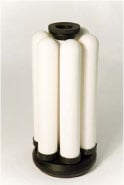
For drinking water at point-of-use that is contaminated with bacteria distillers can provide a reliable way to disinfect water. Ceramic point-of-use filter systems, such as the Doulton Twin HIP/IDIY are also used to filter out bacteria.


Questions? Fill out our quick and easy Water System Designer Form and get a response in 24 hours or less.


Want More Information?

Test your water for bacteria: Test kits for bacteria

Get complete well water testing, including bacteria, metals, minerals: WaterCheck Tests.

Visit USEPA site on private drinking water wells Also see: USEPA Basic Information about E.coli 0157:H7


Home  |  Online Storefront  |  Water Problems  |  Technical Resources  |  Contact Us  |  Company Info 

Clean Water Systems & Stores, Inc. 2806-C Soquel Ave, Santa Cruz, California 95062
Phone: 831-462-8500  Fax: 831-476-0832
Call us Mon. - Fri. 10AM - 8PM Eastern Time or 7AM - 5PM Pacific Time!
Visa, Mastercard, American Express, Discover

We ship from our warehouse in Ohio for fast Midwest & East Coast service.
For West and Southwest orders, we ship from our warehouses in California or Arizona.

©Copyright 1997-2008 Clean Water Systems & Stores, Inc., All Rights Reserved


Ecommerce Shopping Cart Software by Miva Merchant