_2.png)
 Request a Call
How to Improve Your Shower Head Output

Every minute you shower, your shower head could be using anywhere from 1.8 to 5.5 gallons of water, depending on its age and design. With showering accounting for nearly 17% of residential indoor water use—about 40 gallons daily for the average family—understanding shower head flow rate regulations and efficiency standards can significantly impact both your water bills and environmental footprint.
Since the Energy Policy Act of 1992, federal regulations have capped new shower heads at 2.5 gallons per minute (GPM), while modern efficiency programs like EPA WaterSense push that limit even lower to 2.0 GPM. Some states, notably California, have implemented even stricter 1.8 GPM requirements. Yet despite these lower flow rates, innovative technology ensures today’s efficient shower heads deliver satisfying shower experiences that rival their water-wasting predecessors.
Key Takeaways
- Federal regulations limit shower head flow rates to 2.5 gallons per minute (GPM) since 1992
- WaterSense labeled shower heads use no more than 2.0 GPM while maintaining performance
- California requires stricter 1.8 GPM flow rates as of July 2018
- Installing a low flow shower head can save 2,700-2,900 gallons of water annually
- Modern technology ensures powerful shower experiences despite reduced flow rates
- Showering accounts for 17% of residential indoor water use, about 40 gallons daily per family
What is Shower Head Flow Rate (GPM)?
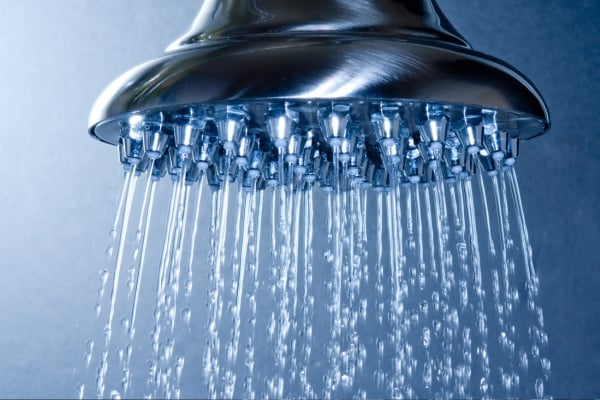
GPM—gallons per minute—measures the volumetric rate at which water exits a shower head. This metric determines how many gallons of water flow through your shower head during each minute of operation. Understanding shower flow rates helps you gauge both water consumption and compliance with federally mandated flow rate standards.
The contrast between older and modern shower heads reveals dramatic changes in water efficiency. Pre-1992 shower heads frequently delivered 3.5 GPM or higher, with some legacy models from the 1980s and early 1990s reaching 3.5 to 5.5 GPM. These older units created substantial water waste that prompted federal intervention.
Consider the practical impact: a 10-minute shower with a 2.5 GPM head uses about 25 gallons, while the same shower duration with a 1.8 GPM California-compliant head uses only 18 gallons. This 7-gallon difference per shower adds up to considerable water and energy savings over time.
Modern shower heads achieve their efficiency through sophisticated flow restrictors and pressure-compensating mechanisms. These engineering solutions maintain consistent performance across varying household water pressure levels, typically ranging from 20 to 80+ psi in residential settings.
Because water heating energy rises proportionally with volume, reduced flow rates directly decrease both water consumption and energy costs for hot water heating, making flow rate a critical factor in household utility expenses.
Federal and State Flow Rate Regulations
The regulatory landscape for shower flow rates centers on the Energy Policy Act of 1992 (EPAct 1992), which established the baseline maximum flow rate of 2.5 GPM for all new shower heads sold in the United States. This federal mandate transformed the plumbing industry and dramatically reduced residential indoor water consumption nationwide.
The 2.5 GPM standard applies at 80 psi test pressure, providing a consistent measurement framework for manufacturers and consumers. This regulation covers all new shower heads, ensuring that legacy high-flow models gradually exit the market as homeowners replace aging fixtures.
State-Level Variations
While federal law sets the ceiling at 2.5 GPM, individual states can implement stricter requirements. California leads this trend with the most aggressive flow rate standards in the nation:
- July 2016: California reduced the maximum to 2.0 GPM
- July 2018: Further restriction to 1.8 GPM for all shower heads sold in the state
These California standards have influenced product offerings nationwide, as manufacturers often design products to meet the strictest requirements rather than maintaining separate inventory for different states.
Other states may adopt WaterSense standards (2.0 GPM) or maintain the federal 2.5 GPM limit, but California’s 1.8 GPM requirement represents the strictest widely-enforced standard currently in effect.
Compliance and Enforcement
Manufacturers must integrate appropriate flow control technology—including flow restrictors, pressure-compensating valves, and calibrated orifices—to ensure their products don’t exceed applicable maximums at test conditions. Consumers in regulated states will find compliant flow ratings clearly marked on product packaging and specification sheets.
The regulatory purpose extends beyond simple water conservation to encompass energy efficiency (reduced water heating requirements) and regional resilience in drought-prone areas where every gallon saved contributes to water security.
WaterSense Certification Standards
The EPA’s WaterSense program, launched in 2006, establishes performance standards that go beyond simple flow restrictions. WaterSense certified shower heads must meet strict performance requirements while using no more than 2.0 GPM—representing a 20% reduction from the federal 2.5 GPM maximum.
Performance Criteria and Testing
WaterSense certification involves comprehensive testing beyond flow rate measurement:
- Maximum Flow Rate: 2.0 GPM (7.6 L/min) at specified test conditions
- Minimum Flow Safeguards: Products must deliver at least 75% of rated maximum flow at both 45 psi and 80 psi, ensuring consistent performance across typical household pressure ranges and preventing excessively weak flow at moderate pressures
- Spray Force and Coverage: Independent testing evaluates spray distribution patterns and force characteristics to ensure user satisfaction, particularly important for larger rain shower designs that historically struggled with adequate coverage at lower GPM
Certification Process
WaterSense relies on third-party certification bodies using ASME/CSA plumbing standards to validate both efficiency targets and performance criteria. This independent verification provides consumers with confidence that certified products will deliver satisfying shower experiences while meeting water efficiency goals.
In July 2018, WaterSense issued Version 1.1 specifications, clarifying updated test methods while maintaining the 2.0 GPM cap. These updates specifically addressed spray coverage and force testing protocols to ensure that innovative designs, including rain shower configurations, meet strict performance requirements.
Benefits of WaterSense Products
Beyond guaranteed water efficiency, WaterSense-labeled shower heads often qualify for utility rebates and incentive programs. Many water and energy utilities offer bill credits, instant rebates, or free exchange programs specifically for WaterSense-certified fixtures, making them cost-effective upgrades for homeowners.
The program’s emphasis on performance testing means consumers can confidently choose WaterSense products knowing they’ll provide a satisfying shower experience while reducing water and energy consumption.
Water and Energy Savings Impact
The financial and environmental benefits of efficient shower heads extend far beyond the bathroom. EPA-cited figures, widely referenced throughout the plumbing industry, demonstrate substantial savings potential for households adopting low-flow shower heads.
Household Savings
- Annual Water Savings: Switching to WaterSense shower heads typically saves 2,700 to 2,900 gallons of water annually per household, depending on baseline usage patterns and shower duration habits.
- Energy Savings: Reduced hot water volume directly translates to lower water heating energy consumption. Households can expect to save over 330 kilowatt hours annually with electric water heating systems, while gas water heater users see proportional natural gas savings.
- Utility Bill Impact: The combination of reduced water consumption and lower energy costs for heating water creates meaningful monthly savings. Simple payback periods for efficient shower heads typically range from several months to one year, depending on local utility rates and household shower frequency.
National and Environmental Impact
The cumulative effect of widespread efficient shower head adoption reaches impressive scales:
- National Water Savings Potential: EPA communications suggest that universal adoption of efficient shower heads could save hundreds of billions of gallons annually across the United States
- Consumer Utility Savings: National-scale implementation could generate billions in consumer utility savings, with estimates exceeding $2.9 billion in annual household cost reductions
- Energy Impact: Reduced water heating demand could save over $2.5 billion in energy costs if all homes switched to efficient models
- Environmental Benefits: Lower water withdrawals reduce stress on regional water supplies and ecosystems, while decreased energy consumption for water heating reduces greenhouse gas emissions from power generation and water treatment facilities
The 17% share that showering represents in residential indoor water use means that even modest flow rate reductions create material impacts on total household water demand, making shower head efficiency a leading factor in residential water conservation strategies.
Choosing the Right Flow Rate for Your Home
Selecting the optimal shower head flow rate requires balancing water efficiency goals with household-specific factors, including water pressure, usage patterns, and performance preferences. Understanding these variables helps ensure your new head delivers both savings and satisfaction.
Assessing Your Water Pressure
Household water pressure significantly affects shower head performance, making pressure evaluation crucial before selecting a lower GPM shower head:
- Typical Pressure Range: Most residential systems operate between 20-80+ psi, though individual homes may fall outside this range depending on municipal supply, elevation, and plumbing configuration
- Low Pressure Considerations: Homes with consistently low pressure (below 45 psi) may find 1.8 GPM heads feel weak unless specifically engineered with pressure-compensating features
- High Pressure Benefits: Higher pressure homes can successfully use the most efficient models while maintaining satisfying spray characteristics
Consider installing a booster pump if low pressure prevents optimal performance from efficient shower heads, though this adds complexity and cost to the upgrade process.
How to Measure Your Current Flow Rate
Before purchasing a new shower head, measure your existing flow rate to understand current consumption and establish a baseline for comparison:
Simple Bucket Test Method:
- Use a container with a known volume (a gallon milk jug works well)
- Run the shower at normal temperature and pressure
- Time how long it takes to fill the container
- Calculate GPM: (Container volume in gallons) ÷ (Fill time in minutes)
Example: If a gallon container fills in 24 seconds (0.4 minutes), your flow rate is 1 ÷ 0.4 = 2.5 GPM
This measurement helps verify compliance with local regulations and provides concrete data for evaluating potential savings from upgrading to a more efficient model.
Balancing Efficiency and Performance
- WaterSense Standard (2.0 GPM): Represents a practical middle ground for most households, providing 20% savings versus the federal maximum while maintaining user satisfaction across varying pressure conditions
- California Standard (1.8 GPM): Maximizes water and energy savings but requires careful product selection, particularly for homes with lower pressure or users accustomed to higher flow rates
- Federal Maximum (2.5 GPM): Provides maximum spray volume legally allowed but forgoes potential savings and may not comply with state-level restrictions
Utility Incentives and Rebates
Many water and energy utilities offer programs that offset the cost of efficient shower heads:
- WaterSense Rebates: Utilities frequently require WaterSense labeling for rebate eligibility, providing instant discounts or mail-in credits
- Free Exchange Programs: Some utilities provide free WaterSense shower heads through direct-install programs or community distribution events
- Bill Credits: Ongoing utility bill reductions for documented water-efficient fixture installations
Check your local utility websites or call customer service to explore available programs before purchasing, as these incentives can make premium efficient models cost-competitive with standard options.
Cost-Benefit Analysis of Low-Flow Shower Heads
The economics of efficient shower heads strongly favor upgrading, with short payback periods and substantial long-term savings that typically far exceed initial investment costs.
Initial Investment Considerations
Efficient shower head pricing spans a wide range based on features and brand positioning:
- Budget Options: Basic WaterSense-certified models start under $30, offering fundamental efficiency without premium features
- Mid-Range Models: PowerPulse and similar enhanced-performance options typically cost $30-60, providing efficiency plus improved spray technology
- Premium Products: High-end models with advanced features like dual-function capability, luxury finishes, or sophisticated spray engineering can cost $60-150+
Even premium models generally offer favorable cost-benefit ratios given the ongoing savings they generate.
Operating Cost Savings
- Water Bill Reduction: Annual savings of 2,700-2,900 gallons translate directly to lower water and sewer charges. At typical utility rates, this represents $30-80+ in annual savings, depending on local pricing
- Energy Cost Savings: Reduced water heating energy consumption saves hundreds of kWh annually for electric water heaters, or equivalent natural gas savings for gas units. This typically adds $40-100+ in annual energy cost reductions
- Combined Savings: Total annual household savings of $70-180+ are common, though actual amounts vary significantly based on local utility rates, household usage patterns, and baseline fixture efficiency
Long-Term Value
Beyond simple payback calculations, efficient shower heads provide ongoing value through:
- Utility Bill Reduction: Continues for the life of the fixture, typically 10-15 years or more
- Property Value: Water-efficient fixtures contribute to overall home efficiency ratings and appeal to environmentally conscious buyers
- Utility Incentives: Immediate rebates or credits can reduce the effective purchase price to near zero in some utility service areas
- Environmental Impact: Reduced resource consumption provides non-monetary environmental benefits that support broader sustainability goals
The combination of short payback periods, substantial ongoing savings, and environmental benefits makes efficient shower head upgrading one of the most cost-effective home improvements available.
Maintenance Best Practices
- Regular Cleaning: Monthly cleaning of spray nozzles prevents mineral accumulation that degrades performance over time. Touch-clean designs simplify this maintenance to a simple finger rub.
- Performance Verification: Periodically measure flow rate using the bucket test method to ensure the head maintains rated efficiency and hasn’t developed leaks or clogs affecting output.
- Replacement Timing: While there’s no legal requirement for replacement intervals, consider upgrading when spray patterns become permanently uneven, flow rate drops significantly, or newer technology offers substantial improvements in efficiency or features.
- Professional Installation: Consider professional installation for complex systems involving multiple outlets, thermostatic controls, or situations where plumbing modifications are needed to accommodate new fixtures.
Proper installation and maintenance ensure that efficient shower heads deliver expected water savings and performance throughout their operational life, maximizing the return on your efficiency investment.
Final Thoughts
Understanding shower flow rates helps homeowners save water and energy while maintaining a satisfying shower experience. Federal regulations cap flow at 2.5 GPM, with WaterSense standards promoting 2.0 GPM and states like California requiring 1.8 GPM. These limits support significant savings—2,700-2,900 gallons of water and over 330 kWh of energy annually per household—without compromising performance.
Measure your current flow rate with a simple bucket test, then consider WaterSense-certified shower heads suited to your water pressure and preferences. Check local utility rebates to offset costs. With payback periods often just months, upgrading to an efficient shower head is a smart, cost-effective home improvement.
Frequently Asked Questions (FAQs)
1. What is the maximum legal flow rate for shower heads in the United States?
The federal maximum flow rate for new shower heads is 2.5 GPM at 80 psi, established by the Energy Policy Act of 1992. This federally mandated flow rate applies nationwide, though individual states can implement stricter requirements.
2. How much water can I save by switching to a WaterSense shower head?
EPA figures widely cited by manufacturers indicate that households can save approximately 2,700-2,900 gallons of water annually by switching to WaterSense-certified shower heads. This also translates to over 330 kWh in energy savings annually for electric water heating systems.
3. Do low-flow shower heads provide adequate water pressure?
Properly engineered low-flow shower heads can provide satisfying shower experiences through advanced spray technology, pressure-compensating design, and innovative nozzle configurations. WaterSense standards require minimum flow safeguards to ensure adequate performance across typical household pressure ranges.
4. Are there different flow rate requirements in different states?
Yes. While federal law caps flow rates at 2.5 GPM, states can implement stricter standards. California requires 1.8 GPM maximum for shower heads sold in the state as of July 2018, representing the strictest widely-enforced requirement in the United States.
5. How do I measure my current shower head’s flow rate?
Use a simple bucket test: collect water from your shower in a known-volume container for a measured time period, then calculate gallons per minute. For example, if a gallon container fills in 24 seconds (0.4 minutes), your flow rate is 2.5 GPM.
6. What rebates are available for purchasing water-efficient shower heads?
Many utilities offer rebates, bill credits, or free exchange programs for WaterSense-labeled shower heads. Check with your local water and energy utilities for available conservation programs, as these often require WaterSense certification for eligibility.
7. How often should I replace my shower head for optimal efficiency?
There’s no legal replacement requirement, but consider upgrading when mineral buildup permanently affects spray patterns, flow rate drops significantly below rated levels, or when newer technology offers substantial efficiency improvements. Self-cleaning touch-clean nozzles help extend effective operational life.


