_2.png)
 Request a Call
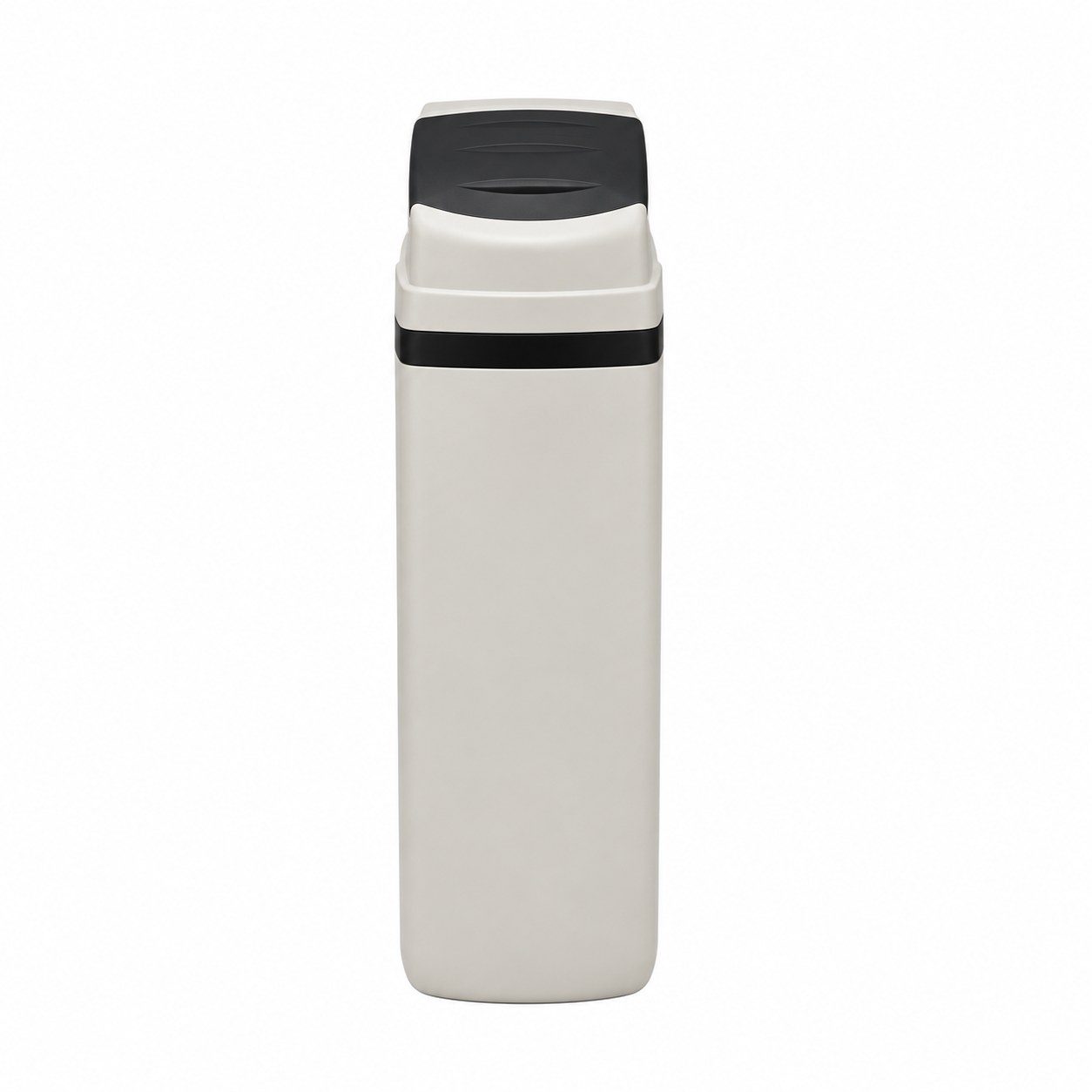
Thumbnail Filmstrip of 5900-BT Compact Cabinet Water Softener with Bluetooth Images

Free Fast Shipping
In the Continental U.S.

Water Experts
WQA Certified Technicians

5900-BT Compact Cabinet Water Softener with Bluetooth
Frequently Bought Together
Price Total
Description
Description
Whole House Soft Water in a Compact Cabinet Design
Enjoy the benefits of soft water without making room for a separate salt tank. The Clean Water Systems Compact Cabinet Water Softener with 5900-BT Bluetooth control combines the softening tank and salt storage in one attractive cabinet. Its slim profile and warm off-white finish make it a practical choice for a garage, utility room, or other protected installation area where floor space matters.
This salt-based whole house water softener removes the calcium and magnesium that cause hard water. It helps reduce new hardness scale in water heaters and plumbing, soap scum in showers, and mineral residue on fixtures. Choose a 24,000-, 32,000-, or 48,000-grain capacity from the size selector to match your water hardness and household water use. Every size includes USA-made ResinTech 10% crosslinked resin and a bypass valve with hard-water blending adjustment.
Compact outside. Automatic softening inside. A single cabinet keeps the equipment together, while the 5900-BT metered control tracks water use and manages regeneration. Bluetooth access through the Legacy View app makes it easier to review system information and settings from a compatible nearby phone or tablet.
Premium USA-Made ResinTech 10% Crosslinked Resin
The resin inside your softener matters. Every capacity option includes premium ResinTech 10% crosslinked water softener resin made in the USA. This upgraded resin provides greater resistance to chlorine attack than conventional 8% crosslinked softening resin, making it an excellent choice for homes with chlorinated city water.
Chlorine can gradually weaken a softening resin's structure. Additional crosslinking strengthens that structure and helps the resin resist oxidative damage. The result is improved durability and the potential for longer service life compared with standard lower-crosslinked resin under similar chlorinated-water conditions.
A resin upgrade built for the long run: Better chlorine resistance can translate into years of additional service, depending on chlorine exposure, water temperature, iron fouling, and maintenance. Actual resin life varies with water conditions; no fixed number of extra years applies to every installation.
Included Bypass Valve with Adjustable Hard-Water Blending
Your system includes a bypass valve that lets you route water around the softener when needed. It is a convenient way to keep untreated water available to the home while the softener is bypassed for maintenance or service.
The included bypass assembly also lets you blend a small amount of incoming hard water with the softened water. If you prefer a little residual hardness instead of water softened to near zero hardness, this adjustment gives you more control over the feel of your water.
Blending reintroduces some hardness and can reduce scale protection compared with fully softened water. Adjust the blending feature according to the supplied instructions and check the result with a hardness test. Our team can help you choose an appropriate setting. Where upstream treatment is needed for iron or other contaminants, review the blending arrangement with us before making adjustments.
Why Choose a Cabinet Water Softener?
- USA-made ResinTech resin: Premium 10% crosslinked softening resin in every size, with enhanced resistance to chlorine-related degradation compared with standard 8% crosslinked resin.
- Bypass valve included: Conveniently bypass the system for maintenance or use the blending adjustment to retain a little hardness if desired.
- One cabinet instead of two separate tanks: The resin tank sits inside the salt-storage cabinet, simplifying the equipment layout and reducing the space needed beside the softener.
- Actual hardness removal: Ion exchange removes dissolved calcium and magnesium rather than leaving those hardness minerals in the water.
- Demand-based regeneration: The electronic meter tracks treated water use so regeneration can respond to your household's needs, with a programmable day override when needed.
- 5900-BT Bluetooth control: Use the Legacy View app for convenient access to setup, status, water-use history, and regeneration controls within Bluetooth range.
- Three capacity choices: Select the size that suits your water test and usage rather than choosing by cabinet appearance alone.
- Easier everyday cleaning: Softer water helps reduce hardness-related soap scum and mineral buildup on showers, faucets, and sinks.
- Better soap performance: With less hardness interfering with lather, you may be able to reduce the amount of soap and detergent you use.
- Help with system selection: Clean Water Systems can review your water hardness, water use, and installation needs before you choose a size.
Choose Your Capacity: 24,000, 32,000, or 48,000 Grains
Grain capacity describes the amount of hardness a softener can remove between regenerations at its applicable salt setting. It is not the number of gallons the unit treats and does not describe its flow rate. The right choice depends on hardness, daily water demand, and how often the system should regenerate.
| Capacity option | Selection guidance | Product code |
|---|---|---|
| 24,000 grains | Consider for lower daily hardness demand. | WS006570 |
| 32,000 grains | Consider for moderate daily hardness demand or more capacity between regenerations. | WS006580 |
| 48,000 grains | Consider for greater daily hardness demand, subject to water quality and required service flow. | WS006590 |
Capacity and salt settings work together. Usable capacity between regenerations depends on the salt dose, water conditions, and programmed reserve. A larger grain capacity does not automatically mean a higher service flow rate. We recommend choosing your system using both your water test and the number of fixtures you expect to use at the same time.
A Simple Way to Estimate Daily Hardness Demand
Multiply your daily indoor water use in gallons by your hardness in grains per gallon (gpg). For example, 200 gallons per day × 15 gpg = 3,000 grains of hardness per day. The softener needs enough usable capacity to cover the desired time between regenerations, plus an appropriate reserve. If your test reports hardness as mg/L or ppm as calcium carbonate, divide by 17.1 to estimate gpg.
Household size is a starting point, but water use can vary considerably. Larger bathtubs, multiple showers, frequent laundry, and very hard water can all change the appropriate size. If your well water also contains iron or manganese, have the complete water test reviewed before selecting or programming the softener.
5900-BT Bluetooth Control and Automatic Regeneration
The 5900-BT Bluetooth control valve directs water through the softening resin and automatically runs the regeneration sequence. Its electronic meter measures treated water use. The controller uses the programmed capacity, hardness, and reserve to determine when regeneration is needed.
Regeneration can be scheduled for a convenient low-use time, such as overnight. Adjustable cycle times let the system be configured for its application, and the calendar day override can trigger regeneration if a selected number of days passes without a demand-based cycle.
Legacy View App Access
From a compatible Bluetooth-enabled phone or tablet, the Legacy View app provides access to system information without requiring you to read the controller directly. Depending on the connected controller and settings, you can:
- Review operating status and water-use history.
- Set the time of day and scheduled regeneration time.
- Start a regeneration or schedule one for the next regeneration time.
- Access programming and diagnostic information when working with technical support.
Bluetooth is a local connection used near the softener. The system operates automatically without leaving a phone connected. Consult Clean Water Systems before changing advanced capacity, salt, or cycle settings.
How This Salt-Based Cabinet Softener Works
Inside the cabinet is a pressurized tank containing ion exchange resin. As hard water passes through the resin, calcium and magnesium are exchanged for sodium ions. The treated water then flows to the fixtures connected downstream of the softener.
As the resin's softening capacity is used, the control valve initiates regeneration. A brine solution made from softener salt restores the resin's ability to remove hardness. The system rinses the resin and discharges regeneration wastewater to a suitable drain before returning to normal service.
Your routine job is to check the salt level, replenish it with suitable water softener salt, and keep the system maintained. Salt use and regeneration frequency depend on the selected size, salt setting, hardness, and actual water consumption.
For Hard City Water or Properly Pretreated Well Water
This compact whole house softener can be used on hard municipal water or suitable well water. For city water, consider a separate carbon filter if chlorine, chloramine, or taste and odor reduction is also a goal. The softener's primary job is hardness removal. Its chlorine-resistant resin improves durability, but does not replace a chlorine-removal filter.
For well water, test hardness along with iron, manganese, pH, and other relevant water-quality parameters. Sediment, oxidized iron, iron bacteria, and sulfur odors may require separate treatment ahead of the softener. A cabinet softener should be selected as part of the complete treatment plan when several water problems are present.
Installation Planning
A cabinet design saves equipment space, but you still need room for plumbing connections, salt filling, and future service. Install on a level surface in a protected location near a suitable drain and an unswitched electrical outlet, following the instructions for the selected model.
- Placement: Typically on the incoming cold-water supply before the water heater and after any required pretreatment.
- Drain: Provide a properly sized regeneration drain connection with the required air gap, plus the cabinet overflow arrangement specified in the installation manual.
- Power: Locate near a suitable unswitched grounded household electrical outlet for the supplied power adapter.
- Access: Leave clearance above and around the cabinet for adding salt, opening covers, plumbing, and service.
- Protection: Keep the softener out of freezing conditions and direct sunlight.
- Outdoor taps: Where practical, keep irrigation and other uses that do not need soft water upstream of the system.
Check the installation requirements and dimensions for the size selected before ordering. If you have limited clearance or need help matching plumbing connections, contact Clean Water Systems with the available space and your water test.
Cabinet Water Softener Frequently Asked Questions
What is a cabinet water softener?
A cabinet water softener places the resin tank inside the same outer cabinet used for salt storage. It performs the same basic ion exchange process as a conventional two-tank softener while keeping the equipment in one compact enclosure.
Does this system actually remove hard water minerals?
Yes. The resin removes dissolved calcium and magnesium through ion exchange. A salt-free scale conditioner works differently and generally leaves those hardness minerals in the water.
What makes 10% crosslinked ResinTech resin an advantage?
Compared with standard 8% crosslinked resin, its more highly crosslinked structure improves resistance to chlorine-related damage. This can extend resin service life in chlorinated water. All three sizes use USA-made ResinTech 10% crosslinked resin.
How many years will the resin last?
Service life depends on chlorine exposure, temperature, water quality, and maintenance. The upgraded resin is selected for durability and can outlast standard lower-crosslinked resin in comparable chlorinated-water conditions, but an exact lifespan or number of additional years cannot be promised for every home.
Is a bypass valve included?
Yes. The included bypass valve lets you route water around the softener for service or maintenance while keeping untreated water available to the home.
Can I leave a little hardness in my water?
Yes. The bypass assembly's blending adjustment lets you mix a controlled amount of incoming hard water with the softened water. Check the resulting hardness with a test kit and adjust according to the system instructions. Retaining hardness reduces the scale protection compared with fully softened water.
Which size should I choose?
Choose using your tested hardness, daily water use, desired regeneration interval, and peak household flow. Select from 24,000, 32,000, and 48,000 grains. Contact us if you would like help reviewing your water test and deciding which capacity is appropriate.
Does the 48,000-grain model provide more water pressure?
Grain capacity describes hardness-removal capacity, not water pressure or service flow. Pressure and flow depend on the supply, plumbing, valve, and resin tank configuration. Match both the capacity and the service-flow requirements to your home.
How often does it regenerate?
The interval varies with water use, hardness, programmed capacity, reserve, and day-override settings. Higher water use or harder water consumes capacity faster. The metered controller helps the system respond to actual treated-water use.
How much salt will it use?
There is no single monthly salt-use figure that applies to every home. Salt consumption depends on the regeneration salt setting and how often the system regenerates. Your system should be configured so the salt dose supports its programmed capacity.
Do I need Wi-Fi or a smartphone to use it?
No. The controller operates the softener automatically. A compatible smartphone or tablet provides optional local Bluetooth access through Legacy View; the phone does not need to stay connected.
Can I use it on well water?
Yes, when the well water is suitable for softening or is properly pretreated. Have a water test reviewed first, especially if you have sediment, iron staining, manganese, sulfur odor, or unusual pH.
Will it remove chlorine or sulfur odors?
This is a hardness-removal system. It should not be selected as a substitute for a carbon filter, sulfur treatment system, or other contaminant-specific equipment. Additional filtration can be paired with it when needed.
Will softened water eliminate every spot on glass?
It helps reduce spots caused by calcium and magnesium. Other dissolved minerals, including silica, may still leave residue after water evaporates. Softened water is not the same as deionized or reverse osmosis water.
Does softening lower total dissolved solids?
Ion exchange replaces hardness ions with sodium ions; it is not designed to lower TDS. A TDS meter cannot confirm whether a softener is working. Use a hardness test to check the treated water.
Can a homeowner install it?
A homeowner with appropriate plumbing experience may be able to install the system where local requirements permit. The job includes water-line connections, a compliant drain and air gap, power, and startup programming. Use a qualified installer when needed.
What maintenance does a cabinet softener need?
Check and replenish softener salt, watch for salt bridging, periodically test treated-water hardness, and follow the cleaning and service instructions. Use only manufacturer-approved maintenance products and procedures.
What Comes with Your Cabinet Water Softener?
- Compact cabinet softener in your selected grain capacity.
- 5900-BT Bluetooth metered control valve.
- USA-made ResinTech 10% crosslinked softening resin.
- Bypass valve with adjustable hard-water blending.
Get Help Choosing Your Compact Water Softener
Start with a water test and a realistic estimate of household water use. Clean Water Systems can help you decide whether a cabinet softener is a good fit, compare the three capacity options, and identify any pretreatment your water needs. Select your capacity above, or contact us for help matching the system to your home.


