_2.png)
 Request a Call
If your well water looks like tea or has a slightly bitter taste, tannins might be the reason. Tannins are natural organic compounds that come from decaying leaves, plants, and tree bark. They seep into groundwater, especially after heavy rain, giving your water a yellow or brown tint. While not harmful to health, tannins can stain laundry and fixtures and make water taste unpleasant.
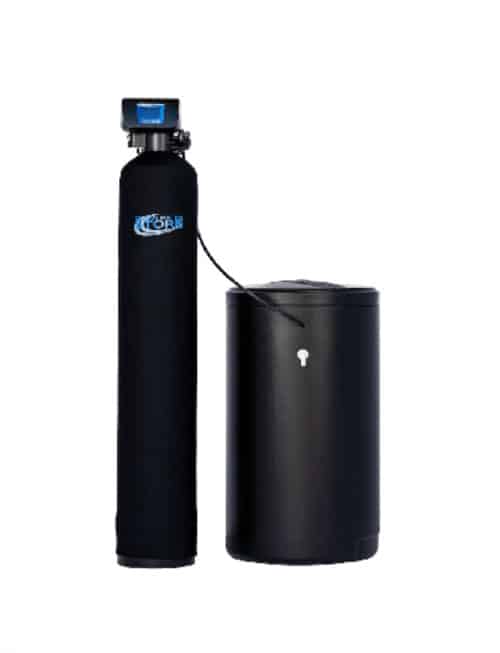
To confirm whether you have tannins in your water, start with an Easy Well Water Test Kit. If tannins are present, we recommend using one of our self-cleaning Tannin Filter Systems. These filters use a special process called ion exchange and regenerate with rock salt, making them effective and low-maintenance.
Where Do Tannins Come From?
Tannins come from humic acid, a major part of natural organic matter in soil, peat, coal, and plants. As rainwater or surface water flows through areas rich in vegetation, it carries tannins into shallow wells. This is why your water may look worse after storms or flooding.
How Can You Remove Tannins?
Tannins are tricky to remove with standard filters, but there are several proven methods:
- Tannin Filter Systems: Our automatic tannin filters regenerate with salt and are ideal for most residential wells.
- Combination Systems: If your water also contains iron or manganese, combining chlorination or ozone with a tannin filter can improve results.
- Advanced Methods: In more complex situations, options like flocculants, reverse osmosis, or ultrafiltration may be used, but these are usually reserved for large-scale or highly contaminated systems.
Why Treatment Design Matters
Every well is different. Water chemistry, flow rate, and the presence of other minerals can all affect how well a tannin filter works. That’s why it’s important to test your water first and choose the right solution for your specific conditions.
Tannins in Everyday Life
Tannins aren’t just in water—they’re in many foods and drinks you already enjoy, like tea, coffee, wine, and some fruits. These polyphenols give certain foods their astringent, slightly bitter taste and play a protective role in plants.
Are Tannins Harmful?
Tannins are not considered dangerous in drinking water. However, they can make your water taste off, look unappealing, and stain your fixtures and clothes. If you’re noticing any of these signs, it’s time to test your water and consider filtration.
Need help choosing the right system? Contact our team for personalized advice or explore our Tannin Filter Systems and Well Water Test Kits to get started.
Resources:
- U.S. Environmental Protection Agency (EPA) – Secondary Drinking Water Standards
https://www.epa.gov/sdwa/secondary-drinking-water-standards-guidance-nuisance-chemicals - Minnesota Department of Health – Iron and Manganese in Private Drinking Water Wells
https://www.health.state.mn.us/communities/environment/water/wells/waterquality/iron.html
Frequently Asked Questions (FAQs)
1. What are tannins in well water?
Tannins are organic compounds that come from decaying vegetation and can leach into well water, causing a yellow or tea-colored tint and sometimes a bitter taste.
2. Are tannins in drinking water harmful?
Tannins are not considered harmful to human health, but they can affect the color, taste, and odor of water, making it unpleasant to drink.
3. How do you remove tannins from well water?
You can remove tannins using ion exchange filters, tannin-specific resin systems, or a combination of oxidizers and filtration, such as chlorination followed by carbon filtration.
4. Can tannins affect water test results?
Yes, tannins can interfere with water testing by causing color distortion, which may impact the accuracy of results, especially when testing for iron or manganese.
5. Will boiling water remove tannins?
Boiling water does not remove tannins. In fact, it may concentrate them slightly as water evaporates, intensifying the color and taste.
6. Why does my well water turn brown after rain?
Heavy rain can wash organic matter into shallow wells, introducing tannins and causing the water to turn brown or tea-colored.
7. Can tannins in water stain laundry or fixtures?
Yes, tannins can cause yellow or brown staining on clothes, sinks, tubs, and toilets, especially when combined with iron.
8. Do tannins affect water pH?
Tannins are mildly acidic and can lower the pH of water slightly, which may affect treatment systems and water chemistry.
9. How do tannins differ from iron in water?
Tannins come from organic sources and cause a tea-colored stain, while iron is a mineral that causes reddish-brown staining and may leave a metallic taste.
10. What’s the best filter for tannin removal in well water?
The best option often includes a tannin filter with anion exchange resin regenerated with salt, or a combination system that addresses both tannins and iron, if present.


