_2.png)
 Request a Call
Well Water Smells? Here’s the 6-Step Fix

Odors in well water, which can affect drinking water quality, are commonly caused by iron and/or sulfur bacteria or compounds of iron, manganese, and sulfates. Hydrogen sulfide gas (“rotten egg odor”) frequently occurs in well water due to decaying organic matter, sulfate activity, and various species of sulfur or iron bacteria. For the full breakdown of what causes odor and how each treatment method works, see our complete guide: Fix Well Water That Smells Bad.
This guide walks through the process from symptom to installed system, in order, so you know exactly what to do next at each step.
1. Check Your Toilet Tank
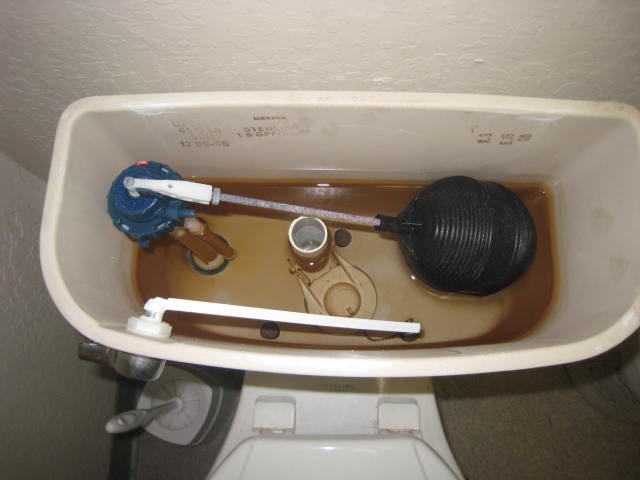
Unless it’s new or recently cleaned, your toilet flush tank can offer a wealth of useful water quality information. Lift the cover and look in. Slimy rust deposits with frothy bubbles usually mean iron bacteria. Furry, stringy red or black growths point to iron or sulfur bacteria respectively.
2. Check for Rotten Egg Smell in Cold & Hot Water
Run a hose bib or tap as close to the well as possible, fill a bucket, and check for odors. A “rotten egg” smell points to hydrogen sulfide gas. An oily or asphalt-like odor suggests manganese. A cucumber or sewage smell usually means iron or sulfur bacteria.
Run hot water from each tap to see if the odor is only present in hot water, not cold. If so, that points to your water heater, not your well. For the full diagnostic walkthrough, including the anode rod fix and what to do if it’s only on certain floors, see our guide: How to Tell If Odors Are Coming From Your Well or Inside the House.
3. Test Your Drinking Water

If there’s an odor problem, the first step is determining the source. A general mineral water analysis is critical to selecting the right system if the source is your well directly.
At minimum, test for pH, iron, manganese, hardness, total dissolved solids, and oxidation-reduction potential. Add tests for sulfate, hydrogen sulfide, and tannin. Take the sample as close to the well as possible, and test for free chlorine levels too, typical public supply concentrations run 0.5 to 2.0 PPM.
With these results, you can identify the right treatment and system for your water chemistry. If your water source is a public system, contact a utility official to determine whether the odor originates from the public system or from your own plumbing.
4. Determine Your Well Water Flow Rate
Before researching water treatment systems, you need to know your well’s flow rate, since every system has pressure or flow requirements. This just takes a bucket and a timer. See our full guide: How to Calculate GPM of a Well Pump for the complete step-by-step method and formula.
5. Choose a Disinfection Method
The most common method for killing odor-causing bacteria is injecting liquid chlorine as water flows through your pipes. You can also use a chlorine pellet feeder, or a metering pump with hydrogen peroxide instead of chlorine. These options generally need a carbon filter to remove trace tastes and odors, plus a contact tank for sufficient contact time.

Another option is ozone injection, which kills bacteria and oxidizes iron and manganese for filtration. Or use an oxidizing iron filter to handle both iron and hydrogen sulfide gas in one system, using air, chlorine, hydrogen peroxide, or ozone.
Not sure which method fits your situation? See our full comparison: Chlorination vs. Aeration, or if you’d rather avoid chemicals entirely, see How to Eliminate Rotten Egg Smell Without Chlorine.
6. Install Your System
Once you’ve tested your water, confirmed your flow rate, and chosen a method, browse our selection of odor-removing systems and read the installation guides to get it up and running. We’re here to help at any step along the way.
Resources
Minnesota Department of Health: Hydrogen Sulfide and Sulfur Bacteria in Well Water
Read More
-
- Fix Well Water That Smells Bad, the full overview of every treatment method.
- How to Tell If Odors Are Coming From Your Well or Inside the House
- How to Calculate GPM of a Well Pump
See how we make clean water simple, with proven systems, easy installation, and a 90-day guarantee. Whether your well or city water smells off or leaves stubborn stains, you don’t have to face it alone. The same goes if it’s damaging your appliances.

Article last updated August, 2026 by Author.


