_2.png)
 Request a Call
Updated October 2026 · Gerry Bulfin
Grit in the faucet aerators. Sand in the bottom of the toilet tank. A water heater that rumbles. Before you buy a sediment filter, find out what the particle is, because that decides the filter.
Match the filter to the particle. A filter finer than the sediment plugs fast. One coarser lets it straight through.
The short answer
| What you see | What it is | What removes it | Rated to |
|---|---|---|---|
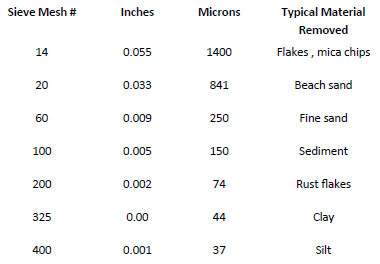
| Sand or grit that settles in seconds | Sand, well grit | Spin-down screen filter | 150–250 microns (100–60 mesh) |
| Cloudy water that clears in a few hours | Silt, fine sediment | Backwashing sediment filter, then a cartridge | About 5 microns, then 1–5 |
| Cloudy water that never clears | Colloidal clay | Ultrafiltration, or flocculation ahead of a backwash filter | 0.015 microns |
| Clear at the tap, orange or black after it sits | Dissolved iron or manganese | An iron filter, not a sediment filter | — |
Step 1: Find out what kind of sediment you have
Do a jar test. Fill a clear glass jar from a tap ahead of any filter. The drain at the pressure tank works. Set the jar on the counter and watch it.
- Settles to the bottom within a minute: sand.
- Settles over several hours: silt.
- Still cloudy after 24 hours: colloidal clay. A cartridge won’t catch it.
- Clear at first, then turns orange, brown or black: dissolved iron or manganese reacting with air. That’s not sediment, and a sediment filter won’t stop it.
Look at where it shows up.
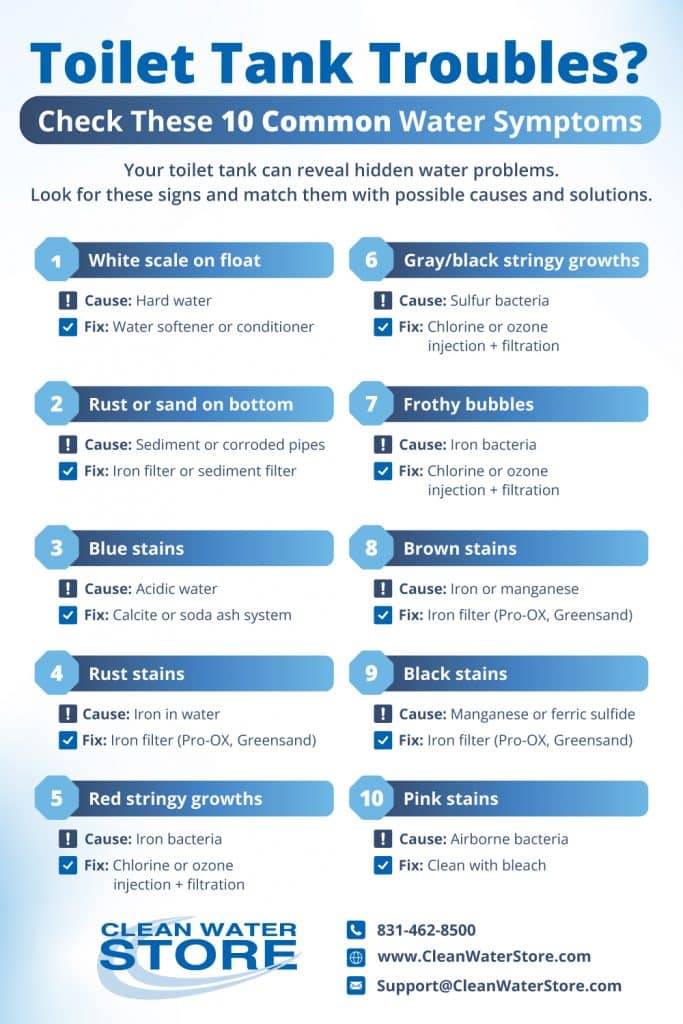
- Only in hot water: it’s coming from the water heater, not the well (see the table below).
- Blue-green stains: copper pipe corrosion.
- Rust flakes in a house with galvanized pipe: the pipe itself.
| Water heater “sediment” | Caused by |
|---|---|
| Blue or gray chips | Decaying dip tube |
| Black or sandy grit | Decaying glass liner |
| Black, orange or gray flakes | Decaying anode rod |
Drain the water heater once a year into a white 5-gallon bucket. It flushes the grit and shows you its color.

Test the water before you buy treatment. Test iron, manganese, pH, hardness and total dissolved solids, from a tap ahead of any filter. A home test kit or a lab test both work. The EPA also recommends testing a private well every year for coliform bacteria and nitrate.

Step 2: If sand showed up suddenly, check the well first
Sand in a well that used to run clean usually means something changed down the hole. The pump may be set too low, the well screen may be failing, or the pump may be drawing faster than the well recovers. A filter will catch the sand, but it won’t stop it wearing out the pump. What to do when your well starts pumping sand.
To flush sediment out of the well itself, run an outside hose that bypasses your treatment until the water clears. If it never clears, or the sand keeps coming back, the well needs a well contractor.
Step 3: Pick the filter
| Filter | Removes | Rated to | Upkeep |
|---|---|---|---|
| Spin-down screen | Sand, grit | 150–250 microns | Open the flush valve when the screen looks loaded |
| Cartridge | Silt, fine sediment | 1–50 microns | Replace the cartridge |
| Backwashing sediment filter | Silt, turbidity | About 5 microns | Backwashes itself; media lasts years |
| Ultrafiltration (UF) | Colloidal clay, bacteria, cysts | 0.015 microns | Backwashes itself; needs a cartridge prefilter |
Spin-down screens
Use 60 mesh (250 microns) for coarse sand and 100 mesh (150 microns) for fine sand and new-well grit. The clear housing shows you when to flush. Silt passes straight through. Spin-down filters
Cartridge filters
A 5-micron cartridge stops nearly everything 5 microns and larger. Put a pressure gauge before and after the housing, and change the cartridge when the drop climbs about 10 psi over a new one. If you’re changing it every few weeks, the sediment load is too heavy for cartridges alone: put a backwash filter ahead of it. Cartridge filter systems

Backwashing sediment filters
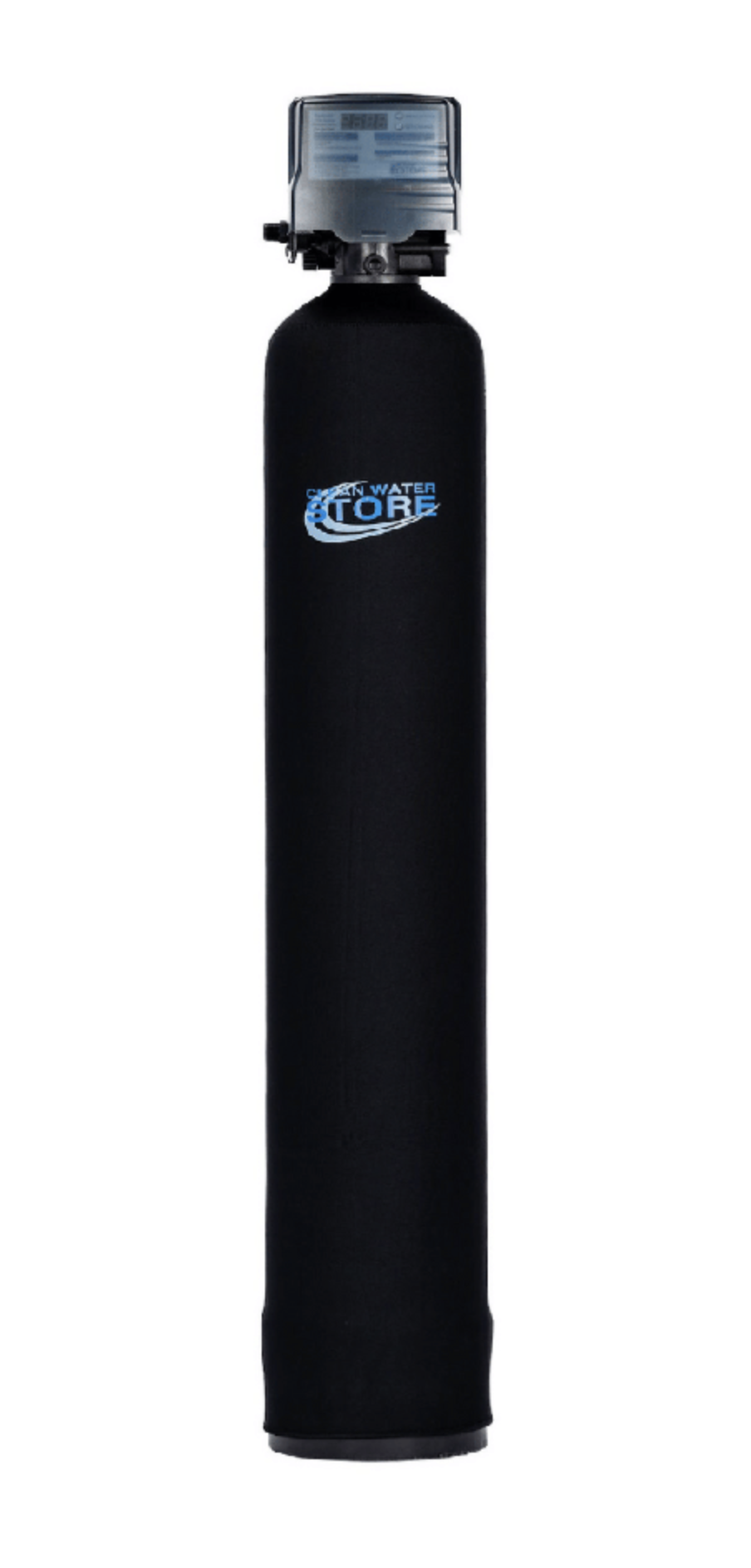
A bed of natural zeolite filters to about 5 microns. The control valve backwashes the bed on a schedule and sends the dirt to a drain, so there’s no cartridge to buy. A manual version needs no electricity. Sediment backwash filters
The limit: your well pump has to deliver the backwash flow. If it can’t, the bed never fully cleans and the filter slowly becomes the clog.
| Filter size | Max service flow | Backwash flow needed |
|---|---|---|
| 0.5 cu ft | 6 GPM | 4 GPM |
| 1.0 cu ft | 10 GPM | 7 GPM |
| 1.5 cu ft | 12 GPM | 8 GPM |
| 2.0 cu ft | 14 GPM | 12 GPM |
To check your pump, time how long a 5-gallon bucket takes to fill at a hose bib near the pressure tank. GPM = 300 ÷ seconds. 30 seconds is 10 GPM.
Ultrafiltration
A hollow-fiber membrane filters to 0.015 microns. It removes the colloidal clay that leaves water cloudy for good, plus bacteria and cysts. It keeps the minerals; it doesn’t soften the water or remove dissolved iron. It needs a cartridge prefilter ahead of it. Ultrafiltration systems
Flocculation
Some water carries clay, color or tannin too fine to filter. A flocculant (alum, ferrous sulfate or chitosan) is injected ahead of the filter. It clumps the fine particles together so a backwash filter or cartridge can catch them. The dose and contact time depend on your water, so this one gets designed from a test, not picked off a chart.

Size it for your peak flow
Size the filter for the most water the house uses at once, not the daily average. The fixture count calculator estimates it from your bathrooms and fixtures. Then compare that number with your pump’s output from the bucket test.
A typical setup for well water with sand and silt

- Spin-down screen after the pressure tank. Takes the sand out before it reaches anything else.
- Backwashing sediment filter. Removes silt down to about 5 microns and flushes it to drain.
- 1-micron cartridge. The final polish. It lasts because stages 1 and 2 do the heavy work.
Sediment filtration goes ahead of a softener, iron filter or UV light. UV can’t disinfect through cloudy water.
What a sediment filter won’t fix: hardness (that’s a softener), bacteria (UF is the exception; otherwise chlorination or UV), and odor.

Gerry Bulfin is a Grade II California Water Treatment Operator, Master Water Specialist and WQA Certified Installer, and owner of Clean Water Store in Santa Cruz.


