_2.png)
 Request a Call
Ice Safety: How an Under-Sink RO System Makes Your Ice Cleaner, Clearer & Safer

When was the last time you gave your ice a second thought? Most of us don’t. But the safety of your ice is directly tied to the quality of the water and the cleanliness of the ice-making system.
If your tap water contains chlorine, bacteria, metals, or other contaminants—or if your ice maker is neglected—you could be freezing in potential health risks.
Installing a certified under-sink reverse osmosis (RO) system is one of the most effective ways to improve ice clarity, taste, and safety, especially in areas with high chlorine, excess salts, metals, or sediment.
Introduction to Ice Safety
Ice safety is an often-overlooked but vital part of ensuring your beverages are enjoyable and safe. Whether using a home ice maker, commercial ice machine, or ice trays, ice quality depends on more than just freezing water. Impurities, bacteria, and contaminants can enter ice, affecting taste, odor, and posing health risks.
Using filtered water in your ice machine helps remove substances that impact flavor and safety. Regular maintenance and filter changes keep ice clean, clear, and free from harmful bacteria. Prioritizing ice safety protects both beverage quality and the health of those who drink them.
Ice Can Be Contaminated by Water Chemistry and Equipment
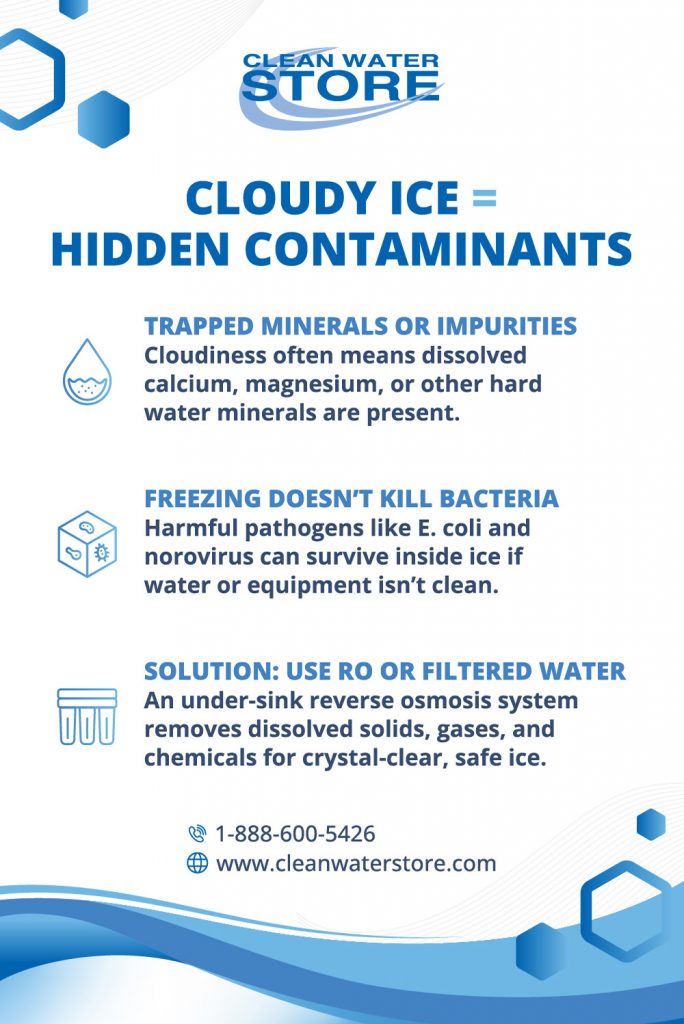
While it may seem innocent, ice is essentially frozen water, and any impurities present in the water will be concentrated in ice cubes. Bacteria such as E. coli and norovirus can survive freezing, and mold or slime inside ice makers can transfer to the cubes.
To reduce the risk of pathogens contaminating ice, it’s important to regularly test and filter your home’s water. According to food safety authorities, pathogens found in the water supply can survive freezing and contaminate ice through dirty equipment or poor handling.
Cloudy Ice Signals Impurities (Not Just Air Bubbles)
Cloudy ice typically traps minerals and dissolved air. While not always unsafe, it can indicate higher levels of contaminants in your water and a lower quality freeze.
Water hardness, caused by dissolved minerals like calcium and magnesium, can also contribute to cloudy ice and lead to scale buildup in ice makers.
Chemicals Affect Taste and Smell
Chlorine, metals, or volatile organic compounds (VOCs) in tap water can freeze into ice cubes, resulting in unpleasant taste or odor in drinks and potentially masking chemical contaminants.
Water filtration systems are designed to remove chlorine, which helps improve the taste and odor of ice cubes.
Official Guidance on Ice Hygiene
Authorities like the FDA regulate packaged ice as a food product, requiring manufacturers to use water that meets EPA drinking-water standards, maintain sanitary equipment, and prevent cross-contamination.
The CDC advises that during a water supply advisory—such as an outbreak or chemical contamination—you should avoid using ice from any appliance connected to the water line, including refrigerator dispensers or ice makers.
When an advisory is in effect, it’s also critical to discard any existing ice from your fridge, flush the water lines for several minutes, and begin making ice only with boiled or bottled water once the advisory lifts.
Does Your Tap Water Meet Safety Standards?
Regulations Govern Water Quality, Not Ice Quality
U.S. utilities must comply with standards under the Safe Drinking Water Act, enforced by the Environmental Protection Agency (EPA). These regulations ensure that over 90 known contaminants—like bacteria, lead, and VOCs—remain below safety thresholds in public tap water.
Yet, even compliant water may contain trace contaminants that affect ice clarity and taste. Using filtered water leads to improved ice clarity, taste, and safety by reducing these trace impurities.
Tap Water May Still Carry Hidden Impurities
Water utilities’ annual water quality reports often list elements like chlorine byproducts or microplastics—something few regularly check. And flavor or aesthetic issues often stem from secondary contaminants that aren’t strictly regulated but can degrade ice quality.
Removing these hidden impurities from your water can make daily life easier and more enjoyable by ensuring better-tasting ice and beverages.
Why an Under‑Sink RO System is Ideal for Ice Safety
An under-sink RO system offers exceptional purification by combining sediment filters, activated carbon, and a semipermeable membrane, removing contaminants from your ice before it’s ever frozen.

The installation process for under-sink RO systems is typically straightforward and user-friendly.
Comprehensive Contaminant Removal
An under‑sink reverse osmosis (RO) system can filter out a range of harmful substances—such as chlorine, heavy metals (lead, arsenic), VOCs, bacteria, nitrates, and protozoa—delivering ultra‑pure water that significantly improves ice quality and safety (EPA overview of reverse osmosis contaminant removal).
These systems are certified to remove even very small particles (as small as 0.0001 microns), making them one of the most effective home water solutions available.
Better Clear Ice Clarity and Taste
Since RO removes dissolved solids and gases, ice cubes freeze evenly and transparently. You’ll notice a dramatic improvement in flavor and appearance—no more cloudy or chemical-tasting ice cubes.
Clearer, better-tasting ice enhances the overall quality of any drink it is served with.
Healthier Ice for Sensitive Groups
For infants, immunocompromised individuals, or seniors, RO water reduces exposure to microbial and chemical contaminants, offering peace of mind that your ice is microbiologically safer.
Reliable Feed for Ice Makers
When properly sized with adequate storage tank capacity and installation kits, RO systems connect easily to ice makers or refrigerators. Most RO systems are designed to be easy to install with standard kits, making the setup process straightforward for most users. To prevent pressure-related cube size issues, using a second storage tank is sometimes recommended, BOS
Inline Water Filters: An Alternative Solution
For those without a built-in water filtration system in their refrigerator or ice maker, inline water filters provide a straightforward way to enhance ice quality. These filters attach directly to the water supply line feeding your ice machine, providing filtered water that creates clearer, better-tasting ice cubes.
Inline filters remove contaminants such as chlorine, lead, and volatile organic compounds, which can affect the taste and safety of ice. They are ideal for portable ice makers, commercial ice machines, or setups that lack access to filtered water. Easy to install and compatible with most filtration systems, inline filters are a practical upgrade that noticeably improves ice quality and safety.
Hygiene Practices for Safe Ice
Even with the best water quality, ice safety depends on maintaining the hardware and adhering to good hygiene habits.
When purging filters or cleaning the ice maker, use a bucket to collect water and manage any excess during the process.
Monthly Cleaning is Essential
Industry guidelines recommend cleaning and sanitizing ice maker bins, dispensers, scoops, and trays at least monthly to prevent microbial buildup or mold growth. Food Safety BlogFoodSafePal®.
Avoid Bare-Hand Contact
Always use sanitized scoops and avoid touching ice directly. Contamination is easily transferred from hands or utensils to ice cubes or storage containers.
Store Ice Safely
Keep ice in sealed, food-safe bins. Do not store ice near contaminants or in open containers where airborne dust, freezer odor, or particles can settle.
Discard Old Ice or Cloudy Ice
Replace old ice regularly, especially if it’s cloudy or has an unpleasant odor. Cloudy ice isn’t always dangerous, but it’s a signal that impurities are present in the freezing water or ice maker environment.
Filtration System Maintenance: Keeping Your Ice Safe
Keeping your ice machine’s filtration system in good condition is essential for safe, high-quality ice. Over time, filters can become clogged with bacteria, heavy metals, and minerals, which can affect the taste and safety of the ice.
Regular filter changes—every six months to a year—help maintain water quality. Besides replacing filters, clean the ice machine to prevent scale, mold, and bacteria buildup. Neglecting maintenance leads to poor ice quality, bad flavors, and health risks. Proper upkeep ensures your ice stays clean, clear, and safe.
At‑Home Filtration vs. Bottled or Bagged Ice
Is Store-Bought Ice Always Safer?
Unfortunately, not always. While commercially packaged ice is regulated, contamination can still occur during manufacturing or transport. During flooding or water treatment failures, manufacturers have sometimes used contaminated municipal sources, resulting in past illnesses.
Filtered Home Ice Often Outperforms Retail Ice
Ice made at home using well-maintained RO filtration and hygienic practices frequently outperforms retail ice in terms of clarity, taste, and microbial safety.
Compared to built-in fridge filters, dedicated home filtration systems often provide superior water quality, resulting in even clearer and better-tasting ice.
Practical Benefits of RO Ice
| Benefit Category | Under-Sink RO Ice | Tap Water Ice (No RO) |
|---|---|---|
| Contaminant Removal | Removes chlorine, metals, microbes, VOCs | May contain trace chemicals and microorganisms |
| Ice Clarity & Taste | Crystal-clear, odor-free | Cloudy, chemical or metallic taste |
| Microbial Safety | Lower risk when paired with hygienic practices | Higher risk from bacterial or mold contamination |
| Maintenance | RO system needs filter/membrane replacement | Requires regular device cleaning and good hygiene |
| Cost & Waste | Higher upfront cost, low ongoing waste | Lower cost; water quality depends on supply |
Environmental Impact of Ice Makers
The environmental footprint of ice makers goes beyond energy use. Many people use bottled water for ice, but this creates plastic waste and adds carbon emissions from production and transport. Ice machines using unfiltered water can become less efficient, consuming more energy and needing more maintenance. Switching to filtered water from a dedicated filtration system reduces reliance on bottled water and cuts plastic waste.
Maintaining your ice machine and choosing energy-efficient models further lowers environmental impact. Using a water filtration system improves ice quality and supports a more sustainable way to enjoy fresh ice at home or in business.
Cost and Budget Considerations for Ice Makers
When evaluating ice makers and ice machines, consider both upfront and ongoing costs. Models with built-in water filtration may cost more initially, but often produce better-tasting ice and need less maintenance due to less scale and bacterial buildup. Replacement filter costs vary by model and quality, but regular changes are essential for ice quality and safety.
In commercial settings, maintenance and filter expenses add up but are vital for customer health and satisfaction. Over time, investing in a reliable water filtration system can save money, reduce bottled water use, lower environmental impact, and provide consistently better-tasting ice. Considering these benefits helps you make a smart, budget-friendly choice for home or business.
Final Thoughts
Ice is more than just frozen water—it’s a reflection of both water quality and hygiene. Even when tap water meets official safety standards, impurities, chlorine, or microbial contamination can compromise the clarity, taste, and safety of your ice.
Investing in a certified under-sink reverse osmosis system ensures cleaner water for ice—and when paired with strict cleaning routines and hygienic handling, it delivers clearer, tastier, and safer ice. Whether for everyday hydration or entertaining, RO water takes your ice quality to the next level.
Would you like product recommendations for under-sink RO systems proven to deliver clean ice, or a cleaning routine checklist for your ice maker? I’d be happy to provide them.
Frequently Asked Questions (FAQs)
1. Can ice be contaminated even if the water is filtered?
Yes. Dirty ice bins, scoops, or trays can transfer bacteria to ice, even when the water source is clean.
2. Is ice made from tap water safe?
It depends on your water quality—chlorine, minerals, bacteria, or metals may freeze into cubes.
3. Why does my ice taste or smell bad?
Likely due to chlorine, impurities, mold growth, or stale freezer odors.
4. Can mold or bacteria grow in my ice maker?
Yes—especially if it’s not sanitized regularly.
5. What’s the best water for ice?
Filtered or reverse osmosis water—preferably from an under-sink RO system.
6. How often should I clean ice trays or machines?
At least once a month, more often if odors or buildup appear.
7. Can ice carry viruses or bacteria?
Yes—if the water or maker is contaminated, ice can harbor pathogens like E. coli and norovirus.
8. Is store-bought ice safer?
Not always. Contamination can occur during production or storage. Home-filtered ice is often safer.
9. Why is ice cloudy?
It usually contains trapped air and dissolved solids, signaling possible impurities.
10. How can I make sure my ice is safe?
Use RO-fed water, clean and sanitize your ice maker monthly, handle ice safely, and store it in sealed, clean containers.


