_2.png)
 Request a Call
What Water Treatment System Do I Actually Need? A Buyer’s Guide by Symptom
Most homeowners come to us knowing something is wrong with their water. The smell, the staining, the scale on the faucets, or the taste. Something is off and they want it fixed. But the water treatment industry is full of systems that solve different problems, and buying the wrong one wastes money without solving anything.

Article updated July 2026
This guide is organized around your specific symptoms. Find what you are dealing with, and we will tell you exactly which system addresses it and why. Whether you have city water or well water.
The most important thing to know before you start: symptoms give you clues, but a water test gives you facts. Some problems look identical on the surface but require completely different treatments. A water test takes the guesswork out and ensures you buy the right system the first time.
Not sure where to start?
Order a water test and our WQA-certified specialists will review your results and recommend the right system for your specific water — no pressure, no overselling.
How to Read This Guide
Each section below starts with a symptom and leads to the system that addresses it. We also note when a symptom could have more than one cause, which is exactly why testing before buying matters.
If you are on city water, start by pulling your annual Consumer Confidence Report (CCR) from your utility’s website. The EPA requires every public water system to publish one annually. It lists what was detected in your water and at what levels. This tells you what your city is treating for and what may still be present at your tap.
If you are on well water, the EPA does not regulate your water supply — you are responsible for testing and treating your own water. The CDC recommends testing at minimum annually for bacteria, nitrates, pH, and hardness.
Symptom: My Water Smells Like Rotten Eggs or Sulfur
What it is: Hydrogen sulfide gas (H2S) dissolved in your water. Almost always a well water problem. The smell ranges from a faint eggy odor at the tap to an overwhelming sulfur smell when you run the shower or fill a bath. It often gets worse with hot water.

What you need:
-
- Mild odor, no iron: Hydrogen peroxide injection system (J-PRO proportional flow) followed by a catalytic carbon backwash filter. Peroxide oxidizes the hydrogen sulfide and the carbon removes the oxidized particles. Leaves no chemical residue in your water.
- Moderate to strong odor with iron: Chlorine injection with a contact tank followed by a carbon backwash filter. Chlorine oxidizes both sulfur and iron simultaneously and is more effective at higher concentrations of either.
- With iron bacteria (orange slime in toilet tank): Chlorine injection is required — it kills iron bacteria that would otherwise foul filter media.
Test for: Hydrogen sulfide, iron, iron bacteria, pH.
Read more: Why Hydrogen Peroxide Is Often Better Than Chlorine for Well Water Odor
Symptom: Orange or Rust-Colored Staining
What it is: Iron. The most common well water problem in the United States. Iron stains fixtures, laundry, and dishes orange or rust-colored and gives water a metallic taste.
What you need:
-
- Dissolved iron below 10 ppm, no bacteria: Pro-OX 7500 iron filter — oxidizes and filters iron and manganese without chemicals. Low maintenance, self-backwashing.
- High iron, manganese, or iron bacteria present: Chlorine injection before the iron filter — chlorine kills iron bacteria and oxidizes high iron and manganese levels more effectively than air injection alone.
- Iron combined with sulfur odor: Chlorine injection with contact tank, then iron filter, then carbon backwash filter to remove chlorine residual.
Test for: Iron (ferrous and ferric), manganese, iron bacteria, pH.
Read more: J-PRO Chlorinator Setup Guide for Well Water
Symptom: My City Water Tastes or Smells Like Chlorine or a Swimming Pool
What it is: Chlorine or chloramine used by your municipal water system to disinfect the water. According to the EPA, more than one in five Americans receive water treated with chloramines rather than standard chlorine, a distinction that matters for choosing the right filter.
What you need:
-
- Standard chlorine: Carbon backwash filter (GAC or coconut shell carbon) removes chlorine effectively and improves taste and odor throughout the whole house.
- Chloramines: You need catalytic carbon specifically like in this city water whole house system — standard carbon cannot break down chloramines at an adequate rate. Confirm which disinfectant your city uses by checking your CCR.
- City water with hardness: Pair the carbon backwash filter with a water softener. The carbon filter must go first to protect the softener resin from chlorine damage.
For a complete city water solution: See our City Water Whole House Filtration and Softening Bundles.
Read more: Do I Need a Whole House Filter AND a Water Softener for City Water?
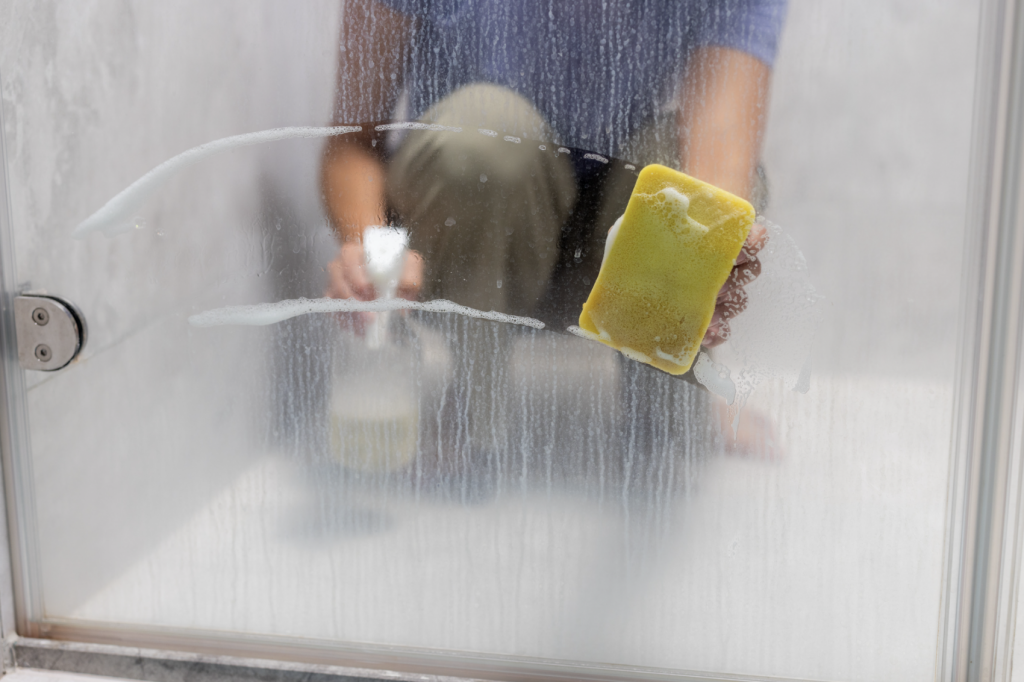
Symptom: Scale Buildup, Spotted Dishes, Dry Skin and Hair
What it is: Hard water — elevated calcium and magnesium that leave mineral deposits on fixtures, appliances, dishes, and skin. According to the USGS, approximately 85% of US homes have hard water.
What you need:
-
- Hardness above 7 gpg: Water softener (5900-BT) or 7500 Upflow softener — removes hardness minerals through ion exchange. Most effective solution for significant hardness.
- Moderate hardness under 12 gpg, no salt preference: Salt-free conditioner (TAC system) — prevents scale formation without removing minerals. Not as effective for very hard water or soap performance.
- City water: Always install a carbon backwash filter before the softener to protect the resin from chlorine degradation.
Read more: Why Hard Water Gets Worse in Summer — and What to Do About It
Symptom: My Well Water Tested Positive for Bacteria
What it is: Coliform or E. coli contamination in your well. This is a health issue, not an aesthetic one, and requires immediate action. The EPA recommends testing private wells at least once per year for bacteria — contamination can enter through aging well casings, surface runoff, or nearby septic systems.

What you need:
-
- Confirmed bacteria: Chlorine injection system with adequate contact time — chlorine provides a residual that continues working through your plumbing and is verifiable with a simple test strip. UV alone is not sufficient if water is not pretreated and clear.
- Recurring bacteria or surface water influence: Chlorine injection with contact tank plus UV at the final stage provides the most comprehensive protection.
- Shock chlorinate first: Before installing a permanent system, shock chlorinate the well to establish a clean baseline.
Read more: Well Water Chlorinators: Low-Cost Disinfection for Home Well Systems
Symptom: Low pH, Blue-Green Stains, or Pinhole Leaks
What it is: Acidic water (pH below 6.5) corroding copper pipes and fixtures. Blue-green staining on sinks and tubs is the telltale sign — it’s copper leaching from your pipes into the water. Over time, acidic water causes pinhole leaks and costly plumbing damage.
What you need:
-
- pH between 6.0 and 6.8: Acid neutralizer (calcite or calcite/magnesium oxide blend) — raises pH passively as water flows through the media. Low maintenance, no chemicals required.
- pH below 6.0: Soda ash injection system — injects sodium carbonate to raise very low pH. More effective for extreme acidity than a calcite neutralizer alone.
- If iron is also present: Install the acid neutralizer before the iron filter — correcting pH first improves iron filter performance significantly.
Symptom: Sediment, Sand, or Grit in Water
What it is: Sand, silt, clay, or fine particles entering from your well or city main. Sediment clogs fixtures, damages appliances, and shortens the life of downstream treatment equipment.
What you need:
-
- Moderate to high sediment loads: Sediment backwash filter (7500) — self-cleaning, handles high sediment loads without cartridge changes. First stage of any multi-system treatment setup.
- Light sediment or as final polishing: Cartridge filter — lower cost, suitable for light loads, but requires regular cartridge replacement.
- Always the first system installed: Sediment pre-filtration protects every downstream system — iron filters, softeners, carbon filters — from premature clogging and wear.
Symptom: Arsenic in My Well Water
What it is: Arsenic occurs naturally in groundwater in many regions — particularly the western US, New England, and parts of the Midwest. It is colorless, odorless, and tasteless at concentrations that exceed safe levels. The EPA maximum contaminant level for arsenic in public water is 10 parts per billion.
What you need:
-
- Whole house arsenic filter system — uses adsorptive media specifically designed for arsenic removal. Requires pH and oxidation state to be correct — a complete water test is essential before sizing.
- Under-sink reverse osmosis as a point-of-use alternative for drinking water only.
The System Order That Matters
For well water customers installing multiple systems, the order in which they are installed determines whether they work correctly. A correctly sequenced system treats each problem without interfering with the next stage:

-
- Sediment pre-filter — first, always
- Acid neutralizer (if pH is low)
- Chlorine or peroxide injection (if bacteria, iron bacteria, or high iron/sulfur)
- Contact tank (if using chlorine for bacteria or high oxidant demand)
- Iron filter
- Water softener (if hardness is present)
- Carbon backwash filter (removes chlorine residual and remaining taste/odor)
- UV system (final biological protection, if needed)
- Reverse Osmosis for drinking water purification.
Not every property needs every stage. Your water test tells you which ones are required.
Read more: How Do I Know If One System Will Work or If I Need Multiple Systems?
Not sure which system is right for your water?
Schedule a free call with one of our WQA-certified water specialists. We review water test results every day and help homeowners across the country find the right solution — no guesswork, no overselling.
Related Resources
- How Do I Know If One Water System Will Work or If I Need Multiple Systems?
- Do I Need a Whole House Filter AND a Water Softener for City Water?
- When Should You Test Your Well Water? A Summer Checklist
- Identifying Well Water Problems by Symptoms
- Is Your City Testing for this? What to look for in your CCR
- Best Budget-Friendly Whole House Water Filters
Sources & Further Reading


