_2.png)
 Request a Call
Is Your City Testing for This?
Is Your City Testing for This?
Every year, your water utility sends out a report. It has a lot of numbers on it, a few chemical names you don’t recognize, and a line that says everything is “within acceptable limits.” Most people glance at it, feel reassured, and move on.
Here’s the part that report doesn’t make obvious: acceptable limits and good tasting, good feeling water are not the same thing.

We sell whole house water filters to city water customers across the country, but we do not recommend them for everyone. Think of it like getting your eyes tested before you buy glasses. You wouldn’t want a prescription based on a guess, and you shouldn’t get a water treatment recommendation that way either. Before we suggest anything, we look at your specific water chemistry first.
Every filter and treatment system serves a different purpose. A system built for chlorine taste and smell isn’t the same one you’d need for PFAS, and neither is the one you’d need for hard water. Our goal isn’t to sell you a system. It’s to make sure you buy the right one if you need it to improve your water quality.
What Does My City Test For?
City water testing is built around a specific job: keeping the water legally safe to drink. Utilities test for things like bacteria, lead, and a defined list of regulated contaminants, and they report the results each year in a Consumer Confidence Report set by state and federal guidelines.
What they are not required to test for, and often don’t, includes things like:
-
- Chlorine and chloramine byproducts that affect taste and smell
- Water hardness, which affects everything from your skin to your appliances
- PFAS (“forever chemicals”), which many municipalities are only beginning to monitor
- Localized issues in your specific neighborhood’s pipes, which can differ block by block from the treatment plant’s own numbers
In other words, the report tells you the water met the bar. It does not tell you what is actually coming out of your tap, in your house, today.
Why Does My Water Taste Different in Late Summer?
Late summer puts extra strain on municipal systems. Higher demand, warmer source water, and more disinfectant used to keep things safe all add up to water that can taste and smell noticeably different this time of year, even when it is still technically passing every required test.
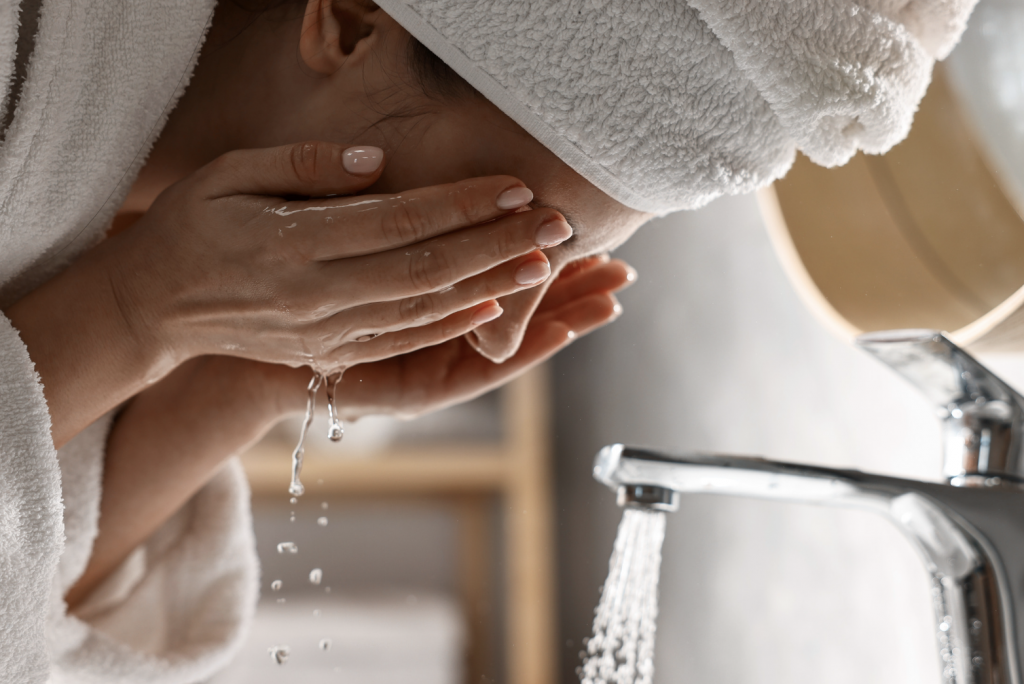
If you’ve noticed your tap water tasting a little more “chemical,” or smelling slightly different than it did in the spring, this is very likely why. It is not your imagination, and it is not necessarily a sign of a serious problem. It is what typically happens to city water systems under summer stress.
What Can I Do About City Water Quality?
Pull your city’s most recent Consumer Confidence Report. It’s public, usually a quick search away, and worth five minutes to see what’s actually being tested and reported in your area.
Test your own tap water. A simple at-home test kit can tell you what your city’s annual average can’t, since it reflects your specific water, in your specific pipes, right now.
Talk to someone who reads these reports for a living. If something in your results looks off, or you just want a second opinion, our water specialists look at this kind of data every day and can help you figure out what it means.
What Water Filter is Best for City Water?
Once you know what’s really in your water, the fix usually depends on what you’re dealing with:
-
- Taste and smell from chlorine or chloramine: A whole house carbon filtration system removes these at the point your water enters your home, so every tap, not just your kitchen sink, gets clean tasting water.
- PFAS or other contaminants your city isn’t required to remove: A reverse osmosis system is the most reliable way to filter these out at the point of use, or a specialized whole house system like our Whole House PFAS & Lead Filtration & Softening System
- Hardness affecting your skin, hair, or appliances: A water softener addresses this separately from taste and contaminant issues, since hardness is a mineral problem, not a chemical one. We carry various city bundles designed for specific kinds of water.
Your city is doing its job. But “meets the standard” and “tastes and feels great in your home” are two different bars, and only one of them is something you can actually check for yourself, and do something about.
Not sure which fix is right for your water? Chat with a water specialist and we’ll help you figure out exactly what your water needs, based on your city’s report and your own test results.
Article last updated July 2026.

Related Articles
What’s the Best Complete Water Testing Kit for City Water?
Best Water Filter System for PFAS in City Water
Why Does My City Water Smell Bad?


