_2.png)
 Request a Call
Whole House Carbon Filters vs. Water Softeners: Which is Better for Combatting Dry Hair?
Many people are unaware that water quality can significantly affect hair and skin health. Whole house carbon filters vs water softeners are two common solutions for addressing issues like dry hair caused by dissolved minerals in hard water and chlorine.
Both systems work differently, and in this guide, we’ll help you determine which option is best for your home.
Whole house carbon filters and water softeners offer solutions to these problems, but they work differently and address different issues. This post explores the benefits of each, helping you decide which system is best for maintaining healthy, hydrated hair and skin.
Introduction to Water Treatment
Water treatment is a crucial process that helps remove contaminants and impurities from water, making it safe for drinking, cooking, and other household uses. One of the most effective ways to treat water is by using a water filtration system, which can remove a wide range of contaminants, including bacteria, viruses, and dissolved solids.
Water softeners, on the other hand, are designed to remove calcium and magnesium minerals that cause water hardness, which can lead to scale buildup and damage to plumbing fixtures. In this section, we will explore the different types of water treatment systems, including water softeners, water filtration systems, and salt-free water softeners, and how they can help improve water quality.
Whole House Carbon Filters vs Water Softeners: How They Work
One common question homeowners ask is which is better for hair health: whole house carbon filters vs water softeners.
Is it chlorine causing the problem, harsh minerals in the water, water contamination, or all of the above?
Whole House Carbon Filters
These filters are designed to remove chlorine, chloramines, and other chemical contaminants from the water. Chlorine, commonly used in municipal water supplies to disinfect, can strip the natural oils from your hair and skin, leading to dryness and damage.
Activated carbon filters are used to absorb these chemicals, improving water quality and making it gentler on hair and skin.

How Filtration Systems Work
Filtration systems work by using a process called adsorption, where contaminants are attracted to the surface of the filter media, such as activated carbon or carbon filters. The filter media is designed to remove specific contaminants, such as chlorine, volatile organic compounds (VOCs), and heavy metals. Whole-house carbon filters, for example, can remove a wide range of contaminants, including chlorine, lead, and mercury, making them an effective solution for improving water quality. Reverse osmosis systems, on the other hand, use a semi-permeable membrane to remove dissolved solids and other contaminants, providing a comprehensive water treatment solution.
Water Softeners
These systems are designed to remove hardness minerals like calcium and magnesium from water. Hard water can cause mineral buildup on hair and skin, making hair feel heavy, rough, and prone to breakage.
Water softeners use an ion-exchange process involving resin beads to replace these hardness minerals with sodium or potassium ions. The resin beads attract and hold onto the hard minerals, resulting in softer water that feels smoother and is easier to lather and rinse.
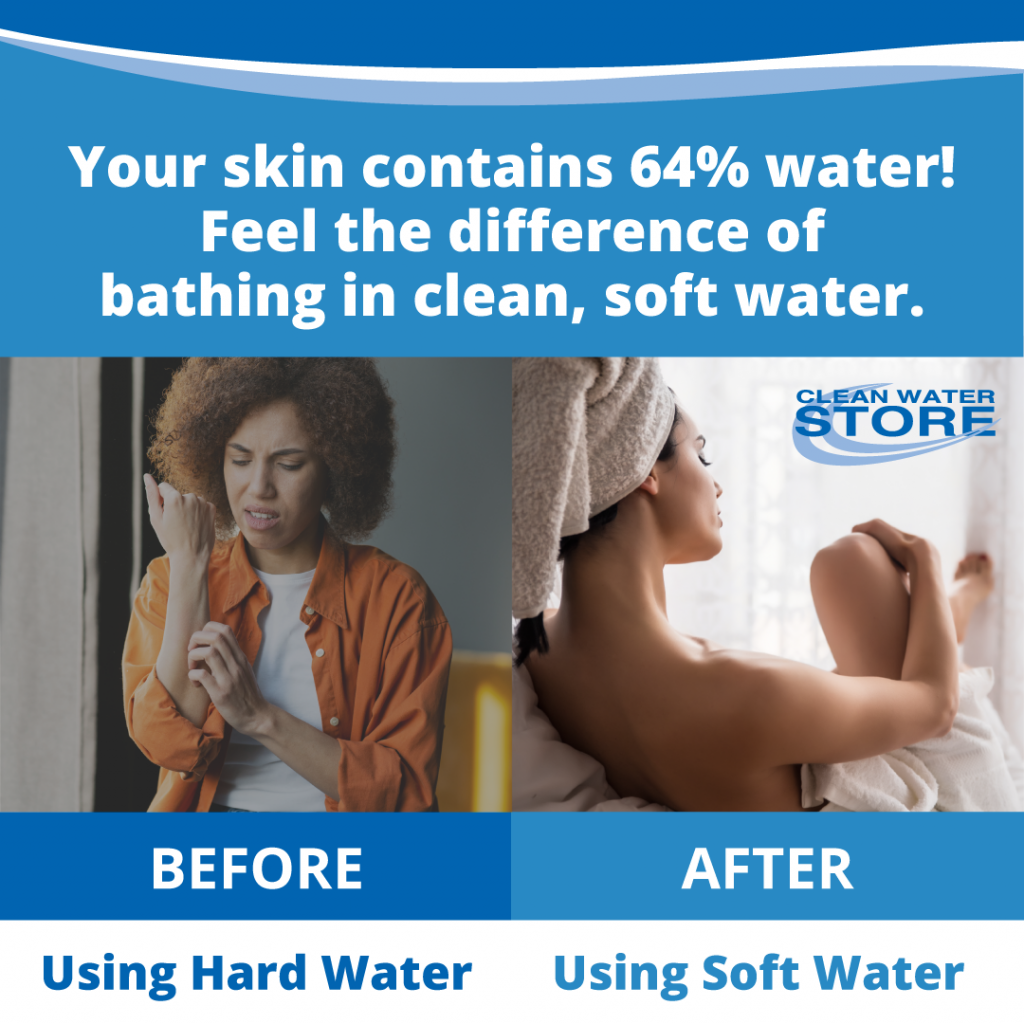
Impact of Chlorine and Hard Water on Hair and Skin
Both chlorine and hard water minerals can negatively impact hair and skin health, but in different ways. Using water softeners to produce softened water can prevent scale buildup, improve appliance efficiency, and enhance the performance of soaps and detergents. This distinction is important as softened water not only helps in improving overall water quality but also significantly benefits hair and skin health.
Chlorine
Chlorine in water can strip natural oils from hair and skin, leading to dryness, irritation, and even scalp conditions like dandruff. It can also cause color-treated hair to fade faster and become brittle.
Hard Water Minerals
Calcium and magnesium can leave a residue on hair, weighing it down and making it feel greasy or rough. This buildup can also prevent moisture from penetrating the hair shaft, leading to dryness and breakage.
Additionally, hard water can make it more challenging to rinse out shampoos and conditioners, leaving hair feeling less clean.
Benefits of Whole House Carbon Filters
- Removes harsh chemicals, making water gentler on hair and skin.
- Helps preserve hair color, especially for chemically treated or color-treated hair.
- Prevents skin irritation and dryness, ideal for individuals with sensitive skin or conditions like eczema.
- Reduces reliance on plastic bottled water by providing high-quality drinking water, which is environmentally beneficial.
Benefits of Water Softeners
- Removes calcium and magnesium, preventing mineral buildup on hair and skin.
- In the ion-exchange process, calcium and magnesium ions are replaced by sodium ions, making hair feel softer and more manageable by allowing it to retain more moisture.
- Helps prevent hair breakage and split ends, promoting healthier hair.
Choosing the Right Solution for Your Home
When considering a water filtration system, whole house carbon filters vs water softeners is a common debate.
When deciding between a whole-house carbon filter and a water softener, consider the following factors:
Salt-free systems are another alternative to traditional salt-based water softeners. These systems use processes like template-assisted crystallization to condition water without adding salt. They require less maintenance, are more eco-friendly, and help prevent hard water problems without removing beneficial minerals. This makes them appealing to those who wish to avoid sodium in their water.
Water Source
A carbon filter may be the best choice if your primary concern is chlorine or chemical contaminants (which are common in city water).
A water softener may be more effective if you have hard water, which originates as water flows from natural sources like mountains, rivers, and lakes. As water flows over geological formations, it gathers minerals that contribute to water hardness, making it common in well water or certain regions.
Find out your water chemistry by searching for your city water chemistry report or getting a home test kit.
Hair and Skin Needs
A carbon filter can provide gentler, quality water for individuals with sensitive skin or color-treated hair, preventing dryness and irritation.
A water softener is beneficial for those struggling with hard water buildup, which leads to dry, brittle hair.
Combination Approach
In some cases, a combination of both systems may be ideal. For example, installing a carbon filter to remove chlorine and a water softener to tackle hardness minerals can provide comprehensive water treatment, offering the best of both worlds. Alternatively, water conditioners can be used as an eco-friendly option to prevent scale buildup without using salt or chemicals. These systems use physical processes to transform hard minerals, making them easier to maintain and more environmentally friendly.
Maintenance and Upkeep
Regular maintenance and upkeep are essential to ensure that water treatment systems continue to function effectively. Water softeners, for example, require regular cleaning and maintenance of the resin tank and brine tank to ensure that they continue to remove calcium and magnesium minerals effectively. Water filtration systems, on the other hand, require regular replacement of the filter media to ensure that they continue to remove contaminants effectively.
It is also important to monitor water usage and adjust the treatment process as needed to ensure that the system is working efficiently. By following a regular maintenance schedule, homeowners can help extend the life of their water treatment system and ensure that they continue to have access to clean, safe drinking water.
Cost and Installation
The cost of installing a water treatment system can vary widely, depending on the type and size of the system. Water softeners, for example, can range in price from a few hundred to several thousand dollars, depending on the size and type of system.
Water filtration systems, on the other hand, can range in price from a few hundred to several thousand dollars, depending on the type and size of the system. Installation costs can also vary, depending on the complexity of the installation and the location of the system.
However, the cost of installing a water treatment system can be offset by the long-term benefits of having access to clean, safe drinking water, including improved health and reduced maintenance costs for plumbing fixtures.
Environmental Impact
Water treatment systems can have a significant environmental impact, depending on the type and size of the system. Water softeners, for example, can generate wastewater that contains high levels of salt and other contaminants, which can harm aquatic ecosystems.
Salt-free water softeners, on the other hand, can be a more environmentally friendly option, as they do not generate wastewater or use harsh chemicals. Whole-house carbon filters can also be a more environmentally friendly option, as they can remove a wide range of contaminants without generating wastewater or using harsh chemicals.
By choosing an environmentally friendly water treatment system, homeowners can help reduce their environmental impact and contribute to a more sustainable future.
When to Consider Each Option
Opt for a Whole House Carbon Filter when:
- Your water supply contains high levels of chlorine or other chemicals.
- You have color-treated or chemically-treated hair.
- You or a family member have sensitive skin or skin conditions.
Opt for a Water Softener when:
- You have hard water with high mineral content.
- You notice buildup on fixtures, dishes, or appliances, affecting your hair.
- You want to improve the overall feel and manageability of your hair.
Water Softener vs. Whole House Filter:
- When deciding between a water softener and a whole-house filter, consider your specific water quality concerns.
- A water softener specifically addresses issues with hard water by removing minerals, while a whole-house filter targets contaminants and impurities in drinking water.
- This comparison helps you make an informed decision based on your needs.
Conclusion
Choosing between a whole-house carbon filter and a water softener depends on your water quality issues and hair and skin needs.
Both systems offer unique benefits and can significantly improve water quality, leading to healthier hair and skin. Testing your water quality and consulting with a water treatment expert can help you make the best decision for your home.
Whether you opt for one system or a combination of both, improving your water quality through effective water purification is a step toward healthier, more beautiful hair and skin.

Questions?
We designed a 3-minute Quiz that helps you select and design a custom system that will work well for your particular water. Take the Quiz Now and find out!
Resources:
- Environmental Protection Agency (EPA) – Water Quality: Provides information on water quality standards and the effects of contaminants, including chlorine, on health.
- U.S. Geological Survey (USGS) – Hard Water: Details what hard water is, how it affects household activities, and the implications for hair and skin.
- Also read our post on Navigating Hair Care in Hard Water Areas: A Comprehensive Guide to Treating Well Water Hair Damage
Frequently Asked Questions (FAQs)
1. What’s the difference between a whole-house carbon filter and a water softener?
A carbon filter removes chlorine, chemicals, and odors from water, while a water softener reduces hardness by removing calcium and magnesium minerals.
2. Do I need both a carbon filter and a water softener for my home?
If you have hard water and want to improve taste and odor, using both systems together can provide cleaner, softer, and better-tasting water throughout your home.
3. Which is better: a whole-house carbon filter or a water softener?
It depends on your water quality. Carbon filters are ideal for removing contaminants and odors, while water softeners are best for preventing scale buildup and extending appliance life.
4. Can a carbon filter replace a water softener?
No, a carbon filter cannot soften water. It removes contaminants but doesn’t eliminate hardness minerals like calcium and magnesium.
5. Should a carbon filter or water softener be installed first?
In most cases, the carbon filter should be installed before the water softener to remove chlorine that could damage the softener’s resin bed.


