_2.png)
 Request a Call
Complete Guide to Whole House Water Filtration for City Water
Updated 2025 | Everything You Need to Know About Municipal Water Treatment

Introduction: Why Whole House Water Filtration Matters
If you rely on city water, you’re probably assuming it’s safe—and generally, it is. But “safe” doesn’t mean ideal. Chlorine smell, odd tastes, and scale buildup are common complaints. A whole-house water filtration system for city water ensures clean, great-tasting water from every tap in your home.
Key benefits of whole-house water filtration systems include improved health by removing bacteria and impurities, protection for appliances from scale and sediment, and the convenience of having filtered water available throughout the whole home, including the bathroom and shower.
Municipal systems use chlorine or chloramine to disinfect, but your water may still contain disinfection byproducts, lead from aging pipes, or sediment. Installing a whole-house filter ensures every drop of water in your home is cleaner and safer. These systems save money compared to bottled water, and you’ll notice better water quality and taste.
Whole-house filters remove impurities, odors, and bacteria, providing safe water for drinking, cooking, bathing, and showering. This solution delivers clean water in every room, including bathrooms and showers, making it perfect for the entire home. Installing a filtration system gives you control over water quality and addresses water issues throughout your household.
Want to learn more about city water safety? Visit the EPA’s Filtration Overview or the CDC’s Home Filter Guide.
What Is a Whole House Water Filter System?
A whole-house filtration system (also called a POE or point-of-entry system) is also known as a home water filtration system, house water filter systems, or house water filtration systems. These systems treat all the water that enters your home, providing comprehensive filtration at the main water line. Unlike point-of-use filters (e.g., pitchers or under-sink filters), this system provides protection throughout your home—for drinking, bathing, cooking, and laundry.
Terms like house water system, house systems, whole house systems, and whole house water systems are also used to describe comprehensive filtration systems that treat all the water entering a home.
These advanced filtration systems use proven technology to remove a wide range of contaminants from your home’s water supply, ensuring safe and clean water for every household use.
Types of Contaminants in City Water
City water may look clear, but it can carry a mix of contaminants that affect water quality and safety. Heavy metals like lead and mercury, industrial solvents, chlorine, and other chemicals can enter your household water. These substances pose health risks and affect the taste and smell of your water.
City water also often contains sediment, dirt, and debris, which can make the water cloudy or taste unpleasant. Over time, these particles can build up in pipes and appliances, reducing their lifespan and efficiency. A house water filtration system tackles these issues. Whole-house water filters reduce harmful contaminants, remove sediment, and filter out dirt and debris, ensuring every tap in your home delivers better water.
Installing a water filtration system improves the taste and smell of your household water and protects your family’s health and your home’s water supply. With the right filters, you can enjoy peace of mind knowing your water is cleaner, safer, and better for daily use.
DIY Installation: Step-by-Step
- Turn Off Water – Shut off your main water supply and open a faucet to relieve pressure.
- Pick a Location – Choose a spot near where the city water enters your home.
- Cut Pipe & Deburr – Remove a section of the pipe and clean edges.
- Install Brackets & Housing – Mount your system securely to the wall.
- Connect Fittings – Use compression or push-fit connectors for leak-free sealing.
- Check Flow Direction – Ensure inlet/outlet ports are correct.
- Flush & Inspect – Slowly turn the water back on and check for leaks.
Want more detail? View our guides at Clean Water Store.
Top 3 Systems for City Water
1. Whole-House Carbon Filtration

Best for: Chlorine, taste, and odor removal
- Removes over 95% of chlorine and chloramine
- Improves taste and odor
- Protects appliances and plumbing
2. Water Softener + Reverse Osmosis Combo

Best for: Hard water & high-quality drinking water
- Softens water by removing calcium and magnesium
- Eliminates spotting on dishes and fixtures
- A reverse osmosis system provides purified drinking water
➡ Shop 5900-BT Water Softeners
➡ View Reverse Osmosis Systems
3. Salt-Free Water Conditioners (TAC)
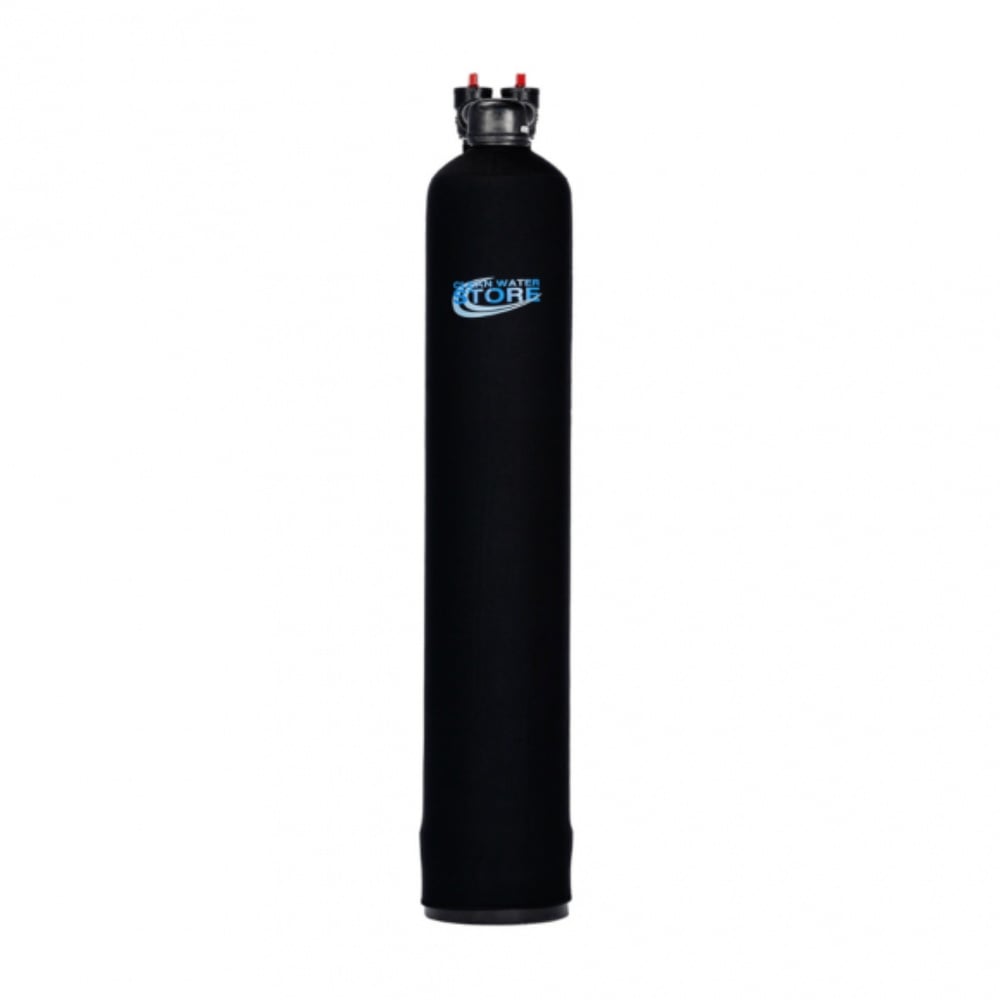
Best for: Scale prevention in moderate hardness
- No salt or backwashing required
- Reduces scale in pipes and appliances
- Environmentally friendly
- Does not remove minerals (white spots may remain)
Understanding Flow Rate and Its Impact
When choosing a house water filtration system, flow rate is key. It measures how much water moves through your whole house system at once and affects its performance.
A high flow rate keeps water pressure strong throughout your home, even when many appliances, showers, or faucets run simultaneously. This is vital for larger homes or families with high water use. If the system can’t handle demand, water pressure or flow at the tap may drop.
Picking a whole-house water filter system with the right flow rate ensures clean, filtered water for cooking, laundry, and more. It also protects your appliances by providing a steady supply of better water. Matching your system to your home’s flow needs gives you peace of mind with reliable access to safe, great-tasting water.
Maintenance Checklist
- Carbon filters: Replace every 5–10 years or 500,000–1,000,000 gallons
- TAC media: Replace every 4–5 years
- Sediment pre-filters: Change every 6–12 months
Keep spare filters on hand to avoid downtime.
Water Testing: Know What You’re Dealing With

Testing helps identify what contaminants are in your city’s water.
- SimpleLab Tap Score Kit: In-depth lab testing of over 100 contaminants
- Easy Water Test Kits
- Clean Water Store Test Kits: Water Test Kits and Supplies
Why Go DIY?
- Save 50–70% compared to a pro installation
- Installation takes about 2–4 hours
- Systems include clear instructions and expert support
Summary
Installing a whole-house water filtration system for city water improves taste, protects appliances, and provides peace of mind. Choose the right system for your needs (carbon, softener+RO, or TAC), test your water, and enjoy cleaner water from every tap.
Explore More:
- City Water Filter Bundles
- Under-Sink Reverse Osmosis
- EPA: Filtration Fact Sheet
- CDC: Choosing Home Filters


