_2.png)
 Request a Call
2026 Whole House Water Filter Buyer’s Guide: How to Choose the Right System for Your Home
Why a Whole House Water Filter Matters in 2026

Whole house water filtration has become one of the fastest‑growing home upgrades in the U.S., driven by rising concerns about PFAS, chloramines, sediment, iron, and disinfection byproducts.
This guide explains exactly how whole home systems work, which problems they solve, and how to choose the right one.
We sell whole-house water filters at Clean Water Store. However, we aim to be transparent about what works, what to watch out for, and how to match a system to your specific water needs so that you can choose with confidence.
What Is a Whole House Water Filter?
A whole house water filter is a system installed at the main water line that treats all the water entering your home, including showers, laundry, kitchen, bathrooms, appliances, and even outdoor faucets.
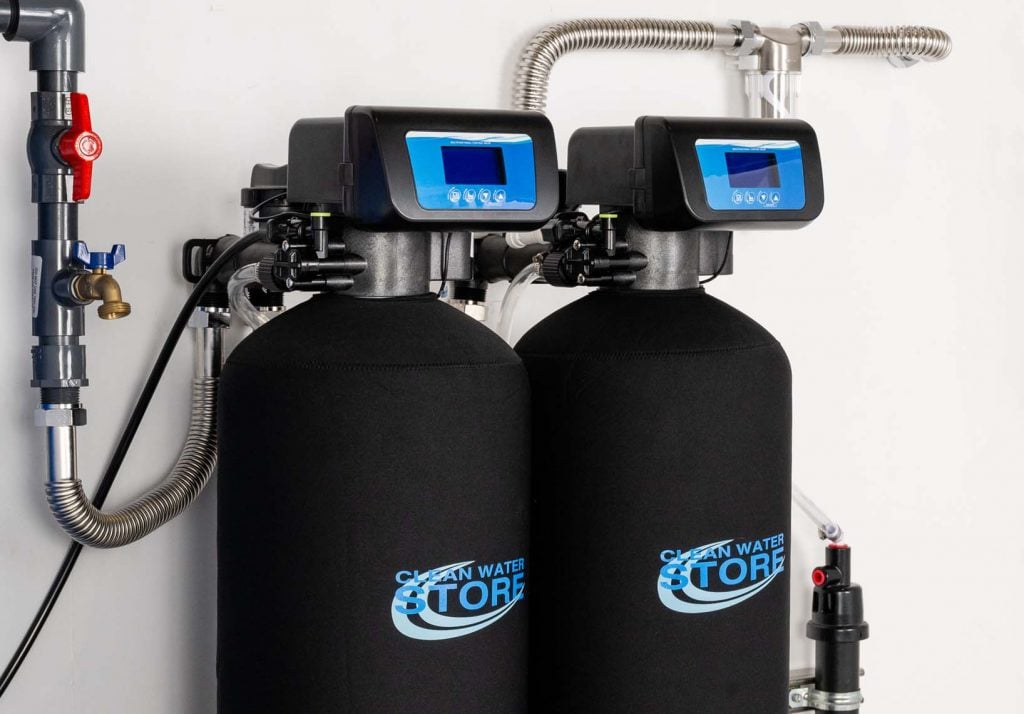
What These Systems Typically Treat
-
-
- Sediment & turbidity
- Chlorine & chloramines
- PFAS (“forever chemicals”)
- Disinfection byproducts (THMs, HAAs)
- Iron & manganese
- Sulfur odors
- Hard water (with a softener or conditioner)
-
Quick Comparison: Types of Whole House Systems
| System Type | Best For | What It Removes | Notes |
| Whole House Carbon Filter | City water | Chlorine, chloramines, tastes, odors, PFAS | Most popular for municipal water |
| Sediment Filter | All homes | Sand, silt, turbidity | Always recommended as first stage |
| Catalytic Carbon + KDF | City water with chloramines | Chloramines, VOCs, disinfection byproducts | Higher performance for modern city water |
| Salt‑Based Softener | Hard water | Calcium, magnesium | Provides a true “soft water feel” |
| Salt‑Free Conditioner | Scale reduction without salt | Reduces scale formation | Low maintenance alternative |
| Iron/Manganese Filters | Well water | Iron, manganese | Prevents staining and metallic taste |
| Air Injection (AIO) | Sulfur odor | Hydrogen sulfide | Eliminates rotten‑egg smell |
How to Choose the Right Whole House System (Step‑by‑Step)
Step 1 — Test Your Water
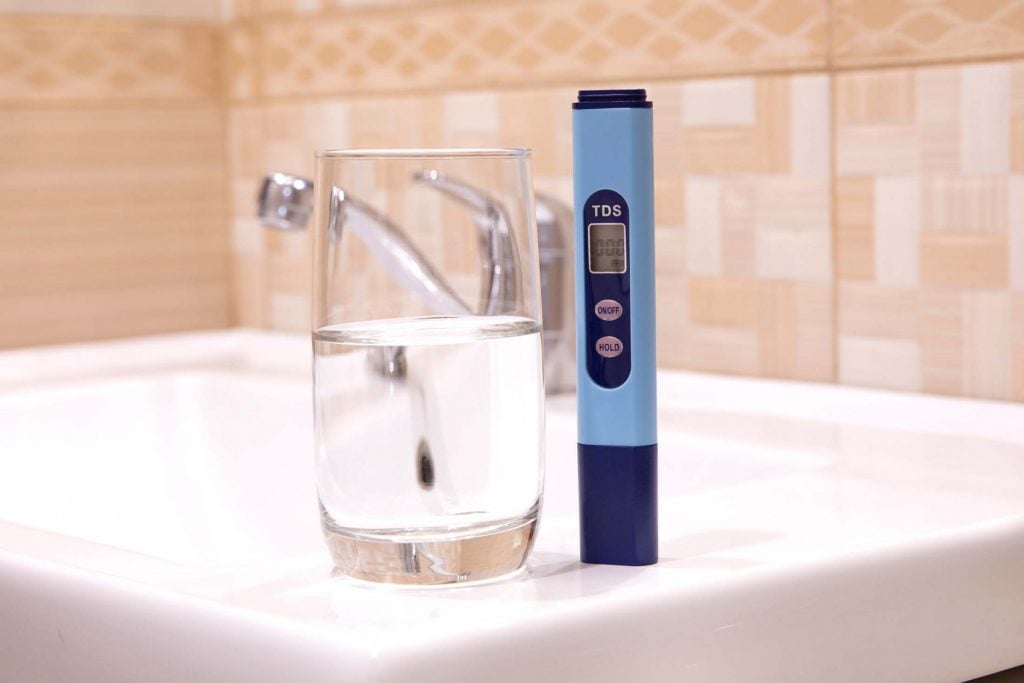
First, start with a certified lab test or professional level home testing kit, or if you have city water another option is to check your local free city water report to identify contaminants. This first step is crucial since treatment effectiveness depends on accurate water chemistry.
Step 2 — Match Problems to Solutions
Next, use your test results to select the correct system:
City Water
-
-
- Chlorine/chloramines → Catalytic carbon whole house filter
- PFAS → Activated carbon or carbon block filters
- Hard water → Salt softener or salt‑free conditioner
-
Well Water
-
-
- Iron/manganese → AIO iron filter
- Sulfur odors → Aeration + catalytic carbon
- Sediment → Spin‑down + pleated filter
-
Step 3 — Size the System Correctly
Finally, look out for:
-
-
- Flow rate (GPM) compatible with home size
- Media volume (cu ft) for capacity
- Backwash requirements for well systems
-
Recommended Whole House System Strategies
For City Water Homes
-
-
- Sediment prefilter (5–20 micron)
- Catalytic carbon whole home filter
- Optional: salt‑free conditioner or softener
- Optional: UV for microbial protection
-
For Well Water Homes
-
-
- Sediment prefilter
- Iron/manganese filter (AIO or oxidation system)
- Catalytic carbon for taste & odor polishing
- Optional: UV sterilization
-
Why Clean Water Store Systems Stand Out
-
-
- Industry‑leading support
- U.S.-based experts in well and city water
- Proven systems for iron, sulfur, manganese, chloramines, PFAS, and scale
- Lower cost of ownership vs. national brands
- Honest sizing + real water chemistry expertise
-

2026 Comparison of Top Whole Home Water Systems
| Brand / System | Best Fit (City / Well) | Chloramine Capability | PFAS / PFOA‑PFOS Option | Salt‑Free Scale Option | Certifications / Testing (Examples) | Typical Warranty* |
|---|---|---|---|---|---|---|
| Clean Water Store Whole House Filters · Chloramine Filters · Salt‑Free Conditioners |
City or well (sediment → carbon core; iron/sulfur options for wells) | Yes (catalytic carbon configurations available) | Yes (activated/catalytic carbon or specialty media options) | Yes (conditioners; softeners also available) | NSF/ANSI component or media certifications vary by model; lab testing recommended per installation | See Clean Water Store Warranty |
| SpringWell Whole House Filters · Filter + Salt‑Free Combo |
City (carbon) and well configurations | Marketed carbon systems; check model/media for chloramine handling | Carbon‑based reduction (no whole‑home PFAS certification claimed on main pages) | FutureSoft salt‑free conditioner | Specs in manuals; media replacement ~6 yrs/1M gal (CF series) | See SpringWell Warranty |
| Aquasana Rhino® Chloramines · OptimH2O® (PFAS/Lead) |
City (chlorine/chloramine) and well (UV bundle) | Yes (Rhino® Chloramines; catalytic carbon) | Yes (OptimH2O® WH certified for PFOA/PFOS reduction) | Salt‑free conditioner add‑on available | NSF/ANSI 42 (chlorine); Rhino® Chloramines tested for chloramines; OptimH2O® WH certified for PFOA/PFOS & lead | 10‑yr (select Rhino®), see docs |
| Pentair (Pelican) PC600/PC1000 Filters · NaturSoft® Combo |
City (chlorine reduction) | Focus on chlorine reduction; verify chloramine needs per model | Not positioned for whole‑home PFAS reduction | NaturSoft® salt‑free scale reduction | IAPMO to NSF/ANSI 42 (chlorine) & 61 (materials); see manuals | See Pentair Warranty |
| US Water Systems Bodyguard Chemical Filter · Pioneer Lead/PFAS (NSF P473) |
City (chemicals) and targeted municipal/well issues | Marketed capability on Bodyguard line | Yes (Pioneer certified to NSF/ANSI P473 + 53 for lead) | Offered in combo lines and alternatives | Pioneer: NSF/ANSI P473 (PFOA/PFOS) + 53 (lead) | Varies by product; see product page |
*Warranty summaries above are for quick comparison only. Always confirm the current terms on the manufacturer’s site.
Not Sure Where to Start? Begin With a Simple Water Test
If you’re unsure which whole‑house system is right for your home, the smartest first step is a free or low‑cost water test. It’s the easiest way to understand exactly what’s in your water—so you can compare systems confidently, avoid unnecessary upgrades, and make a choice that truly fits your needs.

At Clean Water Store, we’ve helped thousands of homeowners match the right system to their unique water chemistry and budget—without pressure, upselling, or guesswork. Our team will:
-
-
- Interpret your water test results
- Next, recommend the best-fit options (including how they compare to top competitors)
- Properly size your system for performance and longevity
-
You’ll enjoy cleaner, better‑tasting water and peace of mind for years to come.
Ready for expert guidance?
Request an appointment with one of our water specialists today:


