_2.png)
 Request a Call
Why Hard Water Gets Worse in Summer — and What to Do About It
If you’ve noticed more scale on your faucets, more spots on your dishes, or your hair or skin feeling drier than usual, and it’s gotten worse over the past few weeks, your hard water isn’t your imagination. It’s the season.
Hard water problems genuinely intensify in summer, and there are specific reasons why. Here’s what’s actually happening and what you can do about it.

Article updated July 7, 2026 by Author.
Why Hard Water Is Worse in Summer
Higher Temperatures Cause Minerals to Drop Out of Solution Faster
The chemistry is straightforward: calcium carbonate, which is the primary mineral that causes scale, becomes less soluble as water temperature increases. Cold water holds it in solution. Hot water causes it to precipitate out and stick to surfaces.
In summer, your incoming water is already warmer than it was in winter. That means scale forms more readily at every stage. Including in your pipes, your water heater, your dishwasher, and your showerhead before the water ever gets hot.
More Hot Water Use Accelerates Scale Buildup
Summer means more showers, more outdoor entertaining, more laundry, more dishes. Every time hard water gets heated, minerals precipitate faster. Your water heater, dishwasher, and washing machine are running more cycles, and each one deposits a little more scale than it would in cooler months.
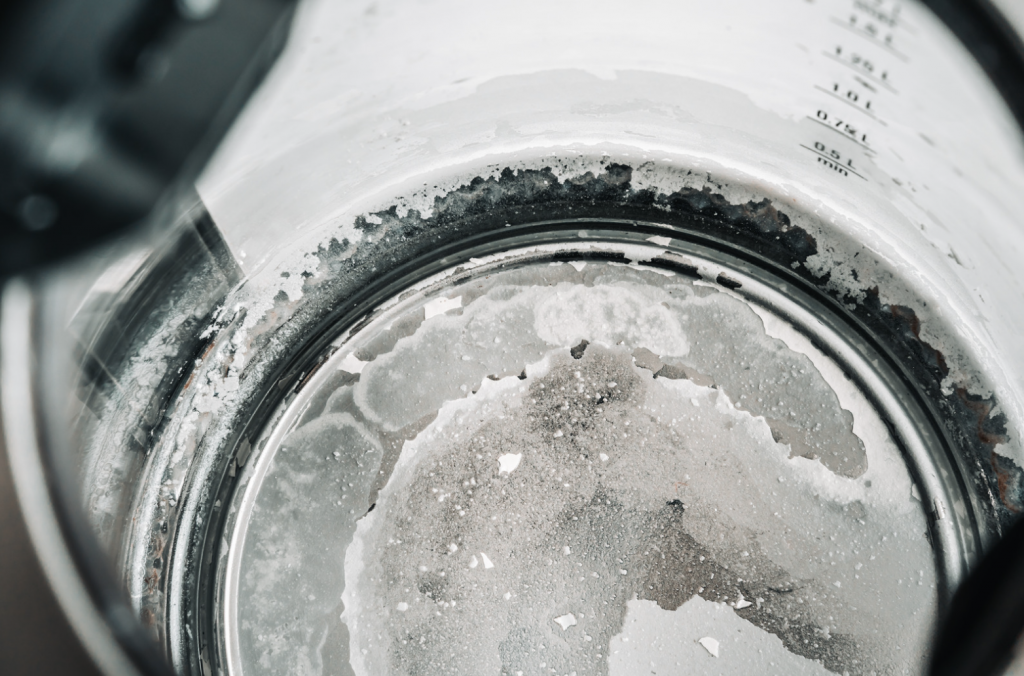
Water heaters are particularly vulnerable. Scale on heating elements acts as an insulator, forcing the element to work harder and longer to heat the same amount of water. Over time this reduces efficiency and shortens the appliance’s lifespan.
Evaporation Concentrates Mineral Levels
When water evaporates from outdoor fixtures, hose connections, and irrigation, it leaves the minerals behind. The result is concentrated scale deposits on outdoor surfaces that are much more visible in summer than any other time of year.
Well Water Customers: Lower Water Tables Mean Higher Mineral Concentrations
If you’re on well water, summer water tables are at their seasonal low. Lower water volume in your aquifer means dissolved minerals are more concentrated. The hardness level coming out of your well in August may be measurably higher than what comes out in March, which means your softener is working harder, regenerating more frequently, and consuming more salt.
What You’ll Notice Getting Worse
-
- White scale on faucets and showerheads that’s harder to remove and builds up faster
- Spots on dishes and glassware that come out of the dishwasher looking worse than they did in spring
- Reduced shower pressure as mineral buildup clogs showerhead openings
- Skin feeling dry and tight after showering — mineral film left on skin interferes with moisture retention
- Hair feeling brittle or hard to manage — the same mineral coating affects hair cuticles
- More soap and shampoo needed to get a lather — hard water reduces soap efficiency
- Water heater running longer or making rumbling sounds — scale on the element
Not sure how hard your water is?
A water test tells you exactly what you’re working with. Our WQA-certified specialists review your results and help you choose the right solution for your home — no pressure, no overselling.
What Actually Fixes Hard Water
Salt-Based Water Softener
A salt-based water softener is the most effective solution for hard water. It works through ion exchange — passing water through a resin bed that swaps calcium and magnesium ions for sodium ions. The result is genuinely soft water: no scale formation, no mineral film on skin and hair, better soap lather, and protected appliances.
For summer specifically, a demand-initiated softener — one that regenerates based on actual water usage rather than a fixed schedule — is the right choice. As your water use increases in summer, the softener adapts automatically rather than under- or over-regenerating on a fixed timer.
Sizing matters. A softener undersized for your hardness level and household usage will be overwhelmed in summer when both water demand and mineral concentration are at their peak. Our specialists can help you size correctly based on your actual water test results.
Salt-Free Conditioner (TAC System)
A salt-free conditioner — also called a Template Assisted Crystallization (TAC) system — doesn’t remove hardness minerals but changes their form so they’re less likely to stick to surfaces and form scale. It’s a good option for homeowners with low to moderate hardness levels, concerns about sodium, or in areas with water softener restrictions.
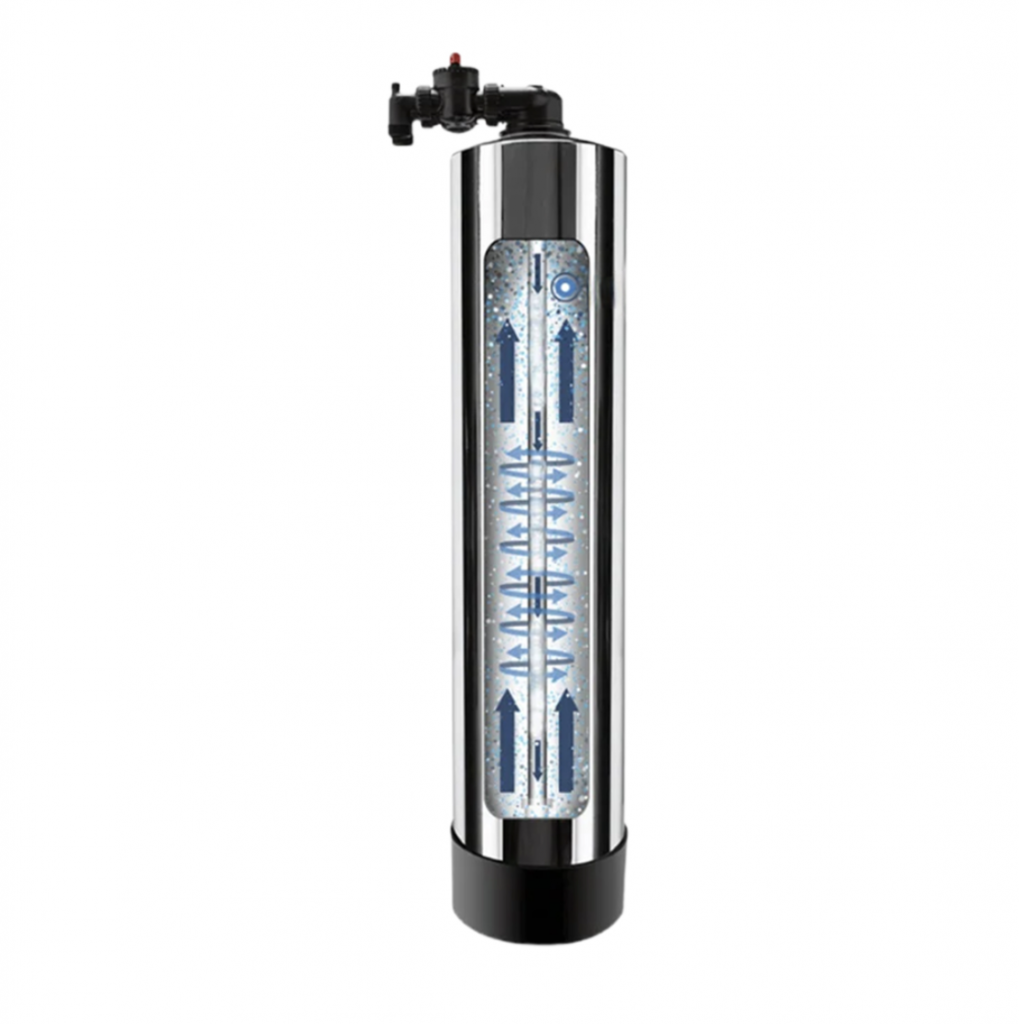
Important distinction: a salt-free conditioner reduces scale formation — it does not soften the water in the traditional sense. Skin and hair feel won’t change the way it does with a salt-based softener, because the minerals are still present in the water.
For City Water Customers: Add a Carbon Filter
City water customers dealing with hard water in summer have a compounding problem: higher chlorine levels alongside elevated mineral concentrations. Chlorine strips the skin’s natural oils while hard water leaves a mineral film. Together they produce the dry skin and brittle hair effect many people chalk up to summer heat.
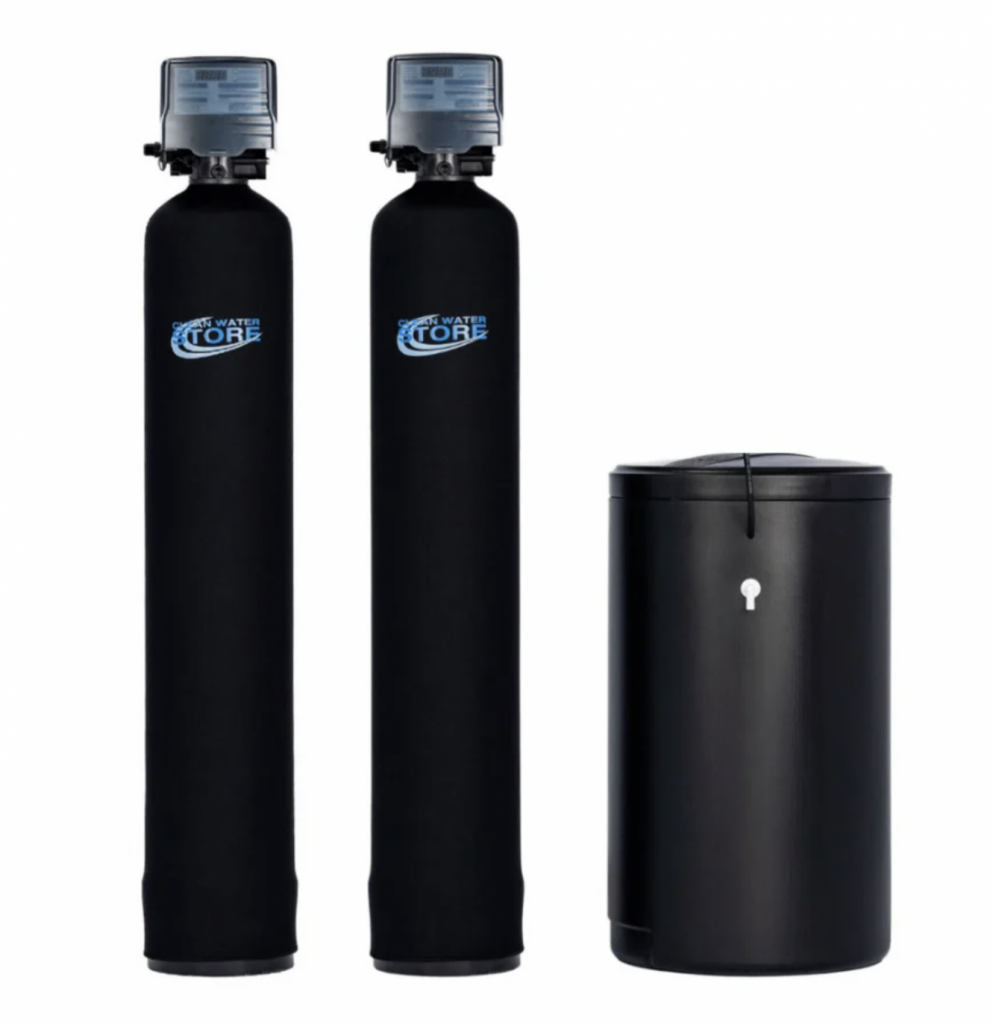
A whole-house carbon filter paired with a water softener addresses both issues — the carbon removes chlorine and chloramine, the softener removes the hardness minerals. The combination typically produces the most noticeable improvement in skin and hair feel.
If You Already Have a Softener
Summer is a good time to verify your existing softener is still performing correctly:
-
- Check salt levels in the brine tank — summer usage increases salt consumption
- Test hardness at the tap — if hardness is registering after your softener, it may need a rebed or service check
- Check regeneration frequency — if it’s set to a fixed schedule, consider switching to demand-initiated regeneration for more efficient salt use
- Inspect the brine tank for salt bridges — a hard crust that forms above the water line and prevents proper regeneration
A simple hardness test at the tap takes about 30 seconds and tells you immediately whether your softener is doing its job.
The Right Fix Starts With Knowing Your Number
Hard water severity varies enormously — from mildly hard (below 7 grains per gallon) to extremely hard (above 25 grains per gallon). The right solution and the right size depends on your actual hardness level, your water usage, and whether you have additional water quality concerns.
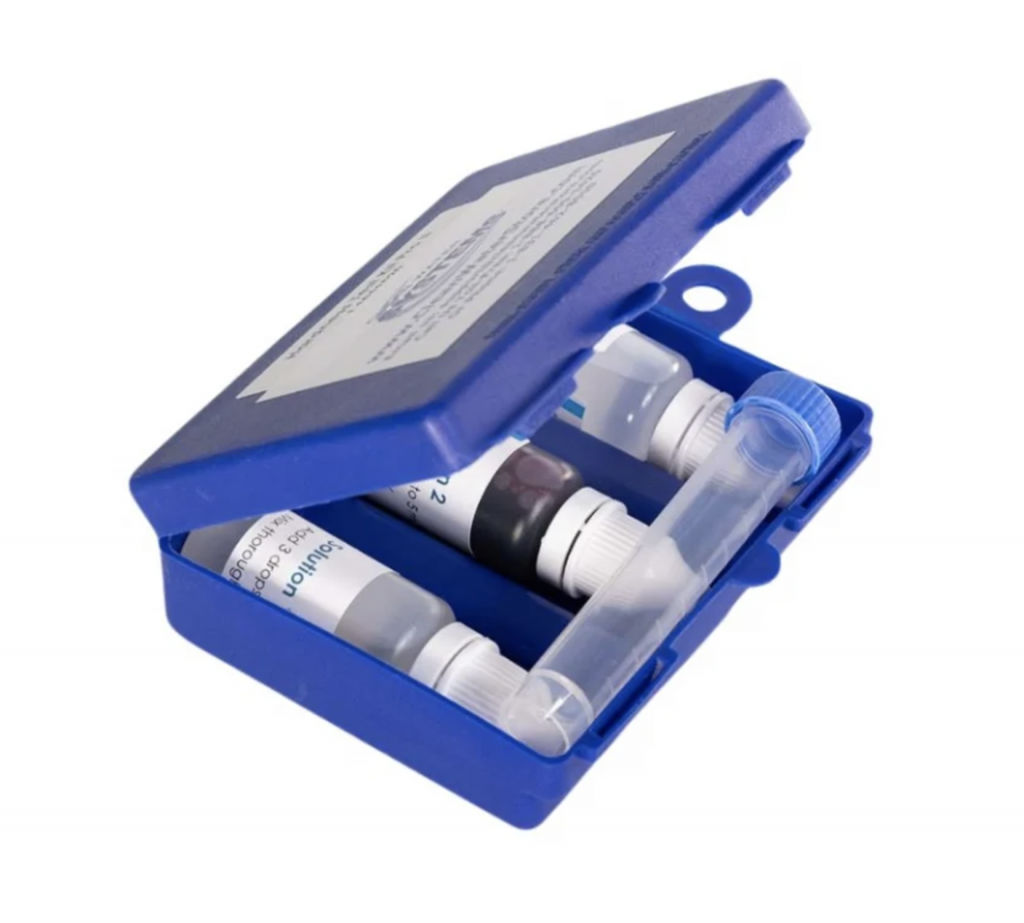
A water test is the right starting point. With that information, the solution is straightforward — and you stop spending money on workarounds that don’t actually fix the problem.
Whether you buy from us or not, our Learning Center is your go-to resource for getting and maintaining clean water for your home, business or larger property.

Related Resources
Sources & Further Reading


