_2.png)
 Request a Call
Carbon Block vs Reverse Osmosis Filters: How to Choose the Right Water Treatment System
Understanding Your Water Treatment Options

When you’re looking to improve your water’s taste and quality — whether it comes from a city main or a private well, you’ll likely encounter two popular options: carbon block filters and reverse osmosis systems. But choosing between them isn’t just about picking the “best” technology—it’s about understanding what specific water problems you’re trying to solve and what trade-offs you’re comfortable making.
In this guide, we’ll break down how each system works, their unique advantages and limitations, and provide practical guidance to help you make the right choice for your family’s water needs.
How do Carbon Block Filters Work?
Carbon block filters use a straightforward but effective approach to water filtration. Water flows directly through a dense block of activated carbon and sometimes additional filtration media. As water passes through this carbon matrix, several important things happen:
-
- Chlorine is effectively removed, eliminating that chemical taste and odor
- Many organic compounds are absorbed and filtered out
- Lead can be removed when the filter includes specialized media designed for heavy metal reduction
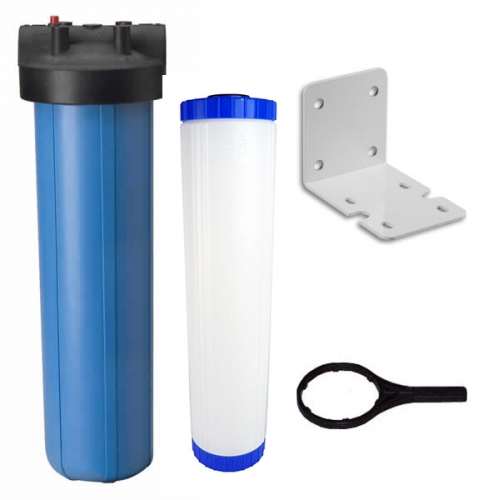
One of the biggest advantages of carbon block systems is their simplicity. There’s no storage tank, no wastewater production, and water flows through at approximately one gallon per minute. This makes them an excellent choice for homeowners who want immediate access to filtered water without any complicated setup or ongoing waste concerns.
How Do Reverse Osmosis Systems Function?
Reverse osmosis (RO) takes a fundamentally different approach to water purification. Instead of water flowing straight through a filter medium, RO systems push water under pressure against a semi-permeable membrane. This membrane is so fine that only pure water molecules can pass through, while everything else gets rejected and flushed away.

The RO Process Breakdown
Here’s what gets removed by the RO membrane:
-
- Dissolved minerals and total dissolved solids (TDS)
- Nitrates and other dissolved chemicals
- Heavy metals
- PFAS (forever chemicals)
- Microplastics
RO systems also incorporate carbon filters as part of their multi-stage process, so you get the benefits of carbon filtration plus the additional purification from the membrane.
The Water Usage Trade-off
The membrane flushing process is critical for preventing fouling and maintaining system performance, but it comes with a significant trade-off. RO systems typically send 50-90% of incoming water to the drain, meaning you’ll use 2-4 gallons of water for every gallon of purified water produced. This is an important consideration for both environmental and cost reasons.
When Carbon Block Filters Are the Right Choice
Carbon block filters work exceptionally well in specific situations. They’re ideal when:
-
- Your city water already has low dissolved solids and mineral content
- Your primary concern is removing chlorine taste and odor
- You want to eliminate organic compounds and potentially lead
- You prefer immediate water access with no storage tank
- Water conservation is a priority
- You want a simple, low-maintenance system
If your municipal water supply is already well-treated and your main goal is improving taste while removing chlorine, a carbon block filter can provide excellent results without the complexity or water waste of reverse osmosis.
For well water users, carbon block filters can play an important supporting role — particularly as a pre-filter stage in a larger treatment system. They’re effective at removing organic compounds, tannins, and hydrogen sulfide odors that are common in well water. However, carbon alone is rarely sufficient as a standalone solution for private wells, since most well water problems involve dissolved contaminants like iron, manganese, nitrates, arsenic, or bacteria that carbon cannot address.
When Reverse Osmosis Makes Sense
Reverse osmosis becomes the better choice when you need more comprehensive water purification. Consider RO if:
-
- You want the lowest possible total dissolved solids for a bottled water-like taste
- Your water contains concerning levels of nitrates, heavy metals, or other dissolved contaminants
- PFAS removal is a priority (these “forever chemicals” are increasingly found in water supplies)
- You’re concerned about microplastics
- You prefer the peace of mind that comes with the most thorough filtration available
The additional water usage and complexity of RO systems are justified when you need this level of comprehensive purification that carbon alone cannot provide.
Well water users are often the strongest candidates for a point-of-use RO system at the kitchen sink — precisely because well water tends to carry the dissolved contaminants RO is best at removing. Nitrates from agricultural runoff or septic systems, arsenic occurring naturally in bedrock, heavy metals, and PFAS from nearby industrial or farming activity are all contaminants that a carbon block filter will pass right through but a reverse osmosis membrane will reject. If your well water test has come back with elevated readings for any of these, RO at the drinking water tap is one of the most targeted and effective solutions available to a homeowner. It’s worth noting that well water with high sediment, iron, or hardness typically needs a whole-house pre-treatment system upstream before an RO unit — otherwise those contaminants will foul the membrane prematurely.
Making the Decision: Key Factors to Consider
Rather than asking “which is better,” focus on these practical considerations:
Assess Your Water Quality
Understanding your starting water quality is crucial. City water that’s already low in dissolved solids may not benefit significantly from RO, while water with higher mineral content or specific contaminants might require the more thorough approach of reverse osmosis.

Define Your Goals
Be clear about what you’re trying to achieve. If taste improvement and chlorine removal are your primary goals, carbon may be sufficient. If you want the purest possible water or need to address specific dissolved contaminants, RO is likely necessary.
Consider Practical Factors
Think about water usage patterns, available space for equipment, and your comfort level with system maintenance. Carbon block systems are simpler but less comprehensive, while RO systems require more involvement but provide more thorough treatment.
Conclusion
The choice between carbon block and reverse osmosis filtration isn’t about finding a universal “best” option — it’s about matching the right technology to your specific water quality needs and household preferences. Carbon block filters excel at providing efficient, waste-free improvement for already well-treated water, while reverse osmosis systems offer comprehensive purification for those who need or want the highest level of treatment available. That need is just as common — and often more urgent — for well water households as it is for city water users.
If you need help determining which system is right for your specific situation, our water treatment experts are here to help you make an informed decision based on your local water quality and family’s needs.

Article last updated April 6, 2026
Frequently Asked Questions
Q: Can carbon block filters remove dissolved minerals like calcium and magnesium?
No, carbon block filters cannot remove dissolved minerals or reduce total dissolved solids. They’re designed primarily to remove chlorine, organic compounds, and some heavy metals like lead, but dissolved minerals pass right through.
Q: How much water does a reverse osmosis system actually waste?
Most residential RO systems use 2-4 gallons of water to produce 1 gallon of purified water. This means 50-75% of the water goes to drain, though newer efficient models can reduce this ratio somewhat.
Q: What the Q6 800 GPD Tankless RO, does it waste water?
The tankless RO uses advanced membrane technology to deliver a 2:1 pure-to-drain ratio, saving up to 300% more water than traditional RO systems. So for every 2 gallons of clean water you get, only 1 gallon goes to drain. That’s a significant improvement and puts it in line with other modern high-efficiency tankless RO systems on the market.
Q: Do reverse osmosis systems remove beneficial minerals from water?
Yes, RO systems remove virtually all dissolved minerals, including beneficial ones like calcium and magnesium. However, most people get the majority of their minerals from food rather than water, so this typically isn’t a health concern.
Q: How often do I need to replace filters in each system?
Carbon block filters typically need replacement every 6-12 months depending on water usage and quality. RO systems have multiple filter stages that replace at different intervals: pre-filters every 6-12 months, the RO membrane every 2-3 years, and post-filters annually.
Q: Which system is better for removing PFAS chemicals?
Reverse osmosis is significantly more effective at removing PFAS (forever chemicals) than carbon block filters alone. While some specialized carbon filters can reduce PFAS, RO provides more comprehensive removal of these persistent contaminants.
Q: I’m on well water — do I need a whole-house system before adding an RO unit?
It depends on your water test results. If your well water has elevated iron, manganese, hardness, or sediment, those need to be addressed at the whole-house level first — otherwise they will foul your RO membrane and shorten its life significantly. If your well water is relatively clean but has dissolved contaminants like nitrates or arsenic, a point-of-use RO system at the kitchen sink can often be installed on its own. Getting a full water test before deciding is always the right first step.


