_2.png)
 Request a Call
Do whole-home filters use more water or electricity?
If you’re shopping for a whole-home water filter, you might wonder how much water or electricity these systems actually use—and whether they’ll drive up your utility bills. The truth is, it depends on the type of system you choose.
At Clean Water Store, we’ve installed thousands of water filtration systems across the U.S. for both well water and city water. We’ve seen how much water and power each type uses—and how small setup choices can make a big difference in efficiency.

Since we design and sell these systems, you might expect us to say they all run efficiently. But that’s not always the case. Some filters clean themselves using water, others use a small amount of electricity, and a few use both. In this guide, we’ll explain which systems use more water, which use more power, and how to choose one that’s efficient for your home.
Why Do Some Whole-Home Filters Use Water While Others Don’t?
Some whole-home water filters use water to clean themselves, while others don’t need any extra water at all.
Iron filters, for example, use the most. They typically need between 140 and 150 gallons of water per cleaning cycle, and they do this once or twice a week. That water is used to rinse away the iron and other debris that the filter has trapped.
Water softeners also use water when they “regenerate”—a process that flushes minerals and salt from the resin beads inside the system. The exact amount depends on your water’s hardness and how often your household uses water, but softeners generally use less water overall than iron filters.
Meanwhile, carbon and sediment filters don’t use any extra water at all. They simply rely on your home’s existing water pressure to push water through the filter. The same goes for no-salt conditioners and upflow carbon systems, which don’t require a drain. These types are often preferred in drought-prone areas or homes with septic systems since they don’t waste any water.
How Household Size and Water Quality Affect Usage
The number of people in your home and the quality of your water both play a big role in how much water a filtration system uses.
If you have a large household, your system will clean itself more often because more water is flowing through it each day. Smaller homes, on the other hand, may go longer between cycles.

Your water quality also matters. If your water has a lot of iron or sediment, your system may need to backwash more frequently to stay effective. In some regions, wastewater from these systems can’t go into a septic tank, so you may need a separate drain pit or dry well to handle the discharge.
Which Whole-House Filters Use Electricity—and How Much
Not every filtration system needs electricity, but some use a small amount to run certain components.
Control valves, the devices that manage cleaning cycles, use minimal electricity, usually just a few dollars’ worth per month. UV (ultraviolet) systems also use a small amount of power to run the light that kills bacteria, but it’s comparable to keeping a regular light bulb on.
The only systems that use noticeable electricity are those with booster pumps, like some whole-home reverse osmosis (RO) setups. These pumps need more power to push water through the tight RO membrane that removes contaminants.
Overall, the annual electricity cost for most systems is very low—often between $15 and $25 per year—and it’s considered negligible compared to other household appliances.
How to Make Your System More Efficient
Even small adjustments can make a big difference in water and energy efficiency.
1. Choose a metered or on-demand softener.
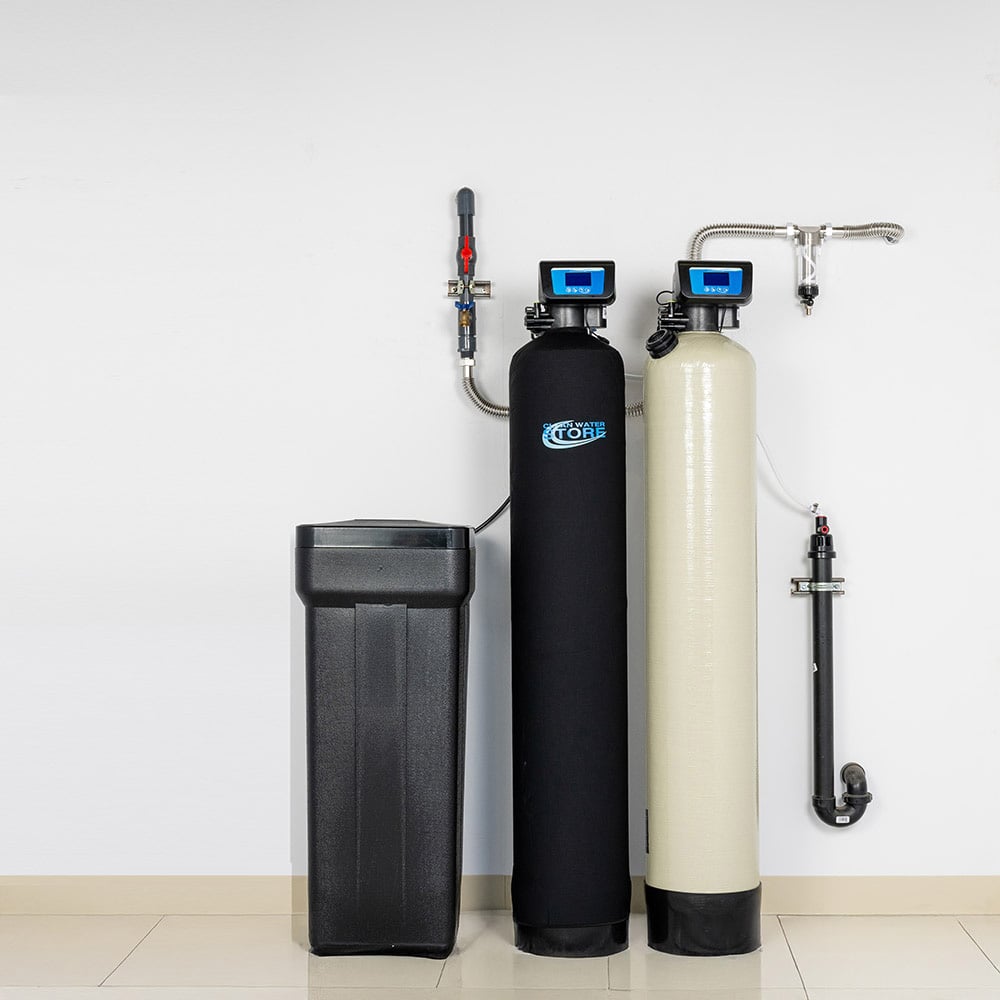
Older water softeners regenerate on a timer, whether they need to or not. Newer on-demand models only regenerate when the system actually needs cleaning, saving 30–50% of salt and water each year.
2. Avoid oversized systems.
Bigger isn’t always better. Oversized filters can use more water and power than necessary during backwashing. Your system should be properly sized for your household’s flow rate (the maximum amount of water you use at one time).
3. Test your water hardness and make gradual adjustments.
By slowly increasing the time between cleaning cycles, you can reduce waste while still maintaining good filtration.
4. Maintain your system regularly.
Clogged filters or incorrect timer settings can lead to unnecessary cycles. A quick check every few months helps prevent wasted water and energy.
Best Water Filtration Options for Homes in Drought or Septic-Sensitive Areas
If you live in an area where water conservation is important—or if your home uses a septic system—it’s best to choose systems that don’t discharge water.
Cartridge filters, no-salt conditioners, and carbon filters are the most eco-friendly options because they don’t waste any water during operation. While backwashing filters can’t completely eliminate discharge, the amount can be minimized by using the right filter media and programming the system to clean less often when water conditions allow.
Read more: How to Optimize Your Water Treatment System During a Drought

Comparing Water and Electricity Use by System Type
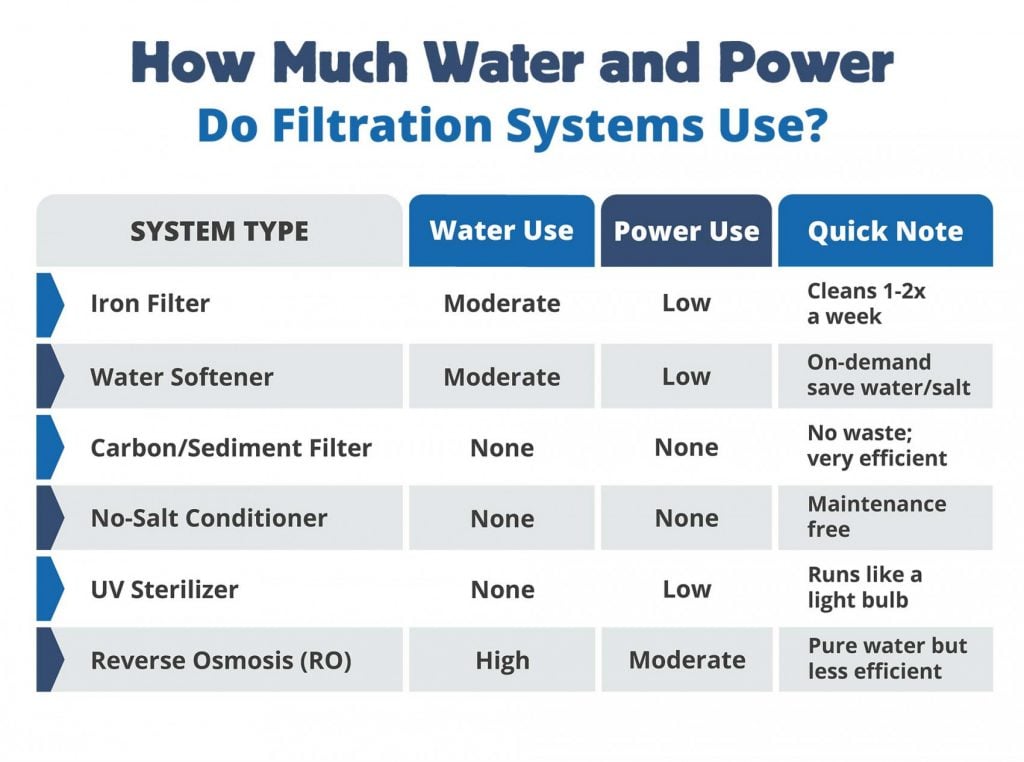
| System Type | Water Use | Electricity Use | Notes |
| Iron Filter | 140–150 gallons per cycle | Minimal (control valve only) | Cleans once or twice a week. |
| Water Softener | Moderate (during regeneration) | Minimal | On-demand models save water and salt. |
| Carbon or Sediment Filter | None | None | Most efficient option; no waste. |
| No-Salt Conditioner | None | None | Maintenance-free; doesn’t remove hardness. |
| UV Sterilizer | None | Low (continuous lamp) | About the same as a light bulb. |
| Reverse Osmosis (RO) | High | Moderate (pump) | Produces very pure water but less efficient. |
Common Mistakes That Waste Water or Power
A few common setup mistakes can cause your water filtration system to waste more water or power than it should. Installing an oversized system is one of the biggest culprits. It can backwash more often than necessary, wasting both water and energy.
Another mistake is skipping a water test before choosing your system. Without accurate water data, it’s easy to end up with the wrong setup or incorrect settings. Some homeowners also set regeneration timers or hardness levels incorrectly, leading to unnecessary cleaning cycles.
Finally, ignoring routine maintenance allows buildup to form inside the system, which forces it to work harder and run longer.
Do Whole-Home Filters Use More Water or Electricity?
Whole-home water filters don’t use much electricity at all—but some systems, especially those that backwash or regenerate, do use water to stay clean.
Knowing how your system works can help you save both water and energy over time, and prevent unexpected utility costs.
Before you buy a system, get a professional water test and ask your installer how often it will clean itself and how much power it uses. That simple step helps you choose a system that fits your water and your budget.
At Clean Water Store, we specialize in helping homeowners find efficient, reliable water treatment solutions. Whether you’re on city water or well water, we’ll help you choose a system that delivers clean, safe water—without wasting a drop or an extra watt.

FAQ: Water and Electricity Use in Whole-Home Water Filters
1. Do whole-house water filters use a lot of water?
Not all filters use extra water. Backwashing systems like iron filters and water softeners use water during cleaning cycles, while cartridge filters, carbon filters, and no-salt conditioners use none.
2. How much water does an iron filter use?
Iron filters typically use 140–150 gallons per cleaning cycle, and they clean once or twice a week depending on water quality and household size.
3. Do water softeners waste water?
Water softeners use water during regeneration, but modern on-demand models minimize waste by cleaning only when needed—saving up to 30–50% water and salt compared to older timer-based systems.
4. Do whole-home water filters use electricity?
Most systems use very little electricity—usually just for control valves or UV lights. Annual costs are typically $15–$25, which is negligible compared to other appliances.
5. Which systems use the most electricity?
Reverse osmosis (RO) systems with booster pumps use the most electricity because they need extra pressure to push water through the membrane.
6. What’s the most efficient water filter for drought-prone areas?
Cartridge filters, carbon filters, and no-salt conditioners are best because they don’t waste water during operation.
7. How can I make my water filter more efficient?
Choose an on-demand softener, avoid oversized systems, test your water regularly, and maintain your system to prevent unnecessary cleaning cycles.


