_2.png)
 Request a Call
Removing Hydrogen Sulfide with a Chlorination System
One reader recently wrote to us wondering why the foul sulfur odor in his water seemed to disappear after shock chlorination, only to reappear about a week later.
This is a common question with a rather simple answer: Foul odors in water tend to be caused by iron and sulfur bacteria, which expel foul-smelling hydrogen sulfide and methane gas as they live, grow, and die in your plumbing.
Chlorinating water without allowing enough contact time will remove some odors, but may not kill the bacteria that yield them.
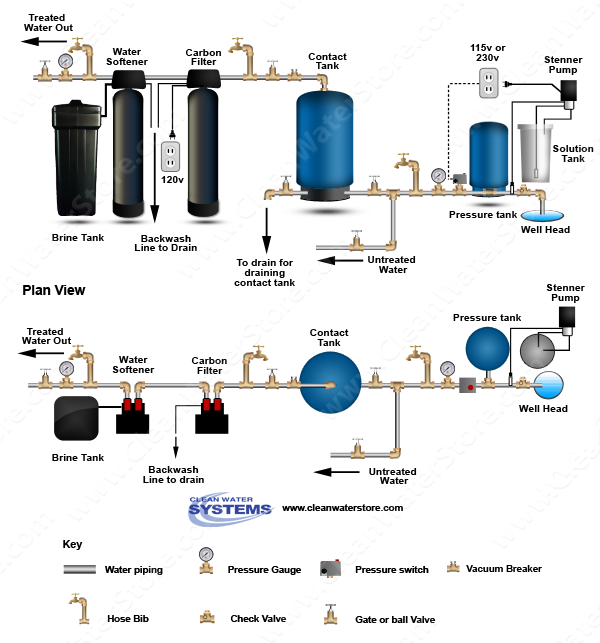
Contact Tank
Not to worry, as achieving sufficient contact time is easy to do by installing a contact tank after your chlorinator. Refer to our chlorination guide to determine the optimal contact tank size, contact time, and solution strength for your specific application.

By using a contact tank, you’ll also be reducing the amount of chlorine needed for disinfection. This approach is a cost-effective way to improve disinfection and reduce chlorine usage.
However, it is still a good idea to consider installing a carbon backwash filter after your chlorinator to filter out oxidized particulates and residual chlorine tastes and odors. The carbon backwash filter uses a media bed to remove these oxidized particulates and residual chlorine, further enhancing your water quality. These systems are also effective at removing sulfur, improving the taste and odor of your water.
This approach is a form of water treatment designed to address hydrogen sulfide and other contaminants.
Introduction to Hydrogen Sulfide Gas
Hydrogen sulfide is a colorless, flammable, and highly toxic gas often found in well and surface water. Water with hydrogen sulfide is commonly called sulfur water. It’s easily recognized by its strong “rotten egg” smell, which can be detected even at very low levels.
Despite the strong odor, hydrogen sulfide is hard to test for in a lab. The gas escapes quickly from water samples, making accurate testing difficult. It forms when sulfur bacteria break down organic matter in low-oxygen environments like wells, septic systems, and sewer lines.
As the gas enters the water, it creates a foul odor and a bad taste. The smell can linger, making the water unpleasant to use. Even small amounts can affect taste, odor, and plumbing. Removing hydrogen sulfide from well water is essential for clean, safe, and usable water.
Understanding the Problem: Hydrogen Sulfide in Water
Hydrogen sulfide in water is a common problem, especially for homes using well or surface water. The most noticeable sign is the rotten egg smell when you turn on the tap or use appliances. Besides the bad odor, it can cause black or yellow stains on fixtures, laundry, and appliances. These stains are unsightly and hard to remove. At high levels, hydrogen sulfide can make water taste bad and corrode pipes over time. Hydrogen sulfide is usually a nuisance due to its odor and taste, not a major health threat. It can enter well or surface water through springs or contamination from sources like septic systems, so it’s important to address it quickly to protect water quality.
Test packs are a convenient way to detect hydrogen sulfide on-site, allowing for informed treatment decisions.
Health Risks Associated with Hydrogen Sulfide
While hydrogen sulfide is often known for its rotten egg smell, it can pose health risks at high levels. Inhaling or drinking water with hydrogen sulfide may irritate the eyes and respiratory system, but this usually happens only when levels are dangerously high.
Long-term exposure to high concentrations can be toxic or even fatal. That said, it’s rare to consume harmful amounts through drinking water—most people would avoid it due to the strong odor and taste.
High hydrogen sulfide levels are especially risky for infants, children, and people with respiratory conditions. Elevated sulfate levels (over 250 ppm) can cause dehydration and a laxative effect, especially in babies and young animals. At this level, treatment is necessary to avoid health issues.
To protect your family, it’s important to remove hydrogen sulfide from your water. A good filtration system can effectively treat both hydrogen sulfide and sulfate, making your water clean, safe, and compliant with health standards.
Identifying Hydrogen Sulfide in Well Water
Hydrogen sulfide is a colorless gas recognized by its foul “rotten egg” smell. If you detect this odor when using your tap, hydrogen sulfide gas is likely present in your well water. This gas stays trapped in water until pumped to the surface, where it escapes and becomes noticeable. Even at low levels, the smell is unpleasant and makes water unpalatable.
Sulfur bacteria breaking down organic matter in low-oxygen environments—found in deep or shallow wells and surface water—are the usual source. Testing your water is essential to identify hydrogen sulfide and other contaminants like iron and manganese, which can also affect water quality.
Sometimes, the odor appears only in hot water due to bacteria in the water heater. While replacing the magnesium rod with aluminum may reduce the smell temporarily, it’s not a recommended long-term fix.
High hydrogen sulfide levels can irritate the respiratory system and cause stomach issues, making removal important. Cost-effective water filtration systems can effectively remove hydrogen sulfide and other contaminants. Regular maintenance, including frequent regeneration of the media bed, keeps the system working well.
In summary, testing and understanding the source of hydrogen sulfide is key to choosing the right treatment and ensuring fresh, clean water at home.
Overview of Hydrogen Sulfide Removal Methods
Several effective methods exist to remove hydrogen sulfide from water, especially to address water smells caused by hydrogen sulfide contamination. Activated carbon filters absorb the gas and improve taste, but may need frequent regeneration in high concentrations. Oxidizing filters like manganese greensand convert hydrogen sulfide into solids for filtration, offering reliable results for moderate to high levels but requiring more maintenance. The characteristic odor of hydrogen sulfide is often described as a spoiled egg smell, which serves as a key indicator of its presence.
Aeration systems release the gas by introducing air before water reaches taps; hydrogen sulfide escapes from water quickly, making detection by smell along water lines easy. Often, homeowners combine these methods to also address contaminants like iron and manganese, ensuring clean, odor-free water throughout the home. The natural movement of water, or water winds, can carry hydrogen sulfide throughout the water supply, affecting taste and odor.
Here’s a diagram of how a standard installation of these systems might look: