_2.png)
 Request a Call
Is Your Well Water Killing Your Lawn and Garden?
Brown spots on the lawn. Shrubs that won’t bounce back. Burned leaf tips on plants you’ve been watering all season. If this sounds familiar, you may have already blamed the fertilizer, the heat, or pests and found no answer.
The real problem may be coming out of your hose.
In this video, Gerry from Clean Water Store walks through the most common irrigation water quality problems that slowly damage lawns, gardens, trees, and landscaping and what you can do about them.
Whether you’re using well water for your lawn, garden, orchard, or landscaping, understanding your irrigation water quality is one of the most overlooked steps in protecting your investment. Here’s what you need to know.
Clear Water Isn’t Always Good Water
This is the most important thing to understand before anything else: well water can look crystal clear and still be damaging your plants.
The minerals and salts that harm lawns and gardens are dissolved — completely invisible. You cannot tell by looking at your water whether it’s safe for irrigation. That’s why homeowners with beautiful-looking well water sometimes spend years chasing plant problems that turn out to have a simple water chemistry explanation.
A water test is the only reliable way to know what you’re actually irrigating with.
The Most Common Irrigation Water Problems
High Salinity and TDS
Total Dissolved Solids (TDS) is a measure of all dissolved minerals and salts in your water. At high levels, salinity creates osmotic stress — meaning water is actually pulled out of plant roots rather than being absorbed by them. The result looks exactly like drought stress, even when you’re watering on schedule. Wilting, browning tips, and stunted growth are classic signs.
Sodium and High SAR
Sodium is one of the most damaging elements for both plants and soil structure. The Sodium Absorption Ratio (SAR) tells you how sodium-heavy your water is relative to calcium and magnesium. Over time, high-SAR irrigation water displaces the beneficial minerals that keep soil loose and well-draining. The result is compacted, poorly structured soil that suffocates roots — even before plants show obvious symptoms.
Chloride Toxicity
Chloride is absorbed through plant roots and accumulates in leaf tissue. Once it reaches toxic concentrations, you’ll see characteristic leaf scorch — browning and burning along the leaf margins and tips. Some plants are far more sensitive to chloride than others, which is why you may notice certain varieties struggling in your garden while others right next to them appear fine.
Boron
Boron is a micronutrient that plants need in very small amounts. At elevated levels — which occur naturally in some well water, particularly in the western United States — boron becomes toxic. Symptoms look similar to chloride toxicity: tip and margin burn on older leaves, yellowing, and eventual die-back.
pH and Alkalinity
High pH and alkalinity affect how well plants can absorb nutrients from the soil. Many essential nutrients become chemically locked up at high pH, meaning even a well-fertilized soil can leave plants nutrient-deficient. Chlorosis — yellowing leaves with green veins — is a common sign that nutrient uptake is being blocked, often by irrigation water with high pH or bicarbonate levels.
Iron and Sulfur Bacteria
Iron bacteria and sulfur bacteria don’t just stain — they clog. Drip irrigation emitters are especially vulnerable. The slimy biofilm these bacteria produce builds up inside emitters and supply lines, reducing flow and eventually blocking them entirely. If you’re seeing orange or rust-colored slime in your irrigation system, biological iron bacteria is a likely culprit.
Not sure what’s in your irrigation water?
A General Mineral Analysis tells you exactly what you’re working with — TDS, sodium, SAR, chloride, pH, alkalinity, iron, and more. Our water specialists review your results and help you find the right solution for your property.
Why Some Plants Survive While Others Struggle
Plant sensitivity to irrigation water problems varies widely by species. Some plants are naturally tolerant of higher salinity, sodium, or chloride. Others — including many ornamentals, fruit trees, and vegetables — are highly sensitive and will show damage at levels that leave tougher plants unaffected.
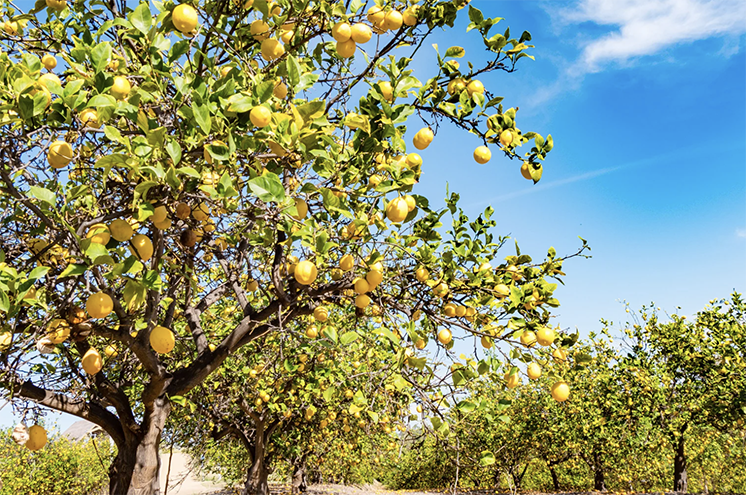
This is why you may see one plant thriving right next to one that’s struggling, even though they’re on the same irrigation zone. The difference isn’t care — it’s sensitivity. If your well water is the problem, the sensitive plants will always show it first.
What Water Tests to Request
For irrigation water, a basic drinking water test isn’t enough. Request a test that includes:
-
- TDS (Total Dissolved Solids)
- Sodium and SAR (Sodium Absorption Ratio)
- Chloride
- Boron
- pH and alkalinity (bicarbonate)
- Iron and manganese
If you’re seeing slime or biofilm in irrigation lines or emitters, add a bacteria test to check for iron bacteria and coliform.
A General Mineral Analysis from Clean Water Store covers most of these parameters and is a good starting point for well water irrigation evaluation.
What You Can Do About It
Drip Irrigation vs. Sprinklers
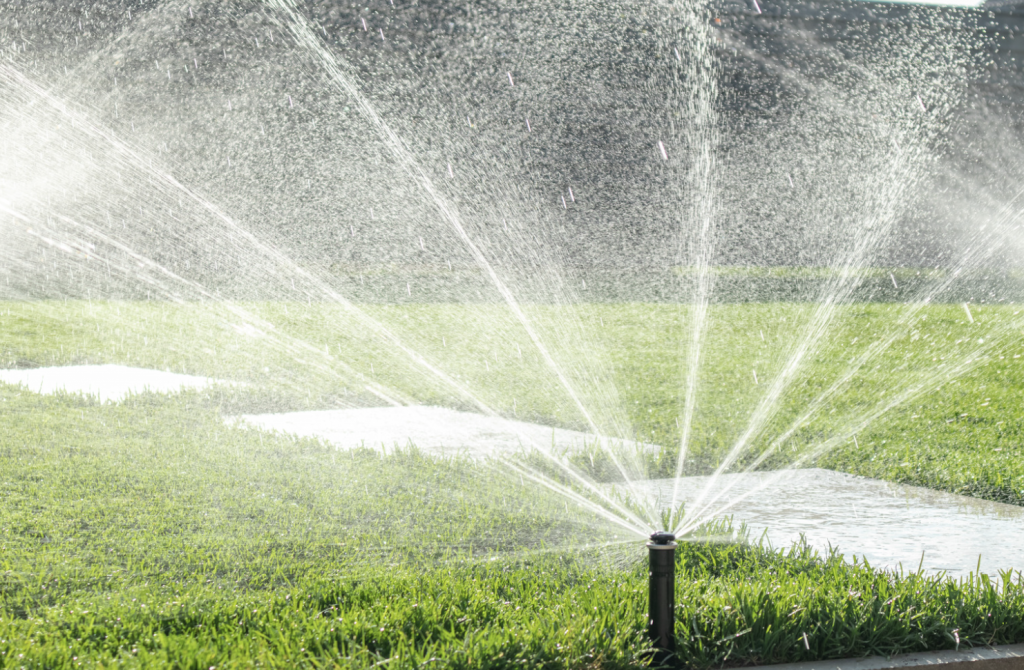
If your water has moderate salinity or sodium, switching from overhead sprinklers to drip irrigation can reduce damage significantly. Sprinklers deposit salts directly on leaf surfaces where they concentrate as water evaporates. Drip irrigation delivers water to the root zone, reducing foliar salt exposure and improving efficiency.
Gypsum for Sodium-Damaged Soil
When high-SAR irrigation water has already degraded your soil structure, gypsum (calcium sulfate) can help by displacing sodium and restoring soil porosity. Gypsum is most effective when SAR is the primary issue — it won’t fix high TDS or chloride problems on its own, but it can help restore a soil that has been damaged by long-term sodium accumulation.
Dedicated Irrigation Treatment
For iron and manganese, a dedicated irrigation iron filter sized for your actual flow rate removes the problem at the source. Standard residential whole-house iron filters are not designed for irrigation volumes — a properly sized irrigation system is a separate installation.
For high salinity, sodium, chloride, or boron, reverse osmosis becomes necessary when levels exceed what plants can tolerate. RO is most commonly used for high-value applications — orchards, greenhouses, sensitive ornamentals — where water quality directly affects results.
The Right Fix Starts With the Right Test
The most common mistake we see is homeowners treating the symptom — replacing plants, adjusting fertilizer, changing watering schedules — without ever identifying the root cause. If your well water is the problem, none of those changes will solve it.
A water test is the first step. Once you know what you’re working with, the solution is usually straightforward.
Whether you buy from us or not, we hope understanding your water better helps you give your lawn, garden, and landscaping the best possible chance.

Related Resources
Sources & Further Reading
Article last updated June 30, 2026 by Author.


