_2.png)
 Request a Call
Easiest Way to Remove Sediment From Well Water
If your water has turned cloudy, your faucet aerators keep clogging, or you’re finding grit at the bottom of your toilet tank, you’re dealing with sediment. Here’s the fastest path to fixing it for good.

Article last updated July, 2026.
Is this really sediment, or something else?
Quick gut check: if the particles only show up after the water sits or heats up, you may be looking at dissolved iron or manganese rather than true sediment (sand, silt, clay, or rust). A basic water test settles it in one shot. For the full walkthrough on what to test for and how to read a toilet tank or water heater drain for clues, see our complete guide to removing sediment from well & spring water. If your symptoms sound more like staining than grit, Sediments, Stains and Water Sediment Filters 101 will help you tell the difference.
What’s the easiest way to handle it for good?
For most wells with ongoing sediment, skip the single cartridge you have to remember to replace and go with a three-stage approach:
-
- A spin-down strainer catches the coarse sand, dirt, and mud first.
- An automatic backwashing sediment filter, like the 5900 BT sediment filter, which uses natural zeolite media to filter to 5 microns with no cartridges and little to no pressure drop which removes the bulk of the remaining turbidity and flushes it to drain on its own schedule.
- A Big Blue Dual Grade 25/1 micron cartridge filter polishes the water down to 1 micron, and lasts far longer than it would on its own since the backwash stage is doing the heavy lifting.
Not sure whether you need the full backwash setup or a cartridge is enough for your situation? When To Use a Sediment Backwash Filter breaks down exactly that decision by sediment load and flow rate.
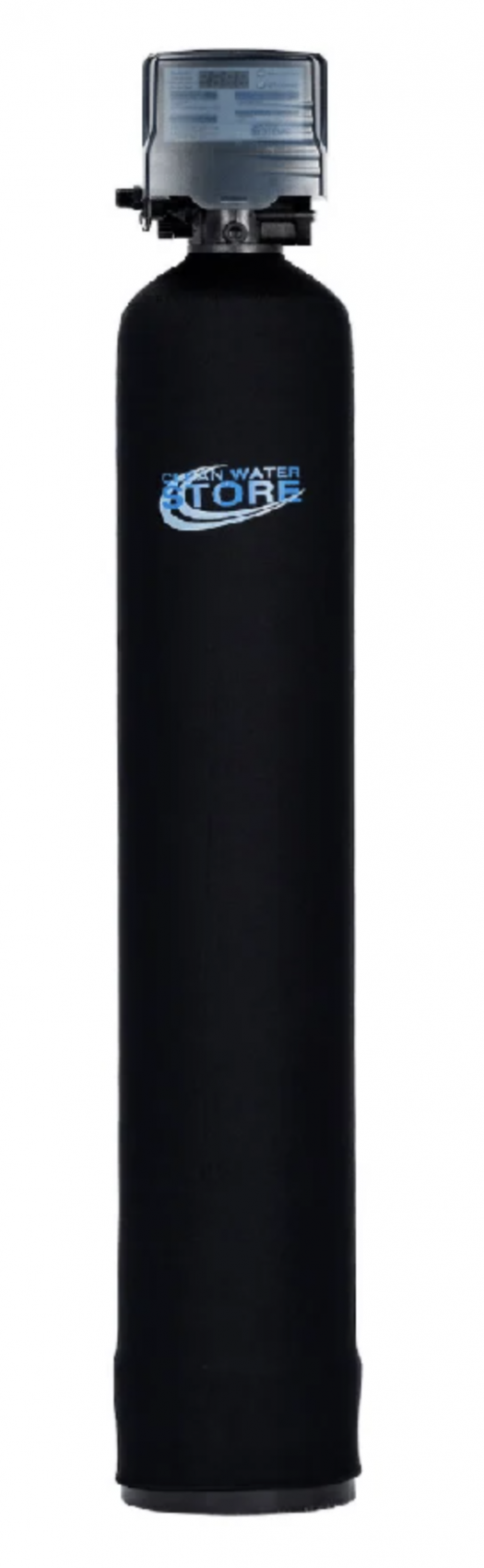
For wells that also need to remove bacteria, cysts, or sub-micron colloidal particles, a whole-house ultrafiltration system added after the stages above gets you the rest of the way. The full comparison of filter types, including ultrafiltration and flocculation for tannin or colloidal water, is in the complete sediment guide.
Do I need to fix anything besides installing a filter?
Worth checking, especially if sediment showed up suddenly rather than gradually: pump placement (a submersible pump should sit 10–20 feet above the bottom of the well. Set it too close and it stirs up settled material every time it cycles) and well screen condition (a degrading or corroded screen lets more material through than it used to). A filter solves the symptom either way, but if sediment appeared right after pump work or a repair, a quick well inspection is worth the call before assuming a bigger filter alone will handle it.

Related reading
-
- How to Remove Sediment From Well & Spring Water — the full reference guide on filter types, testing, and diagnostics
- When To Use a Sediment Backwash Filter To Remove Sediment From Well Water
- Sediments, Stains and Water Sediment Filters 101
- Why Does My Well Pressure Drop in Summer? — sediment and pressure loss often show up together this time of year
Sources


