_2.png)
 Request a Call
Do Big Blue Water Filters Remove PFAS? What City and Well Water Homeowners Need to Know
As awareness of PFAS “forever chemicals” grows, more and more homeowners are asking a very practical question. Can the filter system I already have, or an affordable upgrade, actually remove PFAS from my water? The answer depends entirely on what kind of filter media is inside the system. Here at Clean Water Store, we’ve stocked PFAS-specific carbon block cartridges for Big Blue whole-house filter housings that address this directly. Below are the questions we hear most often — answered plainly and honestly. Whether you choose us or not, our goal is to educate people honestly about their water quality. We believe an informed customer leads to the best water treatment.

What Is a Big Blue Water Filter and How Does It Work?
A Big Blue filter is a large-format whole-house filter housing — named for its distinctive blue color and generous size. It installs at the point of entry where water enters your home. Unlike smaller under-sink or countertop filters, a Big Blue system treats all the water coming into your house before it reaches any tap, shower, or appliance. The housing holds a replaceable filter cartridge, and the performance of the system depends entirely on which cartridge you use. Not all cartridges remove PFAS. Standard sediment or basic carbon cartridges are not designed for PFAS reduction. That’s why we carry specific high-performance carbon block cartridges engineered for PFAS removal.

Can a Big Blue Carbon Block Filter Actually Remove PFAS From My Water?
Yes — when the right cartridge is used. Our PFAS/PFOA/PFOS Carbon Block Filter (4.5 x 10 Big Blue) and our PFAS/PFOA/PFOS Carbon Block Filter (4.5 x 20 Big Blue) are high-density carbon block cartridges. Both are specifically designed to reduce PFAS compounds including PFOA and PFOS. Carbon block filtration — particularly at the density and contact time these cartridges provide — is one of the treatment technologies recognized by the EPA and NSF for PFAS reduction. These cartridges fit standard Big Blue filter housings. They provide an accessible, affordable entry point for PFAS protection at the whole-house level for both city water and well water customers.
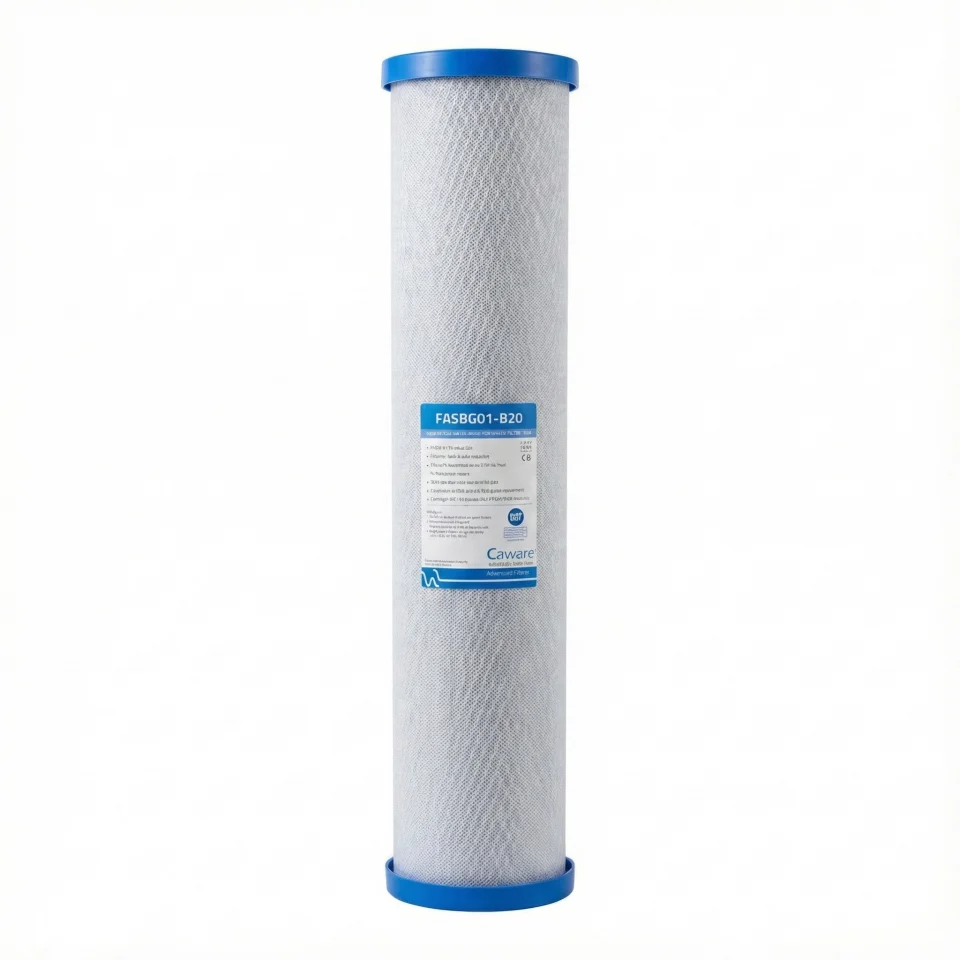
What Is the Difference Between the 10-Inch and 20-Inch Big Blue PFAS Cartridges?
The primary difference is capacity and contact time. The 4.5 x 20 Big Blue cartridge is twice the length of the 4.5 x 10 version, which means more filter media, longer contact time between water and the carbon block, and a longer service life before the cartridge needs replacement. For homes with higher water usage, higher PFAS levels, or where maximum reduction is the priority, the 20-inch cartridge is the better choice. For smaller households or as a secondary stage in a multi-filter setup, the 10-inch cartridge is a practical and effective option. Both cartridges fit standard 4.5-inch Big Blue housings.
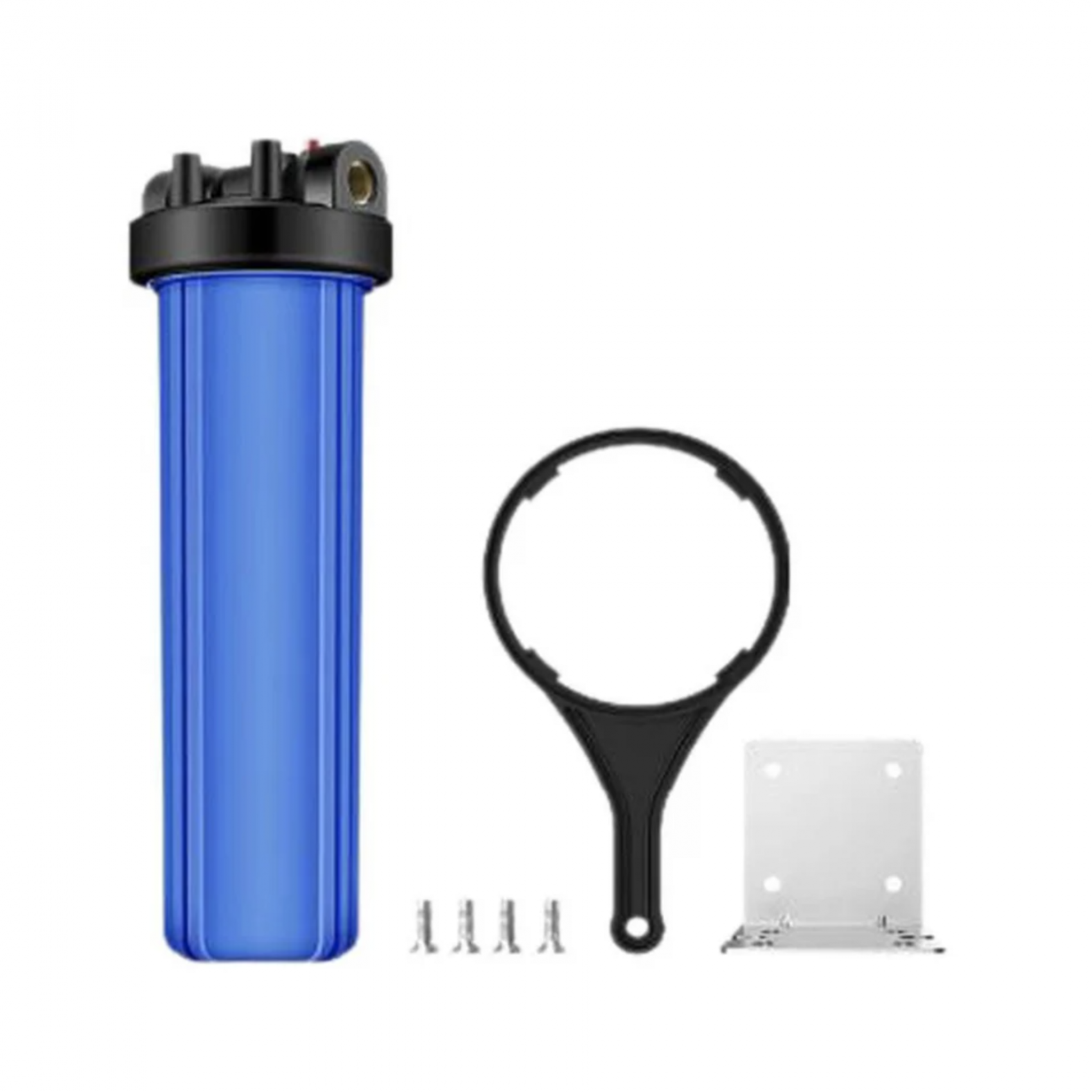
Is a Big Blue PFAS Filter Right for City Water Customers?
Absolutely. City water customers are not immune to PFAS contamination. Municipal water systems draw from surface water and groundwater sources that can be impacted by industrial discharge, military base runoff, and other PFAS sources. While water utilities are now subject to new EPA maximum contaminant levels for six PFAS compounds, compliance timelines extend out to 2029 for many systems.
That means city water customers may be drinking PFAS-containing water for years before their utility is required to address it. A Big Blue PFAS carbon block filter installed at your home’s point of entry gives you protection right now. So that you don’t have to be on your utility’s compliance timeline. It’s an affordable, practical upgrade. Many city water homeowners are choosing to make the decision today rather than waiting, especially if they have young families.
Is a Big Blue PFAS Filter a Good Option for Well Water Customers?
Yes, and for well water customers the case is even more urgent. Private wells are not regulated or monitored by any government agency. This means PFAS contamination can go undetected indefinitely without proactive testing. Well water in areas near military bases, airports, industrial facilities, and agricultural land where PFAS-containing biosolids were applied is at elevated risk.
A Big Blue PFAS carbon block cartridge installed in an existing whole-house filter housing is one of the most cost-effective ways for well water homeowners to add PFAS protection to their existing treatment system. It can be added as a dedicated PFAS stage alongside iron filters, acid neutralizers, softeners, and UV systems without requiring a complete system redesign.
How Do Big Blue PFAS Filters Compare to a Whole House PFAS Removal System?
Both approaches use carbon-based media to reduce PFAS, but they differ in scale, capacity, and long-term cost of ownership. Our Big Blue cartridge filters are an excellent entry point — affordable, easy to install in an existing housing, and highly effective for households with moderate PFAS concerns. Our PFAS High-Capacity Removal Filter System is a larger backwashing tank system designed for higher-volume applications, higher contamination levels, and homes where long-term low maintenance cost is the priority.
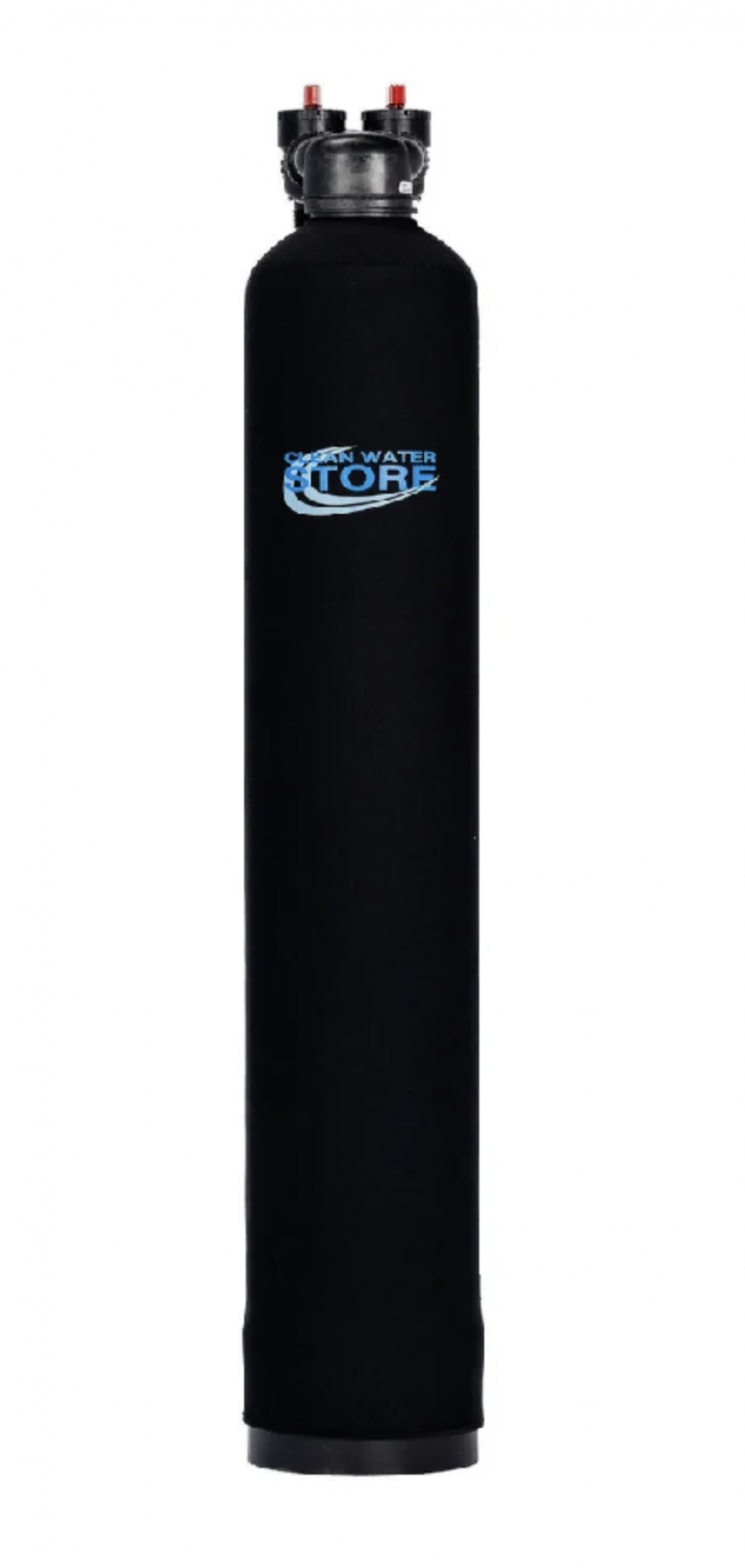
The tank system holds significantly more media than a cartridge. Allowing for longer service intervals and lower ongoing cost per gallon over time. For homeowners with confirmed high PFAS levels or who want the most robust whole-home protection available, the high-capacity system is our primary recommendation. For homeowners who want effective protection with a lower upfront investment and an easy fit into an existing setup, the Big Blue cartridges are a smart, proven choice.
How Often Do I Need to Replace My Big Blue PFAS Cartridge?
Cartridge replacement frequency depends on your household water usage and the concentration of PFAS and other contaminants in your water. As a general guideline, we recommend replacing Big Blue cartridges every six to twelve months, or sooner if you notice a reduction in flow rate. Homes with higher water consumption or higher contamination levels will need more frequent replacement. Because PFAS removal capacity is not visible — you can’t see or smell when a cartridge is exhausted — following a regular replacement schedule is important to ensure ongoing protection. Periodic water testing is the most reliable way to confirm your system is performing effectively.
Do I Need to Test My Water Before Buying a PFAS Filter?
Testing first is always our recommendation — and here’s why. Knowing your actual PFAS levels helps you choose the right system, size it appropriately, and establish a baseline so you can verify performance over time. Our SimpleLab PFAS Water Test is a comprehensive, lab-certified mail-in test that screens for a broad panel of PFAS compounds. It delivers clear, easy-to-understand results.

That said, if you live in a known PFAS-affected area — near a military base, airport, industrial site, or agricultural land where biosolids were applied — many homeowners choose to add PFAS filtration proactively while they await test results. The risk of waiting in a high-concern area often outweighs the cost of acting early.
We Also Carry the Pioneer PFAS System — Is That an Option?
Yes. We carry the Pioneer Lead, PFOA/PFOS, and Cyst Point-of-Entry Filtration System. This systems works best for homeowners who want a certified whole-home system that addresses PFAS alongside lead and cysts. It’s a solid choice for homeowners who want broad-spectrum protection with a certified system.
However, our primary focus for most homeowners concerned about PFAS is our Big Blue carbon block cartridges. These filters offer accessible, affordable protection. And our high-capacity whole-house system is best for maximum performance.
But the Pioneer remains a great option in the right situation. Contact our team and we’ll help you figure out which approach makes the most sense for your water and your home.

Where Do I Start if I’m Concerned About PFAS in My Water?
Start with a test. Then call or email our team. We’ve helped thousands of homeowners on well and city water, in high-risk areas and lower-risk ones, find the right PFAS solution for their specific situation. Whether you’re looking for an affordable cartridge upgrade or a full whole-home system, we’ll give you an honest recommendation. Our product recommendations will always be based on your actual water, not a one-size-fits-all answer.
Shop the 4.5 x 10 Big Blue PFAS Carbon Block Cartridge →
Shop the 4.5 x 20 Big Blue PFAS Carbon Block Cartridge →

Resources
Here are five trusted government and university sources on PFAS in drinking water.
- U.S. EPA — PFAS National Primary Drinking Water Regulation
Details on the 2024 EPA rule setting maximum contaminant levels for six PFAS compounds in public drinking water, including PFOA and PFOS at 4 parts per trillion. - U.S. EPA — Water Treatment Technology for PFAS
EPA research on which water treatment technologies — including granular activated carbon and carbon block filtration — are most effective for PFAS removal. - CDC/ATSDR — PFAS and Your Health
Comprehensive health guidance from the Agency for Toxic Substances and Disease Registry on PFAS exposure pathways including drinking water, skin contact, and inhalation. - USGS — PFAS in U.S. Water Resources
USGS national research on PFAS occurrence and distribution in groundwater and surface water — useful for understanding regional contamination patterns. - Environmental Working Group — PFAS Contamination Map
An interactive map of documented PFAS contamination sites and affected water systems across the United States — helpful for assessing risk in your specific area.
All product information reflects current Clean Water Store offerings and is subject to change. Contact us for personalized recommendations based on your water test results. Article last updated March 16, 2026 by Author.


