_2.png)
 Request a Call
Ultrafiltration vs. Reverse Osmosis: Which One Do You Actually Need?
Ultrafiltration and reverse osmosis both use membranes. Both can produce very clean water. And if you’re trying to figure out which one belongs in your home, the fact that they sound similar makes the decision more confusing than it needs to be.
Here’s the short version: UF and RO solve fundamentally different problems. Pick the wrong one and you’ll either spend far more than you need to, or install a system that doesn’t address what’s actually in your water. This guide — and Gerry’s video below — breaks it down so you can make a confident decision.
🎥 Watch: Gerry Bulfin of Clean Water Store explains UF vs. RO for home water in plain language — including the real-world tradeoffs of whole-house RO that most people don’t talk about.
What Is the Difference Between Ultrafiltration and Reverse Osmosis?
When you want to understand ultrafiltration vs reverse osmosis for home water, the key difference is pore size — and pore size changes everything about what each system can and cannot remove.
A UF membrane has pores around 0.01–0.02 microns. That’s fine enough to physically block bacteria, viruses, protozoa, fine sediment, cloudiness, and turbidity. But dissolved substances — minerals, salts, nitrates, arsenic, fluoride, heavy metals — are too small for a UF membrane to catch. They pass right through.
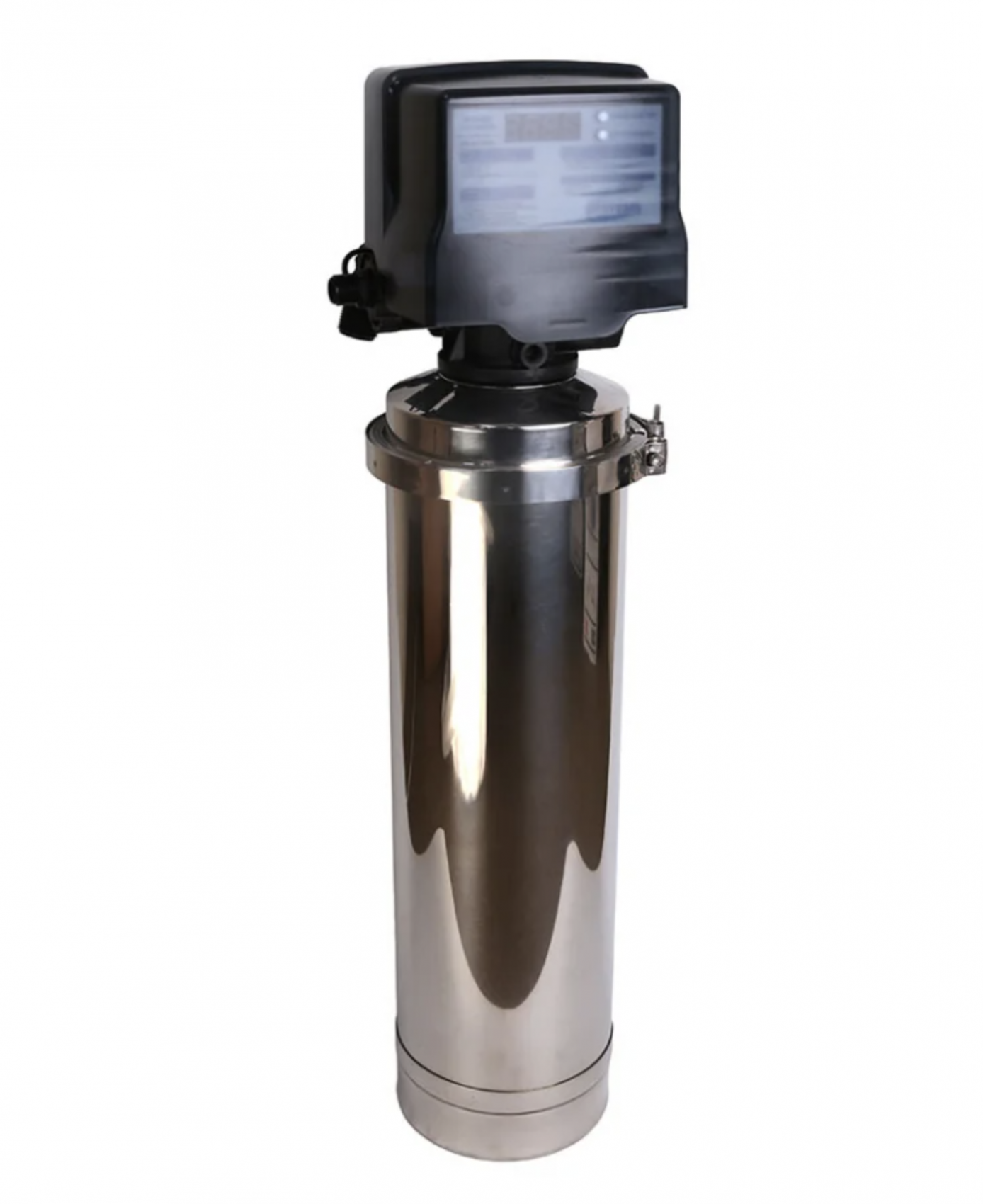
An RO membrane has pores around 0.0001 microns — roughly 100 to 200 times smaller than a UF membrane. At that scale, RO doesn’t just filter particles. It separates molecules, rejecting dissolved solids, salts, heavy metals, nitrates, fluoride, arsenic, PFAS, and virtually everything else that’s dissolved in the water. What comes out the other side is extremely pure water with very low total dissolved solids (TDS).
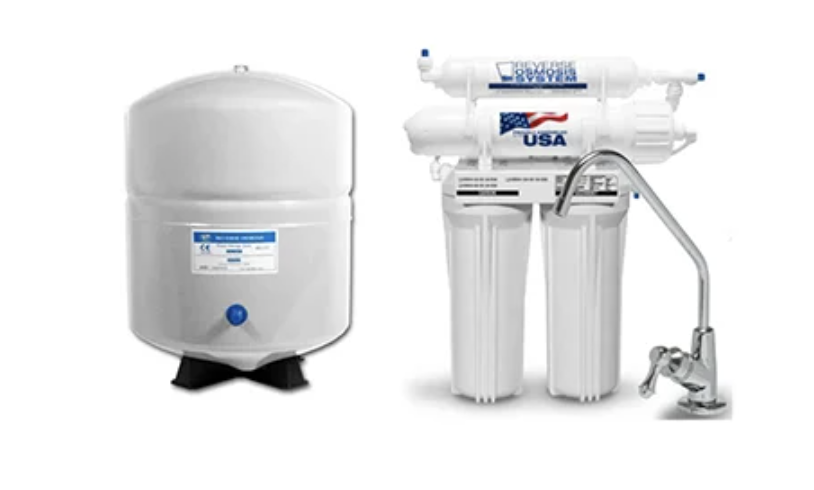
In short: UF is a very fine physical filter. RO is a molecular purification process. They are not interchangeable.
What Does Ultrafiltration Remove — and What Doesn’t It Touch?
UF removes:
-
- Bacteria and viruses
- Protozoa like Giardia and Cryptosporidium
- Fine sediment, turbidity, and cloudiness
- Microplastics (larger particles)
- Some colloids and suspended organic matter
UF does not remove:
-
- Dissolved minerals (calcium, magnesium, iron in dissolved form)
- Total dissolved solids (TDS)
- Nitrates
- Arsenic, fluoride, lead (in dissolved form)
- PFAS and other dissolved chemicals
- Salts
This makes UF an excellent choice when your water problem is microbiological or clarity-related — and your TDS is already at an acceptable level. It’s also a strong whole-house option for city water users who want an extra layer of protection against bacteria and particles without stripping the minerals from every drop of water in the house. As you can begin to see, ultrafiltration vs. reverse osmosis for home water depends on your water quality and your goals.
What Does Reverse Osmosis Remove?
RO removes virtually everything — which is both its greatest strength and the reason it isn’t always the right tool for every application.
RO removes:
-
- All dissolved salts and total dissolved solids
- Nitrates and nitrites
- Arsenic, lead, fluoride
- Heavy metals
- PFAS (forever chemicals)
- Bacteria and viruses
- Microplastics
- Dissolved minerals — including calcium and magnesium
That last point matters. RO produces very pure, very low-mineral water. For drinking and cooking, most people find this to be a significant improvement. For whole-house use, it raises practical questions about cost, flow rate, waste water, and pretreatment.
Is Whole-House Reverse Osmosis a Good Idea?
Whole-house RO exists and there are situations where it makes sense — but it comes with real-world tradeoffs that are worth understanding before committing to the investment.
Waste water. Every RO system produces reject water — water that carries the concentrated contaminants away from the membrane. Even efficient modern systems send 1 gallon to drain for every 2–3 gallons produced. At the point-of-use scale, under a kitchen sink, this is manageable. Scaled to a whole house, waste water volume becomes significant.
Flow rate and storage. RO membranes produce water slowly. A point-of-use system compensates with a small storage tank. A whole-house RO system requires a large pressurized storage tank — often 200–500 gallons — plus a repressurization pump to deliver water at normal household flow rates. This adds cost, space, and maintenance complexity.

Pretreatment requirements. An RO membrane is delicate. Iron, manganese, hardness minerals, hydrogen sulfide, and sediment will all foul or damage an RO membrane rapidly if they’re not removed upstream. For well water especially, whole-house RO means investing in comprehensive pretreatment before the RO stage — iron filtration, water softening, and sediment pre-filters at minimum.
Cost. When you factor in the storage tank, booster pump, pretreatment systems, and membrane replacement over time, whole-house RO is a significant investment — typically justified only when TDS is very high, the water source is brackish, or specific dissolved contaminants affect the whole house (not just drinking water).
When Does Whole-House RO Actually Make Sense?
There are clear situations where whole-house RO is the right call:
-
- Your well water has very high TDS — typically above 1,000–2,000 ppm — from dissolved salts or minerals that affect bathing, laundry, and appliances, not just drinking water
- You’re on brackish groundwater with elevated sodium or chlorides
- You have specific dissolved contaminants like arsenic or nitrates that affect the whole household, not just the kitchen tap
- You’re in a remote location where no other treatment option is practical
If none of these apply to you, whole-house RO is probably more system than you need.
When Is Whole-House RO Overkill?
For most homeowners — even those on well water with moderate contamination — whole-house RO is more complexity and cost than the problem requires. If your water’s dissolved contaminants are a concern primarily for drinking and cooking, a point-of-use RO system under the kitchen sink is a far more practical and cost-effective solution. You get the purest possible water where it matters most, without the storage tanks, pumps, and ongoing maintenance of a whole-house system.
What About Iron, Sulfur, and Manganese? Can RO or UF Handle Those?
This is one of the most important points in Gerry’s video — and one of the most common misunderstandings homeowners have.
Neither UF nor RO should be your first line of defense against iron, manganese, or hydrogen sulfide. Here’s why:
Iron and manganese in well water are usually in dissolved form. As water oxidizes, they convert to solid rust particles. Both of these will foul a UF or RO membrane quickly, dramatically shortening its life and reducing performance. Hydrogen sulfide can damage membranes as well.
If your well water has elevated iron, manganese, or sulfur odor, those need to be addressed upstream with dedicated iron filtration before water reaches any membrane system. This is true whether you’re installing UF, RO, or both.

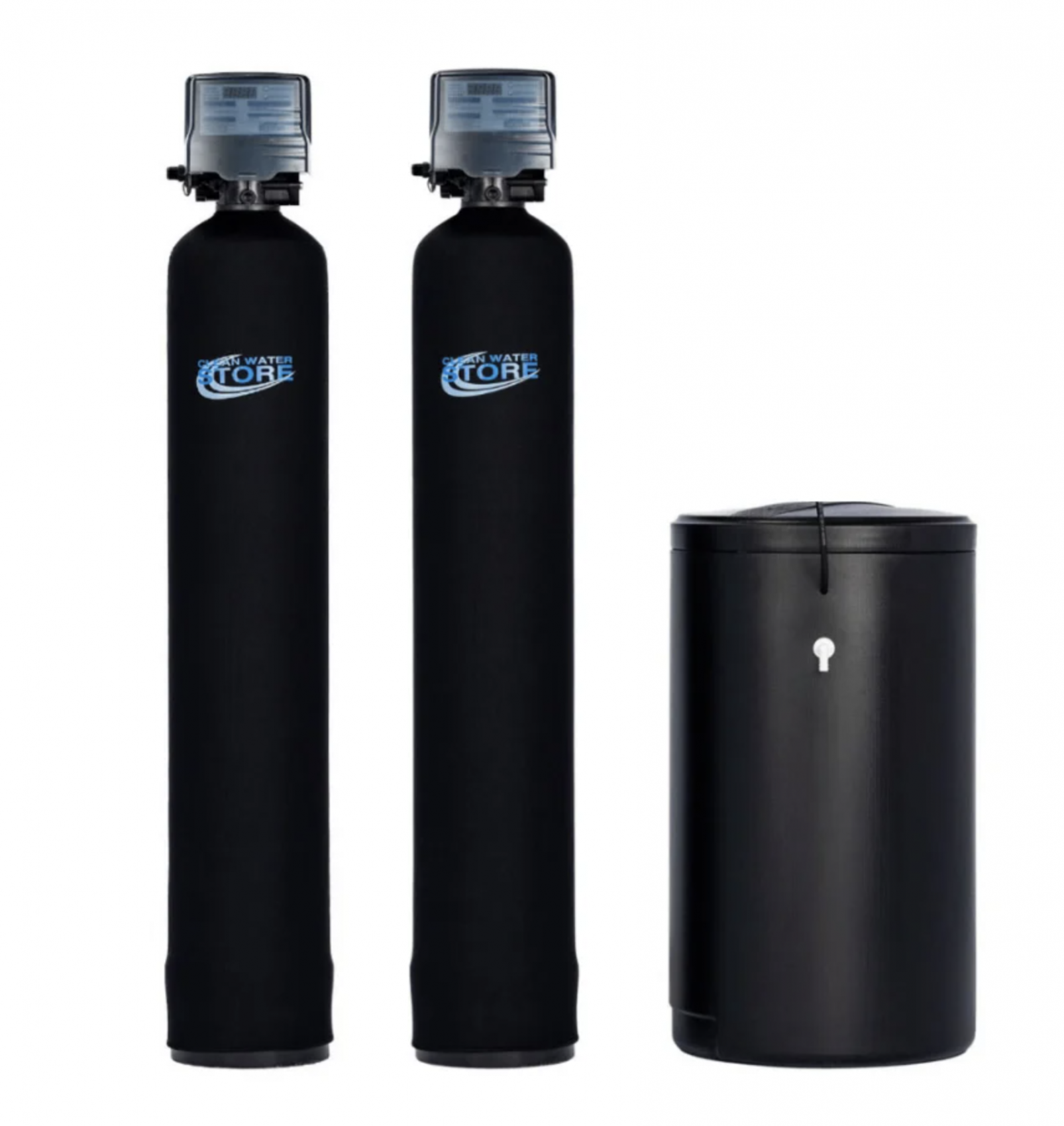
Getting this order right — iron filter first, then softener if needed, then membrane filtration — protects your investment and ensures every stage performs the way it’s designed to. Pictured above is a typical example of a custom well water system.
I’m on City Water — Do I Need Ultrafiltration, Reverse Osmosis, or Both for my home water?
City water is already treated for bacteria and pathogens before it reaches your home, which changes the equation significantly. For most city water users, whole-house UF is overkill — the municipality has already handled the microbiological side of things.
What city water users are typically dealing with is different: chlorine and chloramine added during treatment, disinfection byproducts (TTHMs and HAA5s) that form when those disinfectants react with organic matter, PFAS, lead from aging pipes in older homes, and nitrates in some areas. These are all dissolved contaminants — which means UF won’t touch them, but RO will.
The most practical city water setup for most households:
-
- An under-sink RO system for drinking and cooking water — this handles PFAS, lead, nitrates, fluoride, and dissolved chemicals at the tap where it matters most
- A whole-house carbon filter if chlorine taste, odor, or chloramines are a concern throughout the house — this is simpler, less expensive, and has no waste water. You could also add a softener if you know your city water is hard.
When does UF make sense for city water? Primarily in older homes where aging distribution pipes or the home’s own plumbing create concerns about bacterial regrowth, sediment, or particulates entering the water after it leaves the treatment plant. If your home has very old pipes, a neighborhood with infrastructure concerns, or you’ve noticed turbidity or cloudiness, whole-house UF adds a meaningful layer of protection without the complexity of whole-house RO.
For most city water households though, the answer is straightforward: a whole-house carbon filter plus an under-sink RO covers the vast majority of what city water actually needs.
So What’s the Best Setup for Most Homeowners?
For homeowners on well water without sediment, iron or sulfur odor issues, a practical and cost-effective configuration is:
Whole-house ultrafiltration + under-sink reverse osmosis.
The whole-house UF handles bacteria, viruses, turbidity, and particles for every tap in the home — showers, laundry, appliances. It requires no electricity, produces no waste water, and preserves the minerals that affect taste and feel throughout the house.
The under-sink RO handles the drinking and cooking water — removing dissolved contaminants like nitrates, PFAS, arsenic, fluoride, and heavy metals at the one place where you actually consume the water.
This combination gives you whole-house microbiological protection plus the purest possible drinking water, without the complexity and cost of whole-house RO.

For city water users with lower TDS and no microbiological concerns, a standalone under-sink RO — or even a quality carbon block filter — may be all that’s needed. As always, the right answer starts with knowing what’s actually in your water.
How Do I Know Which System Is Right for My Water?
Start with a water test. The answer to UF vs RO vs both depends entirely on what your water contains — and you can’t know that without testing.
If your TDS is low and your primary concern is bacteria or turbidity, UF may be sufficient. When you have dissolved contaminants — nitrates, arsenic, PFAS, heavy metals, high TDS — RO at the point of use is the right tool. With both microbiological risk and dissolved contaminants, combining whole-house UF with an under-sink RO covers both. Remember, if you have iron, manganese, or sulfur odor, address those first before any membrane system.
👉 Shop Water Test Kits 👉 Explore Reverse Osmosis Systems 👉 Contact Our Team — no commissions, no pressure, just straight answers based on your water.
More Resources on Ultrafiltration vs. Reverse Osmosis for Home Water
CDC: About Home Water Treatment Systems (covers both UF and RO pore sizes and what each removes)
 Article last updated by Author April 14, 2026


