_2.png)
 Request a Call
Are Microplastics in City Tap Water? What Municipal Water Customers Need to Know
Most city water customers assume that because their water is treated, it’s safe from emerging contaminants like microplastics. The reality is more complicated. Here are the questions homeowners on municipal water are asking us every day, answered honestly.
What Are Microplastics and How Do They End Up in My City Water?
Microplastics are tiny plastic particles, generally less than 5 millimeters in size. Often microscopic, they have broken down from larger plastic waste or been released directly into the environment. They come from synthetic textiles, tires, industrial processes, and consumer products. They are now found virtually everywhere on Earth: in oceans, rivers, soil, air, and drinking water.

In municipal water systems, microplastics enter through several pathways. Source water — the rivers, lakes, and reservoirs that feed city water supplies — already contains microplastics from runoff, wastewater discharge, and atmospheric deposition. Microplastics can also enter treated water through aging plastic distribution pipes and even through plastic storage infrastructure after treatment is complete.
Learn more:
EPA: Microplastics in Drinking Water Research
WHO: Microplastics in Drinking Water
Does My City’s Water Treatment Plant Remove Microplastics?
Conventional municipal water treatment (which typically includes coagulation, sedimentation, filtration, and disinfection) was designed decades before microplastics were identified as a concern. Research suggests that standard treatment processes can remove a significant portion of larger microplastic particles, but smaller microplastics and nanoplastics frequently pass through and into finished drinking water.
A 2021 study published in Environmental Science & Technology found microplastics in treated tap water samples across multiple countries, confirming that conventional treatment alone is not a reliable barrier at all size ranges. The EPA is conducting ongoing research but has not yet set a federal maximum contaminant level. This means utilities are not required to test for or report microplastic levels in your annual water quality report.
The bottom line: treatment helps, but it does not eliminate microplastics from your tap water.
Find your annual Consumer Confidence Report (CCR) at EPA.gov
Is Bottled Water Safer Than Tap Water for Microplastics?
This is one of the most common questions we hear. The answer may surprise you. Studies have consistently found microplastics in bottled water, often at higher concentrations than in tap water. A 2018 study testing 259 bottled water products from 11 brands across 9 countries found microplastics in 93% of samples.

Plastic bottles themselves are a source of contamination, particularly when exposed to heat or UV light. Beyond the health concern, bottled water generates enormous plastic waste and costs far more per gallon than filtered tap water. It is not a reliable or sustainable solution to microplastics exposure. For most families, high-quality home filtration is a far better investment.
What Does My Annual Water Quality Report Say About Microplastics?
Almost certainly nothing — and that’s not because your utility is hiding something. The EPA has not yet established a regulatory limit for microplastics in drinking water, so water utilities are not required to test for or report them in your Consumer Confidence Report (CCR). Your annual report is a useful document for regulated contaminants, but microplastics are not yet among them.
This is precisely why proactive home filtration matters. Waiting for regulation to catch up means years of continued exposure. The homeowners we work with every day have decided not to wait.
What Is the Best Filter to Remove Microplastics From City Tap Water?
Not all filters are equal when it comes to microplastics. The key is pore size — a filter needs to be fine enough to physically capture particles that can be extremely small. Here is how the main technologies compare:
-
- Reverse osmosis (RO) — the gold standard for microplastics removal at the point of use. RO membranes filter at the nanometer level, effectively removing microplastics, PFAS, heavy metals, nitrates, and a wide range of other contaminants. Independent testing consistently confirms RO as one of the most effective technologies available for microplastics reduction in drinking water.
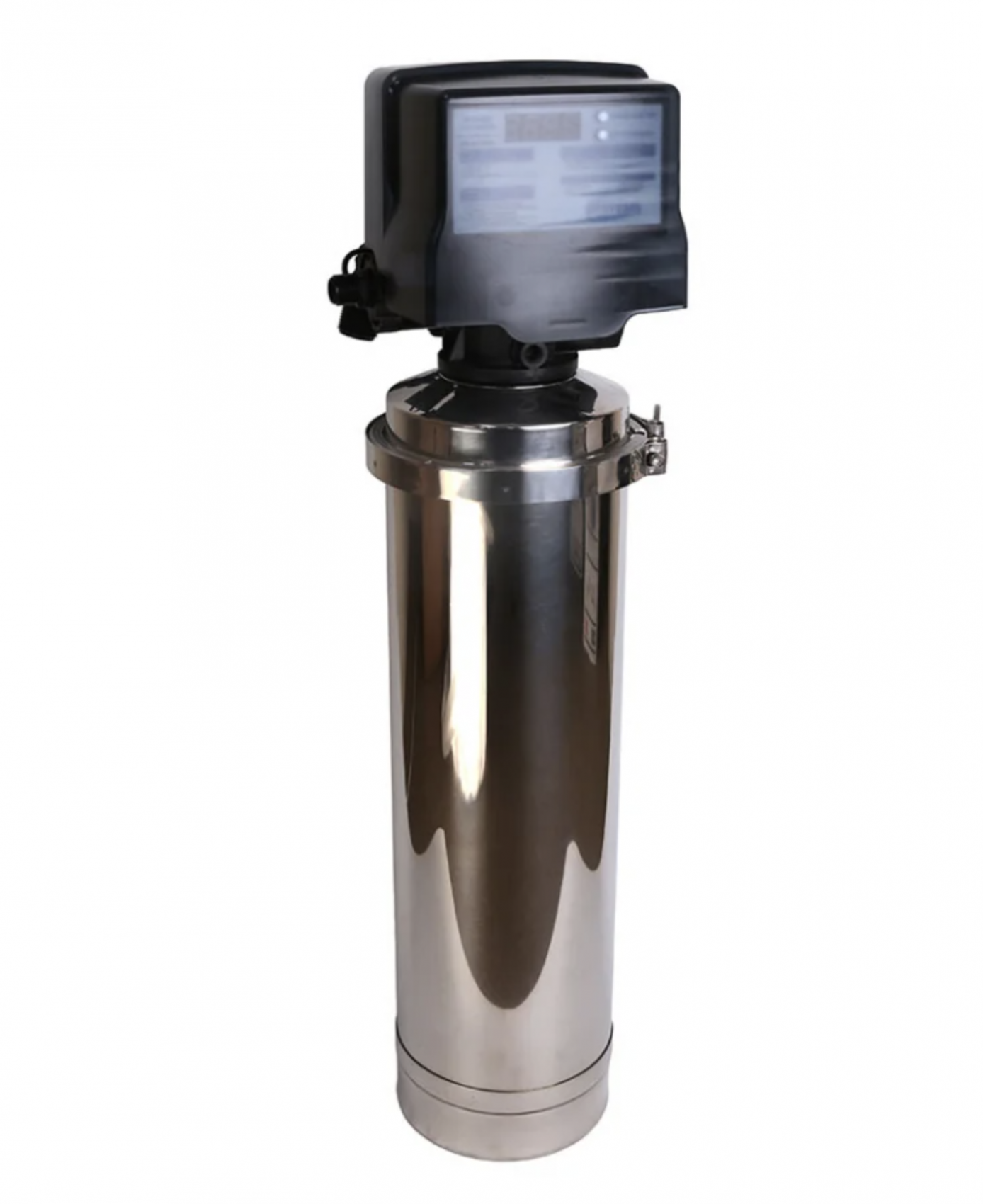
- Ultra filtration — for a powerful level of whole house filtration between standard sediment filters and reverse osmosis systems. It removes particles far smaller than cartridge filters while allowing dissolved minerals to pass through — and without producing wastewater. UF systems filter down to 0.015 microns. Ultrafiltration is ideal as a standalone whole-house clarity filter or as a pre-treatment stage ahead of carbon filters, softeners, or specialty media systems.
- Pitcher and faucet filters — these vary widely in effectiveness. Many standard pitcher filters are not rated for microplastics removal. We do not recommend this type of filter or other basic carbon filters for Microplastics.
For city water homeowners, the most effective strategy is either an Ultra Filtration system or a point-of-use reverse osmosis system for drinking and cooking water.
Is a Whole House Filter or an Under-Sink Reverse Osmosis System Better for Microplastics?
The honest answer is: it depends. Are you mostly concerned about the drinking water or do you want whole home protection for showering and bathing?
A reverse osmosis system installed under your kitchen sink delivers the highest level of filtration for the water your family drinks and cooks with. It reduces microplastics, PFAS, nitrates, heavy metals, and virtually everything else at the point you consume it. This is your best line of defense for drinking water quality.

A whole house ultra filtration system treats every drop of water that enters your home — protecting you both in the shower and at every tap. This filter does not remove everything, however, and you may also want other whole house filtration that removes other contaminants like Chlorine and Chloramines, for example. It all depends on your water chemistry. This Ultra Filtration System is a great post treatment filter for Microplastics specifically after your whole house system. Some homeowners have a whole house filter system, the UF System and a Reverse Osmosis for complete coverage. It all depends on your water chemistry and budget, reach out to one of our water experts to determine the best set-up.
Should I Be Filtering My Shower Water for Microplastics Too?
Research into dermal absorption and inhalation of microplastics during showering is still early, but concerns are growing. What we do know with confidence is that chlorine and chloramines in shower water have documented effects on skin and hair, and that a whole house system addresses shower water quality comprehensively.
Are Some Cities Worse Than Others for Microplastics in Tap Water?
Yes. Though comprehensive city-by-city microplastics data is still limited due to the lack of federal testing requirements. What research does show is that cities drawing water from heavily industrialized or heavily trafficked surface water sources tend to have higher microplastic concentrations in source water. Older cities with aging plastic or PVC distribution infrastructure face additional risk of microplastics entering water after treatment.
The EWG Tap Water Database is a useful tool for checking what contaminants have been detected in your local water supply. For microplastics specifically, independent testing from your own tap is currently the most reliable way to understand your personal exposure.
We partner with SimpleLab, a certified lab with individual tests like for Microplastics.

How Do I Get Started Protecting My Home’s City Water?
The path most of our city water customers follow looks like this:
-
- Review your annual CCR — understand what regulated contaminants are present in your municipal supply
- Consider independent water testing — especially for microplastics, PFAS, and other unregulated contaminants your CCR won’t cover or if you have health concerns
- Install an Ultra Filtration System — for whole house reduction.
- Add an under-sink reverse osmosis system — for the highest level of drinking and cooking water purity
- Consider a whole house water system— for other contaminants and complete coverage

Our technical support team is available Monday through Friday, 7:30 AM to 3:30 PM PT to help you choose the right combination for your water and your home. No overselling, just honest guidance from WQA-certified water experts.

Want to go deeper? Read our related guides:
What Are Microplastics in Drinking Water and Should I Be Worried? — our full homeowner’s guide to microplastics
Are Microplastics in Well Water? — for private well owners
PFAS vs Microplastics: What’s the Difference and Are Both in My Water?
What Are PFAS Forever Chemicals and Are They in My Water?
This article was last updated March 24, 2026 by Author


