_2.png)
 Request a Call
What You Should Know About Coliform Bacteria in Your Home Well Water
If you’re dealing with coliform bacteria in your well water, you may already know the basics, what total and fecal coliform mean, common sources of contamination, and general prevention. If you need that foundation first, see our guide on sources of coliform bacteria contamination in well water.
This guide covers three things that guide doesn’t: how to assess your own property for risk factors, how drilling or repair work can introduce contamination without you realizing it, and how to interpret your test results once they come back.

Survey Your Property for Risks
To protect your well, start by assessing the area around it. Ask yourself:
-
- Are livestock or manure piles located near the well?
- Are pesticides or lawn fertilizers used nearby?
- Is the well downhill from a septic system?
- Is there visible runoff from farmland or pet areas?
- Is your well near a salted or de-iced road?
- Are any household chemicals or used oil being dumped outdoors?
If any of these apply, take three steps. Test your water right away for coliform and E. coli. Contact your local public health department or agricultural extension agent. Have a licensed professional review your well’s construction and location.
Private wells need ongoing attention. If you confirm contamination, you may need to evaluate, and possibly upgrade, your entire water system.
Well Drillers and Contractors May Accidentally Contaminate Your Well Water
Coliform bacteria can enter a well during its original construction or during repairs. Drilling and pump installation often carry the highest risk, since equipment, drilling fluids, or airborne particles can introduce bacteria.
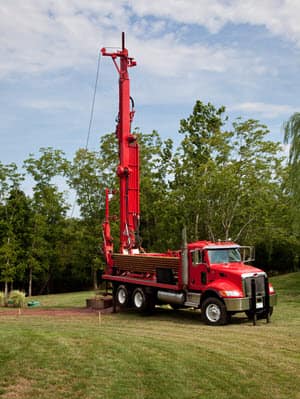
Repairs pose a risk too. Tools, dirt, or contaminated water can introduce bacteria into the well. Chlorinate any water used during drilling or repair (at least 50 PPM) and verify it’s bacteria-free first. Never assume neighboring well water is safe.
Keep all tools and equipment clean, dry, and disinfected with a chlorinated solution before placing them into the well. Proper disinfection and equipment hygiene keep your well water safe. If you’ve recently had drilling, pump work, or repairs done, test your water even if you have no other reason to suspect contamination.
Interpreting Your Test Results
Once your test comes back, what it says determines what happens next:
Total coliform detected, no E. coli or fecal coliform: Your water may have picked up contamination from human or animal waste, though this doesn’t automatically mean it’s unsafe to drink. Treat it as a signal that your well may be vulnerable. Inspect your well construction and the risk factors above, then disinfect and retest.
E. coli or fecal coliform detected: This strongly suggests fecal contamination. Act on this one immediately, treat the water as unsafe until you’ve disinfected it and retested clean.
Either way, a positive result should prompt you to investigate the source, not just treat the symptom. Testing again after any fix confirms whether it actually worked.

You can now test for these bacteria at home using modern test kits. Collect your water sample carefully, since that’s what makes the results accurate. These low-cost kits let you keep an eye on your well’s water supply through consistent testing, and they detect total coliforms along with other bacteria to help you assess potential health risks. See our DIY well water test kits guide for how these compare to lab testing.
Resources:
CDC: Guidelines for Testing Well Water
Texas A&M AgriLife Extension: What to Do About Coliform Bacteria in Well Water
Read More
-
- Sources of Coliform Bacteria Contamination in Home Well Water, for the basics on total vs. fecal coliform, common sources, and general prevention.
- Treating Iron, Manganese, and Coliform Bacteria in Well Water, for choosing the right treatment system once contamination is confirmed.
- Can I Test My Own Well Water for Coliform Bacteria at Home?, a quick FAQ-style answer for homeowners deciding between DIY and lab testing.
See how we make clean water simple, with proven systems, easy installation, and a 90-day guarantee. Whether your well or city water smells off or leaves stubborn stains, you don’t have to face it alone. The same goes if it’s damaging your appliances.

Article last updated July 31, 2026 by Author.


