_2.png)
 Request a Call
Are Microplastics in Well Water? What Private Well Owners Need to Know
If you’re on a private well, you may assume that groundwater is naturally filtered and protected from contaminants like microplastics. However, the science tells a different story. Research confirms that microplastics have been detected in groundwater systems worldwide. This includes in private wells across the United States. And unlike city water customers, well owners have no government agency testing their water or setting limits on their behalf. Here are the questions well owners ask us about these tiny particles and some practical advice about what you can do about them.
Can Microplastics Get Into My Private Well Water?
Yes. Microplastics have been confirmed in groundwater systems across the globe, including karst aquifers, shallow alluvial wells, and deep confined aquifers. A 2024 peer-reviewed study published in Water Research found microplastic accumulation in groundwater worldwide. No groundwater source should be assumed free of microplastic contamination.

The idea that soil acts as a complete natural filter for microplastics is a misconception. While soil does retain some particles, research published in Water (MDPI, 2024) confirms that microplastics migrate vertically through agricultural soils and horizontally through surface runoff into groundwater aquifer systems. Smaller particles and microfibers are particularly mobile in the subsurface environment. They travel significant distances underground before reaching a well.
The depth of your well matters, deeper confined aquifers generally have lower microplastic concentrations than shallow wells. But depth alone does not guarantee protection. Microplastics have been detected even in deeper groundwater sources in multiple studies.
Learn more:
EPA: Private Wells — Protecting Your Family’s Water
EPA: Microplastics in Drinking Water Research
Where Do Microplastics in Well Water Come From?
Microplastics reach groundwater through several pathways — and many of them are specific to rural and agricultural areas where private wells are most common:
-
- Agricultural biosolids — sewage sludge applied to farmland as fertilizer contains significant concentrations of microplastic fibers from synthetic textiles and consumer products. Once applied to soil, these particles migrate downward through rain infiltration into groundwater. This is one of the most significant and least-discussed sources of well water microplastic contamination in the U.S.

-
- Surface runoff — rainwater picks up microplastics from roads, fields, and plastic waste on the surface and carries them into the soil and toward groundwater recharge zones
- Septic systems — a 2019 study published in Groundwater found microplastics in karst wells in Illinois and identified septic effluent as a significant contributing source, with microplastic concentrations consistent with septic-related contamination markers
- Plastic well casing and piping — PVC and plastic components used in well construction and household plumbing can shed microplastic particles directly into water as it passes through
- Landfill leachate — liquid waste from landfills carries microplastics into surrounding soil and groundwater, particularly in areas where landfills sit above or near aquifer recharge zones
- Atmospheric deposition — microplastics fall from the air in rain and dust and infiltrate soil around wellheads, especially in shallow or improperly sealed wells
A 2025 review in ScienceDirect confirmed that the sources of microplastics entering groundwater are numerous and interconnected. Soil, surface runoff, agricultural activity, domestic waste, landfill sites, and industrial production. Many of which are concentrated in rural areas where private wells are most common.
Is Well Water More or Less at Risk Than City Water for Microplastics?
The honest answer is: it depends on your location and well depth, but in some important ways well water owners face greater risk. Not because groundwater necessarily has higher microplastic concentrations, but because of the absence of any oversight or treatment.
Municipal water systems, despite their limitations with microplastics, do provide some level of treatment that removes a portion of larger particles. Private well owners receive no treatment at all unless they install it themselves. Whatever microplastics are present in the aquifer go directly from the ground into your tap.

Additionally, well owners have no government agency testing their water. There is no annual Consumer Confidence Report, no regulatory limit, and no notification system if contamination levels rise. The entire responsibility for monitoring and protecting well water quality falls on the homeowner. Which is exactly why proactive testing and filtration are so important.
Studies analyzing raw water sources for drinking water production have found that surface water sources generally show higher microplastic concentrations than groundwater. But this advantage disappears if a well is shallow, improperly sealed, or located near agricultural land, landfills, or septic systems.
How Do I Test My Well Water for Microplastics?
Standardized, widely available consumer testing for microplastics specifically does not yet exist the way it does for bacteria, nitrates, or heavy metals. Microplastics testing is still developing at the laboratory level, and methodologies vary significantly between labs.
What we recommend for well owners right now:
Start with a comprehensive water quality test — test for the full range of contaminants common in well water: bacteria (coliform, E. coli), nitrates, arsenic, heavy metals, PFAS, pH, hardness, iron, and manganese. Understanding your overall water profile is the essential first step and guides your filtration choices
Consider the individual microplastics test from SimpleLab, a certified water testing lab that we partner with here at Clean Water Store:

Don’t wait for microplastics testing to act — given the widespread evidence of groundwater contamination and the absence of any regulatory protection for well owners, installing proven filtration now is a practical approach if you have concerns.
👉 Get a Well Water Test Kit from Clean Water Store
What Type of Filter Removes Microplastics From Well Water?
For well water, filtration needs to address microplastics alongside the other contaminants commonly found in groundwater — iron, manganese, hardness, bacteria, sediment, and potentially PFAS. The most effective approach is a layered system that handles each concern at the right stage.
-
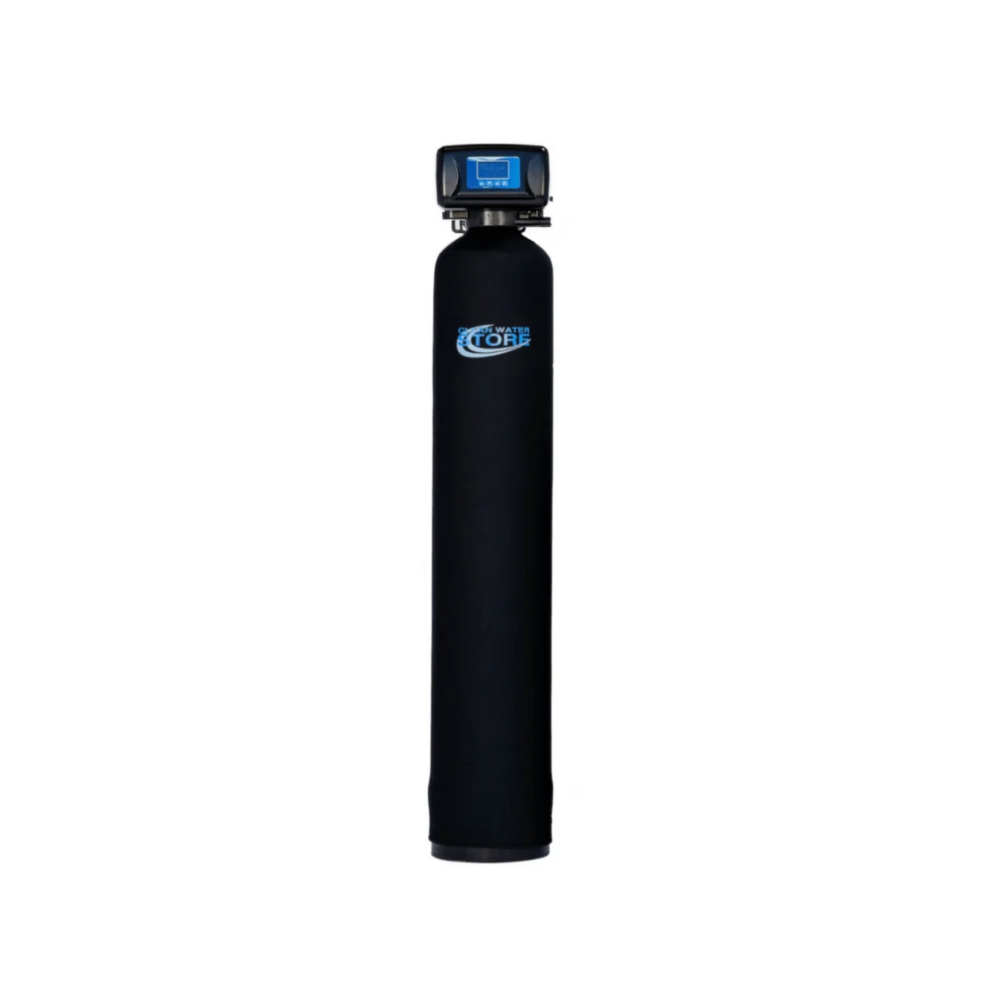
- Sediment pre-filter — an essential first stage for many well water treatment systems. Removes sand, silt, rust, and larger particles including many microplastics before water reaches downstream treatment components. Protects all downstream equipment from fouling and extends media life significantly. View sediment filter systems
-
- Reverse osmosis (RO) system — the gold standard for microplastics removal at the point of use. RO membranes filter at the nanometer level, removing microplastics, PFAS, heavy metals, nitrates, arsenic, and a broad range of other contaminants. For drinking and cooking water, this is the single most effective step a well owner can take. Many of our well water customers have a custom whole house treatment system design and a RO. View reverse osmosis systems

-
- Whole house carbon filtration — addresses chemical taste and odor, chlorine (if present), VOCs, and organic contaminants throughout the entire home. Often another important layer in a complete well water treatment strategy. View whole house carbon systems
-
- Iron and manganese filter — well water commonly contains elevated iron and manganese that must be addressed before other filtration stages. Untreated iron can foul carbon media and RO membranes, reducing their effectiveness for microplastics and other contaminants. View iron filter systems
-
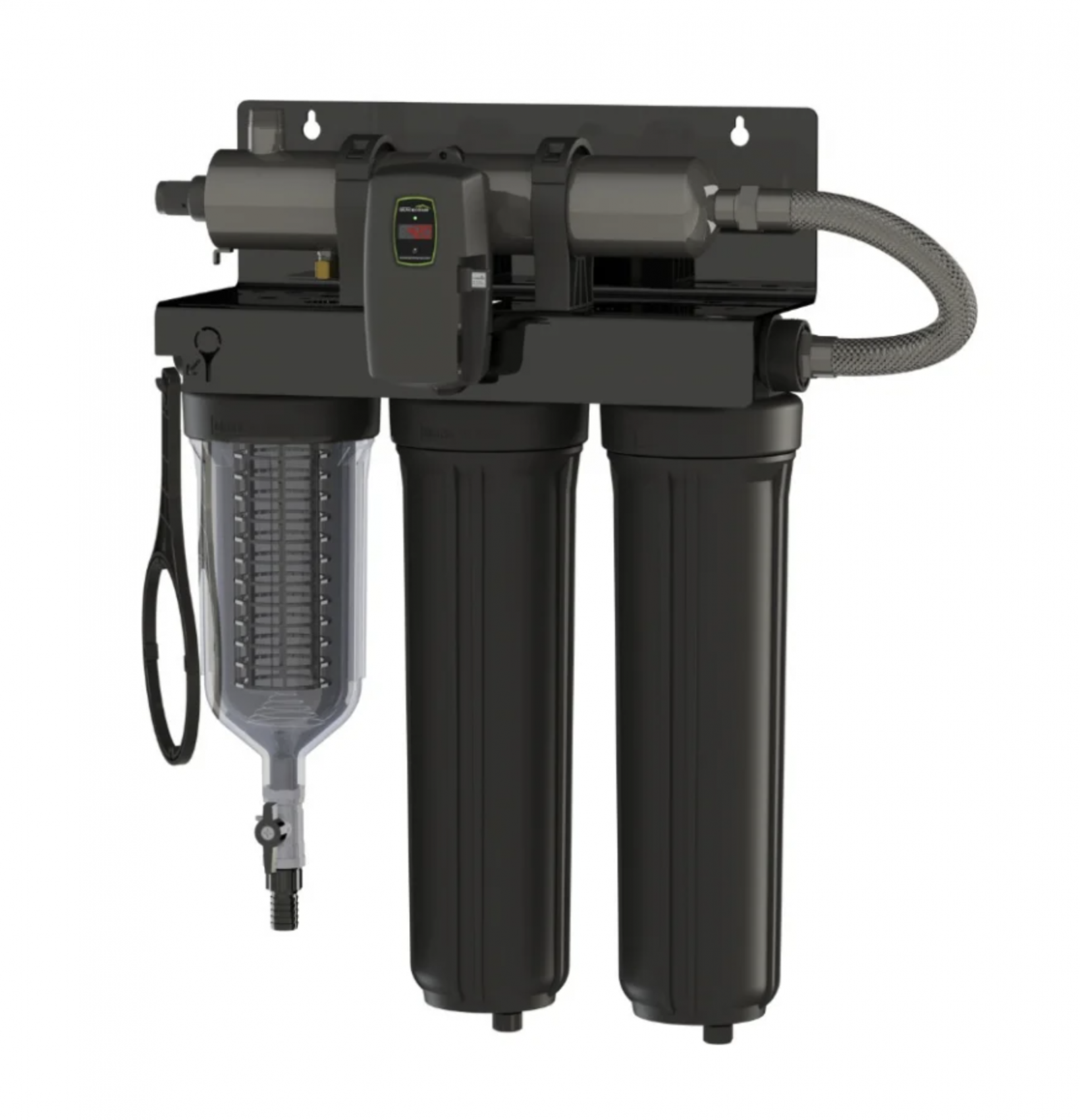
- UV disinfection — well water is not treated for bacteria and viruses the way city water is. UV disinfection is a critical addition for most well owners, eliminating biological contamination without adding chemicals. It works best after sediment and carbon filtration when water is clear. View UV disinfection systems
-
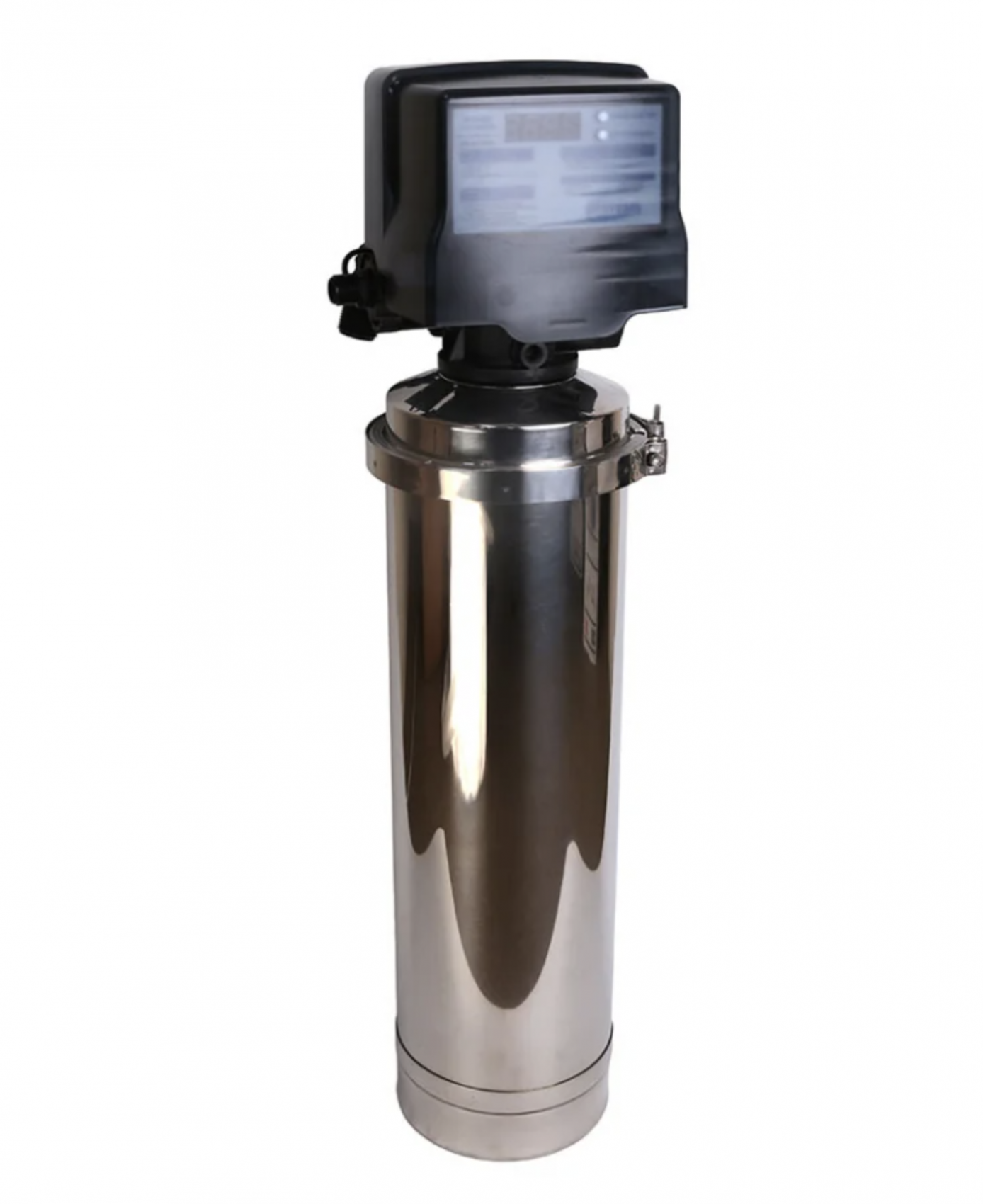
- Whole House Ultra Filtration Systems —Ultrafiltration provides a powerful level of filtration between standard sediment filters and reverse osmosis systems. It removes particles far smaller than cartridge filters while allowing dissolved minerals to pass through — and without producing wastewater. UF systems filter down to 0.015 microns. Ultrafiltration works very well as a post treatment stage filter for microplastics after carbon filters, softeners, or specialty media systems.
Do I Need a Whole House Filter or an Under-Sink Filter for Microplastics in Well Water?
For well water owners, the answer is almost always both. Here is why each plays a different role.
A whole house system treats all the water entering your home at the point of entry. For well water, this typically means a sediment pre-filter, an iron or manganese filter if needed, a carbon filter for chemical contaminants, UV disinfection for bacteria, and an Ultrafiltration system for microplastics. This layered approach protects your plumbing, water heater, appliances, and all household water — including shower water, laundry, and cooking water — reducing sediment, biological contamination, chemical issues, and plastic particles down to 0.015 microns. A whole house system is not optional for most well owners. It is the foundation of a safe home water supply, and adding an Ultrafiltration System as a final stage is one of the most effective steps you can take specifically in response to microplastics contamination in your well water.
An under-sink reverse osmosis system adds a second, finer layer of protection specifically for the water you drink and cook with. Even after whole house treatment, an RO system at the kitchen sink provides maximum contaminant reduction — including microplastics, PFAS, nitrates, arsenic, and heavy metals — at the nanometer level. This is your best line of defense for drinking water purity.
Together, whole house treatment and point-of-use RO give well owners the most complete protection available. Addressing both safety and quality at every tap and at the highest level for the water that matters most.
👉 Shop Whole House Well Water Systems
👉 Shop Reverse Osmosis Systems
How Often Should I Test My Well Water for Microplastics and Other Contaminants?
For regulated contaminants — bacteria, nitrates, pH, hardness, iron, and manganese — the EPA recommends testing private wells at least once per year. However, sometimes more frequent testing is required, especially if you notice changes in taste, odor, or appearance. Or if there has been flooding, nearby construction, or agricultural activity near your well.
For emerging contaminants including PFAS and microplastics, annual testing is a reasonable goal as laboratory options improve and standardize. At minimum, test your well comprehensively when you move into a new property, after any nearby land use changes, and after any flooding or drought events that could affect your aquifer.
The most important thing is not to assume your water is safe because it looks, smells, and tastes fine. The most dangerous well water contaminants — including PFAS, nitrates, arsenic, and microplastics — are invisible, odorless, and tasteless.
EPA private well testing guidance
CDC: Testing Private Wells
What Other Contaminants Should Well Owners Test for Alongside Microplastics?
Microplastics are one piece of a larger picture for well water quality. The most important contaminants to test for in a private well include:
-
- Coliform bacteria and E. coli — the most urgent safety concern for any well. Biological contamination can cause serious illness and must be addressed before any other treatment
- Nitrates — especially critical for households with infants. Common in agricultural areas from fertilizer runoff and septic systems
- PFAS — forever chemicals found in groundwater across the U.S., particularly near military bases, airports, industrial sites, and agricultural land where biosolids were applied. PFAS and microplastics share contamination pathways and frequently co-occur in well water
- Arsenic — naturally occurring in many rock formations and a significant concern in well water across the U.S., particularly in the Southwest, New England, and Midwest
- Iron and manganese — extremely common in well water, causing staining, taste issues, and equipment damage
- Hard water (calcium and magnesium) — causes scaling on fixtures, appliances, and plumbing
- pH — acidic water corrodes pipes and plumbing, leaching lead and copper into drinking water
- Radon — a radioactive gas that dissolves into groundwater from surrounding rock and is a concern in certain geologic regions
A comprehensive well water test that covers all of these gives you the complete picture you need to design the right treatment system for your home. Our team reviews water test results every day and helps well owners choose the right combination of systems — with no overselling and no guesswork.

👉 Get a Comprehensive Well Water Test Kit
👉 Shop Well Water Treatment Systems
👉 Shop Reverse Osmosis Systems
👉 Talk to Our Well Water Experts — Mon–Fri 7:30 AM–3:30 PM PT
Read the full guides in our contaminants series:
What Are Microplastics in Drinking Water and Should I Be Worried? — our complete homeowner’s guide
Microplastics in City Tap Water: Are You Protected?
PFAS vs Microplastics: What’s the Difference and Are Both in My Water?
What Are PFAS Forever Chemicals and Are They in My Water?

Last updated March 24, 2026 by Author.


