_2.png)
 Request a Call
How to Remove Lead from City Water: Whole House vs Point of Use Solutions Explained
Lead in city water is not a treatment plant problem — it’s a plumbing problem. Your water utility almost certainly delivers lead-free water. The contamination happens between the main and your tap, in aging service lines, solder joints, and plumbing fixtures that were installed before lead was banned. That distinction matters enormously when choosing how to protect your family, because it determines exactly where and how filtration needs to happen.

This guide covers what the latest EPA regulations mean for homeowners, which filtration technologies actually remove lead, the honest truth about whole house vs point-of-use systems, and what certifications to look for before buying anything. We’ve been educating homeowners about water quality since 1986, whether they buy from us or not. Clean water is the goal, and we’re here to help you get there.
Why Is Lead Still in City Water in 2026?
In October 2024, the EPA finalized the most significant update to lead drinking water regulations in nearly three decades. The Lead and Copper Rule Improvements (LCRI) set a firm 10-year deadline for replacing every lead service line in the country and lowered the action level from 15 parts per billion to 10 ppb. This is a landmark rule — but it means lead service lines will still be in the ground for years.
After mandatory inventory requirements forced utilities to actually investigate their distribution systems, the EPA revised its national estimate from 9.2 million lead service lines down to approximately 4 million. That’s still 4 million homes that may have lead entering their water through the service line alone — before it even reaches household plumbing.
And the service line is only one part of the picture. Even homes without lead service lines can have lead in their water from:
-
- Lead solder used in household plumbing installed before 1986
- Brass faucets and fixtures that contain lead (legal until 2014)
- Lead-lined galvanized steel pipes that corroded over time
- Older apartment buildings with internal lead plumbing
In children, lead can severely harm mental and physical development, slow down learning, and irreversibly damage the brain. In adults, lead can cause increased blood pressure, heart disease, and decreased kidney function. There is no safe level of lead exposure.
Q: My city’s water test report says lead levels are below the action level. Is my water safe?
Not necessarily — and this is one of the most misunderstood aspects of lead in drinking water. Your utility tests water at representative sampling sites, not at your specific tap. Lead levels vary enormously from home to home depending on your service line material, the age of your plumbing, and your faucet fixtures. The only way to know your actual lead level is to test your specific tap. Find your free Consumer Confidence Report at EPA.gov/ccr — and then test your tap water directly for the most accurate picture. Our Ultimate Guide to Water Testing explains how.
Tip: Many cities and states offer free or low-cost lead tap testing — contact your local water utility directly and ask. Some states like Michigan, New York, and Illinois have active free testing programs. If yours doesn’t, a certified SimpleLab test is the most reliable option with results in 5 days.
👉 SimpleLab Essential City Water Test
Can a Whole House Water Filter Remove Lead?
This is where it’s important to be honest and where some competitors are less clear than they should be.
Not all whole house filters are certified for lead removal and certification matters. Look specifically for NSF/ANSI 53 certification for lead reduction, and NSF/ANSI P473 if PFAS is also a concern. A filter certified for chlorine or sediment removal is not automatically certified for lead.
Whole house point-of-entry filters certified to NSF/ANSI 53 can reduce lead significantly at every tap. However, lead can also enter your water at multiple points throughout your household plumbing. At the service line connection, at solder joints, and at fixtures themselves. A whole house filter installed at the point of entry treats water before it travels through potentially lead-containing household pipes, which means lead can be re-introduced downstream of the filter in older homes.
This is why point-of-use filtration at the tap, specifically at the taps you use for drinking and cooking, is the most targeted and comprehensive approach for lead removal. It is why reverse osmosis is considered the gold standard for drinking water lead protection.
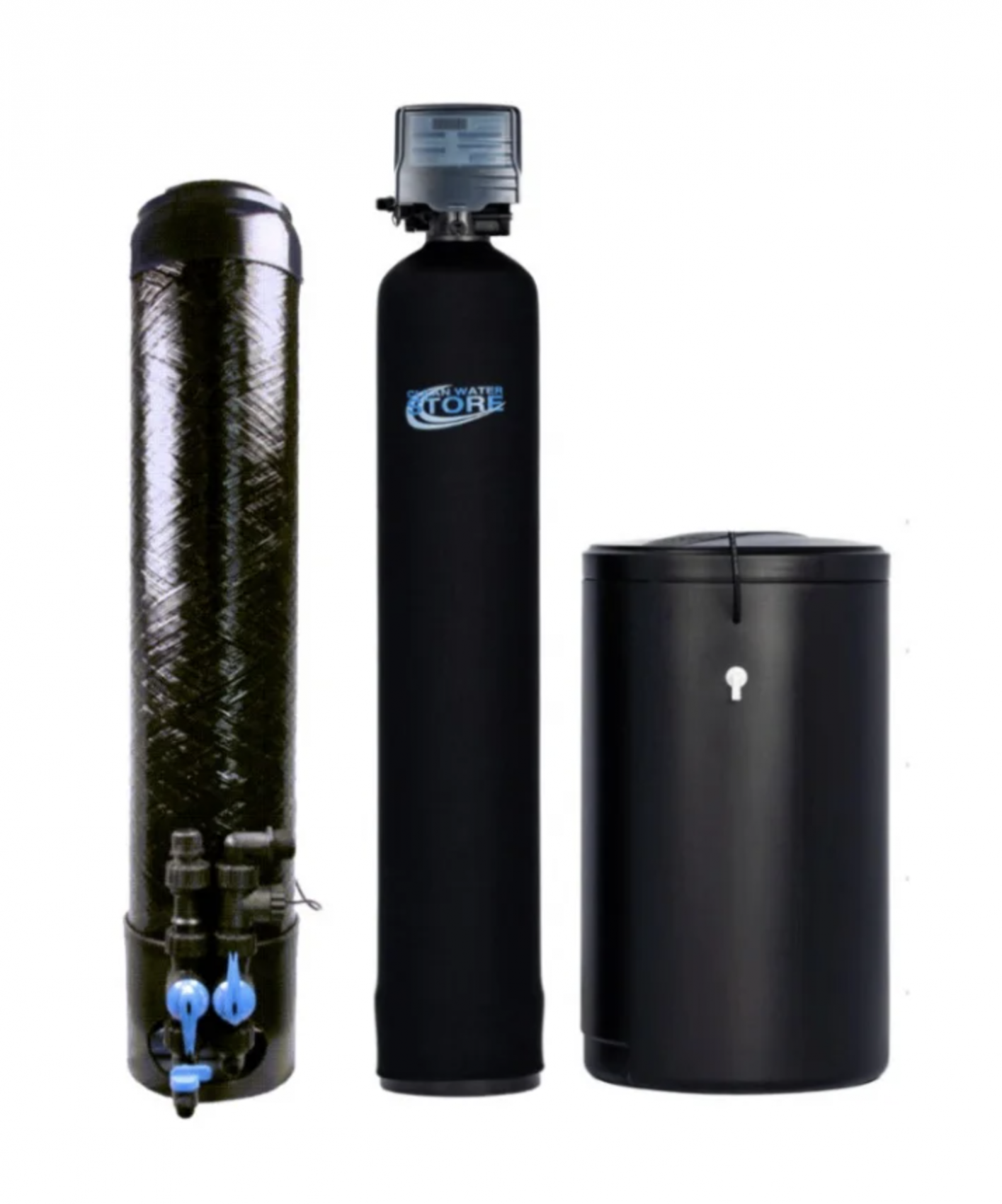
At Clean Water Store, we carry a whole house PFAS and lead removal filter certified to both NSF/ANSI 53 and P473 — meaning it’s independently verified to reduce soluble and particulate lead, PFOA, PFOS, and other PFAS compounds at every tap in your home. Paired with our 5900-BT Smart Water Softener, it’s the most comprehensive whole house city water solution we offer.
👉 View the Combo System: Whole House PFAS & Lead Removal + Smart Softener
Q: Should I still install a whole house filter if I have lead concerns?
Yes — for city water homeowners our NSF-certified PFAS and lead removal whole house filter performs best with a catalytic carbon filter as the first stage — the carbon removes chlorine and chloramines that would otherwise degrade the lead/PFAS cartridge and shorten its life significantly. So rather than choosing between them, they work together as a sequence: carbon first, then the lead/PFAS filter, then the softener if hardness is a concern. Our combo system packages this together with the 5900-BT Smart Softener for a complete whole house solution.
What Filters Actually Remove Lead from Drinking Water?
Two technologies are well-proven for lead removal at the point of use:
Option 1: Reverse Osmosis (RO) — The Gold Standard
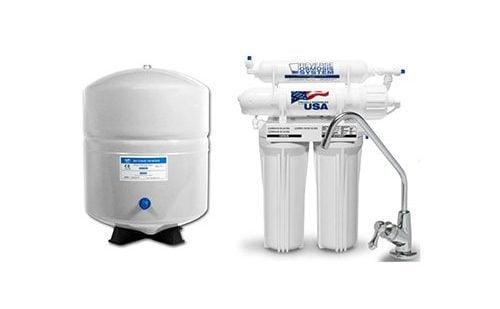
Reverse osmosis is widely considered the most effective technology for lead removal. An RO system forces water through a semi-permeable membrane with pores small enough to block lead ions, producing highly purified water at a dedicated tap — typically under the kitchen sink.
RO removes essentially everything: lead, chlorine, chloramines, PFAS, nitrates, arsenic, fluoride, sodium (from softeners), and most other dissolved contaminants. Modern under-sink RO systems certified to NSF/ANSI 58 achieve 99%+ lead removal.
RO pros for city water:
-
- Removes lead, PFAS, nitrates, arsenic, and chloramines in one system
- Compact under-sink installation
- Most cost-effective solution for drinking water quality
RO considerations:
-
- Treats water at one tap — not whole house
- Produces some wastewater (typically 2:1 to 4:1 ratio — improving significantly in newer systems)
- Removes beneficial minerals — some systems add a remineralization stage
- Filter cartridges require periodic replacement
Option 2: NSF/ANSI 53 Certified Whole House or Point of Use Filter
Certain under-sink, countertop, or whole house filters — specifically those certified to NSF/ANSI 53 for lead reduction — remove lead effectively. Not all carbon filters remove lead — standard activated carbon and KDF media do not reliably remove dissolved lead. The certification is what matters.
NSF/ANSI 53 certifies water treatment products for the reduction of contaminants that have adverse health effects including lead — but a product must be certified to this standard specifically for lead. A product certified to NSF/ANSI 53 for chlorine removal is not automatically certified for lead removal.
What to look for on the label: “NSF/ANSI 53 certified — lead reduction.” If it just says NSF/ANSI 42 or 53 without specifying lead, do not assume it removes lead.
Q: Does a whole house carbon filter remove lead?
Standard catalytic carbon backwash filters are highly effective for chlorine, chloramines, VOCs, and disinfection byproducts — but they are not certified for lead removal. For lead, you need a system certified to NSF/ANSI 53 specifically for lead reduction. The most comprehensive city water approach combines a whole house carbon filter for chemical contaminants, our NSF-certified lead and PFAS whole house filter, and an under-sink RO for drinking and cooking water.
Corrosion Control: Another Layer of Lead Protection
Since most lead contamination comes from corrosion of pipes, solder joints, and fixtures — not the water source itself — addressing the corrosion directly is another effective strategy that many homeowners overlook.
Phosphate crystal feeders work by releasing a small, safe amount of polyphosphate into the water, which coats the interior of pipes and plumbing with a thin protective layer. This reduces corrosion and significantly limits the amount of lead and other heavy metals that leach into your water in the first place. Many water utilities actually use phosphate dosing in their distribution systems for exactly this reason — a home phosphate feeder gives you the same protection at the household level.
A phosphate feeder works alongside your whole house lead filter for a comprehensive two-pronged approach: reduce lead leaching at the source, and filter what remains.
👉 View Phosphate Crystal Feeders at Clean Water Store
The Most Cost-Effective Approach for City Water Homeowners with Lead Concerns
Based on 30+ years of helping city water customers, here is the setup Gerry recommends for homeowners who want comprehensive protection:
Whole house catalytic carbon backwash filter — removes chlorine, chloramines, VOCs, and disinfection byproducts at every tap. Protects appliances, skin, and hair throughout the house. Installed at point of entry.
NSF-certified whole house PFAS and lead removal filter — certified to NSF/ANSI 53 and P473, independently verified to reduce soluble and particulate lead, PFOA, PFOS, and other PFAS compounds at every tap. Available as a combo with the 5900-BT Smart Softener. 👉 View the Combo System
Phosphate crystal feeder (optional) — reduces corrosion in household pipes and fixtures, limiting lead leaching at the source. 👉 View Phosphate Crystal Feeders
Water softener (if hardness is above 10–12 GPG) — installed after the carbon filter. Hard water accelerates pipe corrosion, which can increase lead leaching from old solder and fixtures.
Under-sink reverse osmosis system — installed at the kitchen tap for drinking and cooking water. Removes lead, PFAS, nitrates, residual chloramines, and essentially everything else. The gold standard for drinking water quality.
This combination addresses the full spectrum of city water concerns — chemical contamination whole house, certified lead and PFAS removal at every tap, corrosion control at the pipe level, and the highest purity drinking water at the kitchen tap.
Q: What about lead in shower water? Should I filter that too?
The primary exposure concern for lead is ingestion — drinking and cooking. Lead does not absorb meaningfully through skin during showering, so a dedicated shower filter for lead is not necessary.
That said, if you have our whole house PFAS and lead removal system installed at the point of entry, every tap in your home — including your shower — is already receiving NSF-certified lead and PFAS filtered water. Your optional whole house carbon filter handles chlorine and chloramines throughout the house, and your under-sink RO delivers the highest purity water at the kitchen tap for drinking and cooking.
How to Find Out If You Have Lead in Your Water
There are three steps Gerry recommends before buying any equipment:
1. Read your Consumer Confidence Report (CCR)
Your city is required to publish an annual CCR showing what was detected in your water supply. Find it free at EPA.gov/ccr. Look for the lead section — but remember this reflects distribution system averages, not your specific tap.
2. Check if you have a lead service line
Under the new LCRI rule, water systems were required to complete an initial inventory of their lead service lines by October 16, 2024 and must regularly update these inventories. Contact your water utility or check their website — many now have online lookup tools where you can enter your address and see your service line material.
3. Test your specific tap
A certified lab test for lead at your kitchen tap is the most accurate way to know your actual exposure level. Our SimpleLab certified city water test includes lead testing with results in 5 days:
👉 SimpleLab Essential City Water Test
What Should I Do First?
Test your tap water for lead before buying any equipment. Lead levels vary enormously from home to home. Some homes with lead service lines have low lead levels due to protective pipe scale; others with no lead service line have elevated levels from household plumbing. Knowing your actual level tells you how urgently you need to act and what level of filtration is appropriate.

At Clean Water Store, our WQA Master Water Specialists have been helping city water customers protect their families from lead and other contaminants since 1986. We can review your water test results and CCR, recommend the right combination of systems, and help you size everything correctly for your home — at no charge.
SimpleLab Essential City Water Test — results in 5 days
Combo System: Whole House PFAS & Lead Removal + Smart Softener
Phosphate Crystal Feeders — Corrosion Control for Lead Reduction
Ultimate Guide to Testing Your Water
Do I Need a Whole House Filter AND a Water Softener for City Water?
How to Read and Understand Your Local Water Quality Report
Helpful Resources
Lead and Copper Rule Improvements — EPA.gov
Find Your Consumer Confidence Report — EPA.gov
NSF Guide to Lead Filtration Certification — NSF International
Lead and Copper Rule Improvements — NRDC

Last updated by Author June 2, 2026.


