_2.png)
 Request a Call
J-PRO-38 Chlorinator for Well Water: Setup Guide, Sizing, and When to Use It
If your well water has iron, manganese, sulfur odor, or bacteria — or a combination of all four — chlorine injection is one of the most effective and cost-efficient treatment methods available. The J-PRO-38 is our recommended metering pump system for residential well water, and it’s a workhorse. But like any treatment system, getting the most out of it requires understanding when to use it, how to size it, and how to set it up correctly for your specific water chemistry.
In this guide, Gerry from Clean Water Store walks through everything you need to know — from deciding whether chlorination is right for your situation to setting your pump correctly and choosing between 110V and 220V models.

👉 New to chlorination? Start here first: Well Water Chlorination System: How to Set One Up at Home
What Is the J-PRO-38 and How Does It Work?
The J-PRO-38 is a precision metering pump that injects a measured dose of chlorine solution into your water line each time your well pump runs. It’s paired with a solution tank — available in 15 or 35 gallon heavy-duty polyethylene — which holds your diluted chlorine solution. Each time the well pump activates, the J-PRO-38 pumps a precise amount of solution through an injection check valve directly into the water line.
The result is accurate, consistent chlorine dosing every time water is drawn — without the variability of pellet-style chlorinators or the complexity and cost of ozone systems.
What’s included in the complete J-PRO-38 system:
-
- J-PRO-38 metering pump (110V or 220V)
- 15 or 35 gallon solution tank
- 12 feet of tubing and fittings
- Injection check valve (½” male pipe thread)
- Suction tubing and foot valve
- Degassing/priming valve for easy startup
- Free chlorine test kit
- Installation guide and free expert technical support
Q: What makes the J-PRO-38 better than a Stenner-style peristaltic pump?
Unlike Stenner-style peristaltic pumps, the J-PRO-38 has no pump tube to fail and no rollers to wear out. Peristaltic pump tubes typically need replacement every 1–2 years and are a common failure point. The J-PRO-38 uses a diaphragm metering design — the same technology found in much more expensive industrial metering pumps — which requires significantly less maintenance and delivers more accurate, consistent dosing over its lifetime.
When Is Chlorine Injection the Right Solution for Well Water?
Chlorine injection is not the right tool for every well water problem — but for certain conditions, it’s the best option available. Here’s when Gerry recommends it:
Confirmed or suspected coliform bacteria or E. coli
This is the clearest case for chlorination. UV disinfection is effective but requires clear, pretreated water to work properly. Chlorine injection disinfects regardless of water clarity and provides a residual that continues working through your plumbing. For confirmed bacterial contamination, chlorination combined with UV at the final stage provides the most comprehensive protection. See our guide: Treating Iron, Manganese, and Coliform Bacteria in Well Water.
High iron AND manganese together
When both iron and manganese are present, chlorine injection outperforms both air injection filters and hydrogen peroxide. Hydrogen peroxide performs poorly when manganese is present — chlorine or ozone is the right oxidant for combined iron and manganese removal. Chlorine oxidizes both simultaneously, converting them to filterable particles before they reach your iron filter.
Iron bacteria
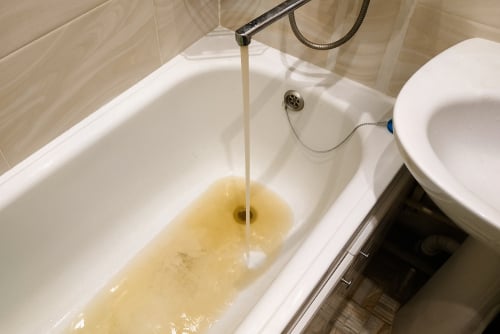
Iron bacteria cannot be solved by filtration alone. They require disinfection upstream — chlorine injection kills iron bacteria and prevents them from colonizing your filter media. If you skip this step and install a filter without treating for iron bacteria, the bacteria will foul the media and your system will fail early. Learn more: What Are Iron Bacteria?
Hydrogen sulfide (rotten egg odor) combined with iron
Chlorine oxidizes hydrogen sulfide, converting it to odorless sulfate. For strong sulfur odors combined with iron, chlorine injection ahead of a backwashing carbon or catalytic carbon filter is one of the most effective treatment sequences available. See: How to Eliminate Odor from Well Water: Chlorination or Aeration.
When is chlorine injection NOT the right choice?
If odor is your only problem with no iron, manganese, or bacteria concerns, hydrogen peroxide injection may be a cleaner option since it breaks down to oxygen and water with no residual. For bacteria-only concerns with very clear water, UV disinfection is a chemical-free alternative. See our comparison: Chlorine vs Hydrogen Peroxide for Well Water Treatment.
Q: Can I use the J-PRO-38 for irrigation water treatment?
Yes — chlorine injection is commonly used for irrigation systems with iron bacteria or high iron levels. The setup is the same as household use, but sizing must account for your irrigation flow rate, which is typically much higher than household demand. See our guide: Iron in Irrigation Water.
110V vs 220V — Which Model Do You Need?
220V (most common for residential wells)
Most residential well pumps run on 220V. The 220V J-PRO-38 is wired to turn on and off with the well pump — so every time the well pump runs, the chlorinator runs. This is the simplest and most reliable setup and is what we recommend for the majority of homeowners. The chlorinator draws only 22 watts so it adds virtually nothing to your electricity bill.

110V with flow sensor (proportional feed option)
If your well pump runs on 220V but you only have 110V available at the installation location, or if you want to add proportional feed — a flow sensor that adjusts chlorine dose based on actual flow rate rather than just on/off — the 110V model is the right choice. The J-PRO-38 comes pre-wired for proportional feed so you can add a flow sensor later if you start with the standard setup.
Q: What is proportional feed and do I need it?
Proportional feed uses a flow sensor to measure actual water flow and adjusts the chlorine pump stroke rate proportionally — so the chlorine dose stays accurate regardless of demand. For most residential applications, standard on/off control tied to the well pump delivers accurate enough results. Proportional feed is most beneficial for irrigation systems or properties with large pressure tanks where pump cycles are infrequent and long.
How to Size the J-PRO-38 for Your Well Water
Sizing a chlorine injection system comes down to three factors: your water flow rate, your contaminant levels, and your contact time.
Step 1: Know Your Flow Rate
The J-PRO-38 pumps 2.0 to 38 gallons of solution per day and works for well water flow rates from 0.5 to 50 GPM — making it suitable for the full range of residential applications. Measure your well pump flow rate using the bucket test method: fill a 5-gallon bucket, time it, divide 5 by the number of seconds, then multiply by 60. Most residential wells run 6–15 GPM.
Step 2: Know Your Contaminant Levels
A water test is essential before setting your chlorine dose. You need to know:
-
- Iron (ferrous and ferric) in PPM
- Manganese in PPM
- Hydrogen sulfide (if rotten egg odor is present)
- pH — affects chlorine effectiveness significantly
- Whether iron bacteria or coliform bacteria are present
👉 Order a water test first — here’s our complete guide to well water testing.
Step 3: Calculate Your Chlorine Dose
Here are the standard dosing guidelines Gerry uses. For a deeper breakdown see our full post: How Much Chlorine to Inject for Iron and Manganese.
| Contaminant | Chlorine Dose Required |
|---|---|
| Iron (ferrous) | 0.62 mg/L chlorine per 1.0 mg/L iron |
| Manganese | 1.29 mg/L chlorine per 1.0 mg/L manganese |
| Hydrogen sulfide | 2.0–4.0 mg/L chlorine per 1.0 mg/L H2S |
| Bacteria disinfection residual | Minimum 0.5 mg/L free chlorine residual at point of use |
Note: pH significantly affects chlorine effectiveness. At pH 6.0–7.0, chlorine is highly effective. Above pH 8.0, effectiveness drops significantly and higher doses are required. If your water is acidic (below pH 6.5), an acid neutralizer installed ahead of the chlorinator may be needed.
Step 4: Choose Your Solution Tank Size
The 15-gallon tank is sufficient for most single-family homes with moderate iron or odor levels. The 35-gallon tank is recommended for higher contaminant levels, higher flow rates, or situations where you want to refill less frequently — such as vacation homes, rental properties, or irrigation applications.
Q: What type of chlorine should I use in the J-PRO-38?
Standard household bleach (5–7% sodium hypochlorite) works well and is inexpensive. Pool chlorine at 10–12% concentration is also commonly used — it requires a smaller volume for the same chlorine dose, which means less frequent tank refills. Do not use chlorine tablets or granular chlorine — the J-PRO-38 is designed for liquid chlorine solution only. Our team will advise on the exact concentration and mixing ratio for your specific water chemistry when you call in.
The Correct Installation Sequence for Chlorine Injection
Where you inject chlorine and what comes after it matters as much as the pump itself. Here is the correct sequence:
Sediment pre-filter — protects the injection check valve and downstream equipment from coarse particles
J-PRO-38 chlorine injection point — injected into the water line before the pressure tank or contact tank
Contact/retention tank — provides sufficient dwell time for chlorine to oxidize iron and kill bacteria. Minimum 30–60 seconds at your peak flow rate. See our guide: Using a Chlorinator with a Storage Tank.
Pro-OX iron filter — removes oxidized iron, manganese, and sediment particles created by chlorination

Catalytic carbon backwash filter — removes residual chlorine, taste, and odor after filtration
UV sterilizer (optional final stage) — for an additional disinfection barrier, especially where bacteria is the primary concern
Not every system requires every stage. Your water test results tell you which stages are necessary for your specific water chemistry.
Q: Do I need a contact tank with the J-PRO-38?
A contact tank is strongly recommended when treating for bacteria, iron bacteria, or hydrogen sulfide. Chlorine needs time to work — typically 30 seconds to several minutes depending on contaminant levels and pH. Without adequate contact time, chlorine may not fully oxidize iron before it reaches the filter, and bacteria may not be fully inactivated. Your pressure tank provides some contact time, but a dedicated retention tank gives you much more reliable results.
Maintenance: What Does the J-PRO-38 Require?
The J-PRO-38 is designed for low maintenance — one of its main advantages over peristaltic pump designs. Here’s what regular upkeep looks like:
-
- Refill solution tank — frequency depends on your chlorine dose and water usage. Most households refill monthly.
- Check chlorine residual — use the included free chlorine test kit to verify residual at a tap downstream of the system. Adjust pump stroke if needed.
- Annual inspection — check tubing connections, injection check valve, and foot valve for wear
- No pump tube replacement — unlike peristaltic pumps, the J-PRO-38 diaphragm design does not have a tube to fail or rollers to replace
Our team provides free expert technical setup and support — call or email us any time during installation or operation and we’ll walk you through it. After hundreds of chlorination system installations since 1986, there isn’t a setup question we haven’t answered.

What Should I Do First?
Test your water. Without knowing your iron level, manganese level, pH, hydrogen sulfide, and whether bacteria are present, you can’t set the chlorine dose correctly or know whether chlorination is the right approach for your specific situation. A basic mineral analysis starts at just $10 at our lab — and our WQA certified water specialists will review your results and help you build the right system.
Order a water test — start here
View the J-PRO-38 Chlorinator System
Complete Guide: How to Set Up a Well Water Chlorination System
How Much Chlorine to Inject for Iron and Manganese
Well Water Chlorinators: Popular and Low Cost Disinfection
Iron in Irrigation Water: The Right Fix for Well Water Properties
How to Stop Rust Stains from Sprinklers for Good
The Ultimate Guide to Testing Your Water
Helpful Resources
- Guidelines for Testing Well Water — CDC
- Iron Bacteria in Well Water — Minnesota Department of Health
- Iron and Manganese in Private Water Systems — Penn State Extension
Article last updated by Author July, 2026.


