_2.png)
 Request a Call
How to Size an Iron Filter for Your Well: Flow Rate, Iron Levels & What to Buy
If you have rusty water, orange stains on sinks and laundry, or a metallic taste coming from your tap, you almost certainly have iron in your well water. The good news: an iron filter will solve it. The frustrating part: most homeowners have no idea what size they need — and buying the wrong size means poor filtration, low water pressure, and a system that fails before its time.
This guide walks you through exactly how to size an iron filter for your well, step by step — no guesswork required. If you’re sizing a system for irrigation rather than household use, see the irrigation sizing section below — irrigation iron filtration has different flow rate requirements and sizing rules that most homeowners get wrong.
Watch: How to Size an Iron Filter for Your Well Water
Gerry from Clean Water Store walks through the full sizing process — household and irrigation — including continuous flow rate vs peak flow, water chemistry, pH, manganese, and when chlorine injection is necessary:
Keep reading for the full step-by-step written guide, sizing charts, and everything covered in the video.
What Is an Iron Filter and How Does It Work?
An iron filter is a whole-house backwashing system installed on your main water line. Water passes through a tank filled with filter media — in the case of our Pro-OX Lite 7500, that’s advanced manganese dioxide media — which oxidizes dissolved iron and manganese, converting it into solid particles that are then trapped and periodically flushed out during an automatic backwash cycle.

Sizing matters for two reasons:
-
- Service flow rate — the filter must handle your peak household demand without dropping water pressure
- Backwash flow rate — the filter must be able to clean itself properly, which requires a minimum flow from your well pump
Get either of these wrong and the system will underperform or fail early.
Step 1: Know Your Iron Level
Before sizing anything, you need to know what’s in your water. The EPA Secondary Maximum Contaminant Level (SMCL) for iron is 0.3 mg/L (ppm) and for manganese it’s 0.05 mg/L. Above these levels you’ll notice staining, taste issues, and eventually damage to appliances and plumbing.
There are different types of iron, and knowing which you have determines the right treatment approach:
-
- Ferrous iron (clear-water iron) — water looks clear from the tap but turns orange/red after sitting. Most common. Dissolved in water, treatable with oxidizing media.
- Ferric iron (red-water iron) — water is visibly orange or brown directly from the tap. Already oxidized, requires physical filtration.
- Iron bacteria — slimy, reddish deposits in toilet tanks or around fixtures. Requires chlorination ahead of filtration. A standard iron filter alone won’t solve this.
- Manganese — causes black or dark brown staining and a bitter, metallic taste. Often found alongside iron.
👉 Not sure what type of iron you have? Order a water test first — it’s the only way to know what you’re actually treating and size the system correctly.
Q: Can I treat iron without testing my water first?
Technically yes, but we don’t recommend it. Without a test, you’re guessing at the iron type, iron level, pH, and manganese — all of which affect which system will work and how it should be sized. A basic mineral analysis starts at just $10 at our lab. It’s the smartest $10 you’ll spend before a $500–$1,500 equipment purchase.

Step 2: Know Your Well Pump Flow Rate
Your well pump’s flow rate — measured in gallons per minute (GPM) — is the single most important sizing factor. Every iron filter has a minimum backwash flow requirement. If your pump can’t deliver that flow, the media won’t clean itself properly, iron will accumulate, and the system will fail early.
How to measure your well pump flow rate:
-
- Turn off all water in the house
- Open an outdoor hose bib fully
- Time how long it takes to fill a 5-gallon bucket
- Divide 5 by the number of seconds, then multiply by 60
Example: If the bucket fills in 30 seconds → (5 ÷ 30) × 60 = 10 GPM
Most residential wells run between 6 and 12 GPM. If yours is lower than 6 GPM, you may need a smaller tank, a storage/pressure tank setup, or two smaller filters running in parallel. Here’s our full guide to measuring well pump flow rate.
Q: What if my well pump flow rate is too low to backwash the iron filter?
If your pump can’t meet the backwash requirement of the filter you need, you have a few options: size down to a smaller tank that backwashes at a lower GPM, install a storage tank to buffer the flow, or in some cases install two smaller filters in parallel. Call us — this is a common problem and we help customers solve it regularly.
Step 3: Size the System to Your Home
Once you know your flow rate and iron level, you can match those numbers to the right tank size. Here’s a general guide:
| Home Size | Bathrooms | Recommended Min. GPM | Typical Tank Size |
|---|---|---|---|
| Small home / cabin | 1–2 | 6–8 GPM | 0.75–1.0 cu ft |
| Average home | 2–3 | 8–10 GPM | 1.0–1.5 cu ft |
| Larger home | 3–4 | 10–12 GPM | 1.5–2.0 cu ft |
| Large home / high demand | 4+ | 12+ GPM | 2.0–2.5 cu ft |
Note: Higher iron levels (above 3–5 PPM) or the presence of manganese may require a larger tank even for smaller homes. When in doubt, size up.
Q: Is it better to oversize or undersize an iron filter?
Always err on the side of sizing up. An oversized filter runs more efficiently, backwashes more thoroughly, and the media lasts longer. An undersized filter will struggle to keep up with peak demand, won’t backwash properly, and will fail much sooner than expected.
Step 4: Check pH and Other Water Chemistry
pH is often overlooked but it matters a lot for iron filter performance. Most iron filter media — including Pro-OX Lite — works best at a pH of 6.8 or above. If your water is acidic (pH below 6.5), the oxidation process is less efficient and you may need to add an acid neutralizer ahead of the iron filter to raise pH first.
Other factors that affect sizing and system design:
-
- Hydrogen sulfide (rotten egg odor) — often present alongside iron; requires air injection or chlorination ahead of the filter
- Iron bacteria — requires chlorination upstream; an iron filter alone will not solve this
- Hardness — very hard water can interfere with some media; a softener may be recommended downstream of the iron filter
- Turbidity / sediment — a sediment pre-filter protects the iron filter media and control valve
Why Pro-OX Lite Media Outperforms Greensand and Other Iron Filter Media
Not all iron filter media is the same. Traditional greensand requires regular regeneration with potassium permanganate, has a shorter lifespan, and is less effective at higher iron levels. Pro-OX Lite manganese dioxide media is different:
-
- No chemical regeneration required — backwashes automatically on a timer or by gallons used
- Removes up to 5 PPM iron and 0.5 PPM manganese without pre-treatment in most conditions
- Long media life — lasts many years longer than traditional greensand or birm
- Made in Texas — not imported; manufactured to the highest quality standards
- Corrosion-proof ceramic disc valve — rated to 150,000+ backwash cycles, outlasting standard piston valves by years
- NSF-certified seamless poly tank — built for long-term residential use
For higher iron levels, water with iron bacteria, or water with low dissolved oxygen, we may recommend ozone, chlorine, or hydrogen peroxide injection ahead of the iron filter to pre-oxidize the iron before it hits the media. Our water specialists will advise based on your test results.

Q: Do I need a water softener AND an iron filter?
It depends on your water test results. If you have both high iron and high hardness, the answer is usually yes — and the iron filter should be installed before the softener. Iron will foul softener resin beads over time, dramatically reducing their effectiveness and lifespan. Removing iron first protects your softener investment. Learn more in our guide to iron filter media types and how to choose between them.
What Is the Right Treatment Sequence for Iron Removal?
Proper system order matters. Here’s the recommended sequence for most well water iron treatment setups:
-
- Sediment pre-filter — removes sand, silt, and coarse particles that can damage control valves
- Chlorinator (if iron bacteria or high iron) — pre-oxidizes iron and disinfects before filtration
- Acid neutralizer (if pH is low) — raises pH to improve iron filter efficiency
- Pro-OX Iron Filter — removes oxidized iron, manganese, and sediment
- Carbon backwash filter (if chlorinating) — removes residual chlorine after treatment
- Water softener (if hardness is high) — installed after iron removal to protect resin
Not every system needs every stage. Your water test tells you which steps are necessary.
Sizing an Iron Filter for Irrigation: Why It’s Different
Sizing an iron filter for irrigation is fundamentally different from sizing one for household use — and this is where most homeowners make expensive mistakes. A residential iron filter sized for household demand will almost always fail in an irrigation application, even if your iron level is the same.
Peak Flow Rate vs Continuous Service Flow Rate
A household iron filter is sized for peak flow rate — the highest demand at any one moment, typically 8–15 GPM for a residential home. The filter handles that burst of demand during a shower or laundry cycle, then the flow stops.
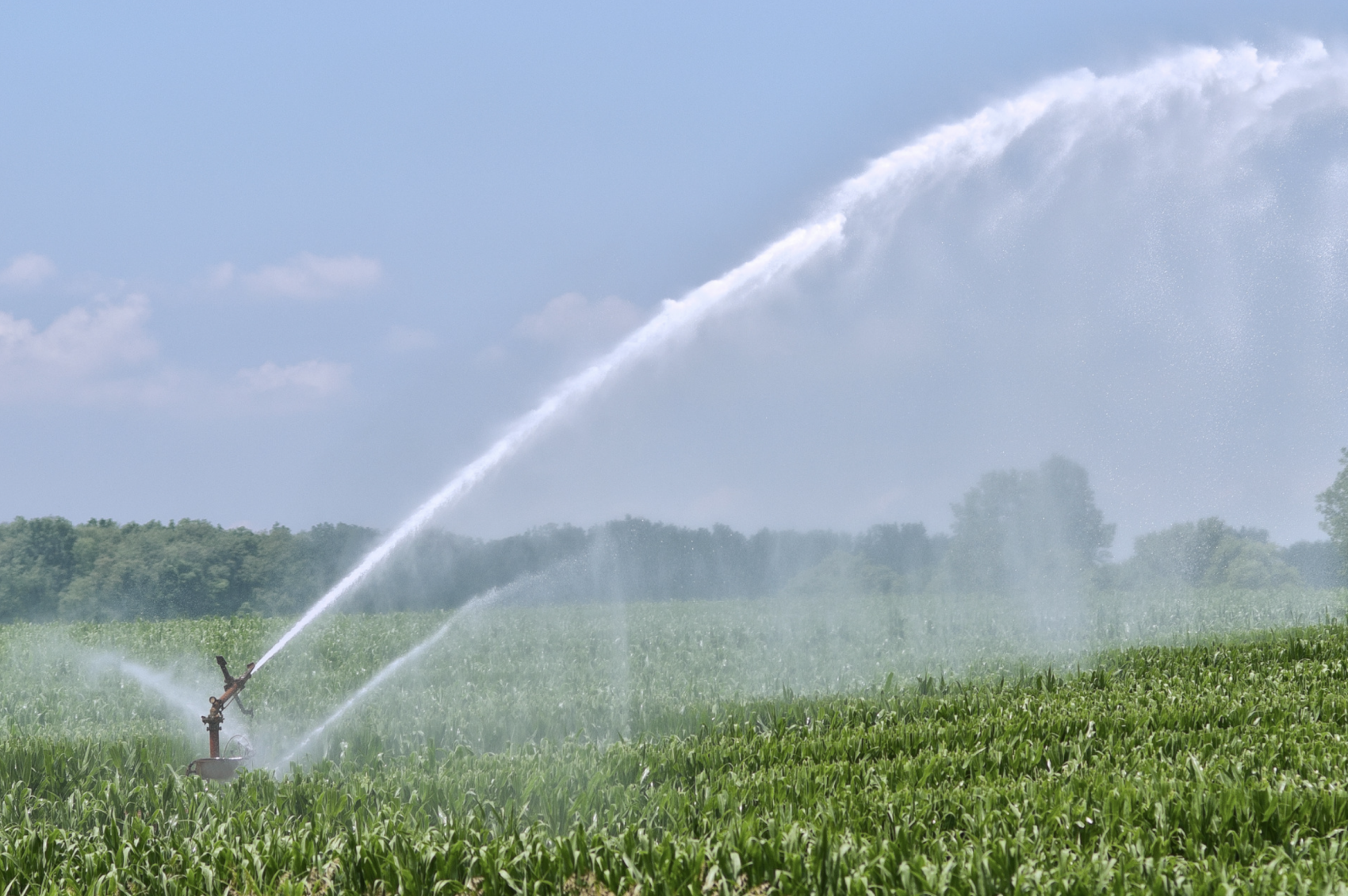
Irrigation systems operate on continuous service flow rate — the system runs at a sustained flow for 20, 30, or 60 minutes at a time across multiple zones. This continuous demand is far more demanding on filter media than household use. Running an iron filter at its rated peak flow rate continuously will exhaust the media rapidly, prevent proper oxidation, and allow iron to pass through untreated.
For irrigation sizing, always size to your continuous flow rate — not your peak. In practice this means sizing up one or two tank sizes from what you would choose for household use alone.
How to Calculate Your Irrigation Flow Rate
The most accurate method is to measure flow directly at your irrigation valve or mainline with a flow meter. If you don’t have one, here’s Gerry’s field method:
-
- Run one irrigation zone at full pressure
- Time how long it takes to fill a 5-gallon bucket from the nearest hose bib while the zone runs
- Divide 5 by the number of seconds, multiply by 60 to get GPM
- Multiply by the number of zones running simultaneously at peak demand
Most residential lawn irrigation systems run 10–25 GPM per zone. Drip irrigation systems run lower — 2–8 GPM — but drip emitters are far more sensitive to iron clogging and require cleaner water than sprinklers.
Backwash Scheduling for Irrigation Systems
An irrigation iron filter needs a backwash cycle — typically 10–15 minutes — when irrigation is not running. The most common approach is scheduling backwash at 2–3am before the irrigation controller starts its morning cycle. If the filter backwashes while irrigation is running, it will drop pressure across the whole system and the backwash won’t be effective.
When Does Irrigation Iron Treatment Require Chlorine Injection?
For most irrigation applications with dissolved ferrous iron only, a properly sized Pro-OX air injection iron filter handles treatment without chemicals. However, chlorine injection becomes necessary when:
-
- Iron bacteria is present — slime buildup inside emitters, pipes, and irrigation heads that a filter alone cannot solve
- Manganese is present alongside iron — chlorine is a more effective oxidant for combined iron and manganese than air injection alone
- Biofilm is building up in drip lines or micro-irrigation components
- Iron levels are very high (above 5–8 PPM) and air injection cannot provide sufficient oxidation at your flow rate
When chlorine injection is added to an irrigation system, a carbon backwash filter downstream removes residual chlorine before water reaches plants, soil, and any livestock waterers. See our complete guide: Iron in Irrigation Water: The Right Fix for Well Water Properties.
Iron Sequestration vs Iron Removal for Irrigation
Polyphosphate injection (sequestration) keeps iron in solution so it doesn’t stain surfaces — it does not remove iron from the water. For residential lawn sprinklers with moderate iron levels, it’s a lower-cost option. For drip irrigation, greenhouses, or any system with small-orifice emitters, iron removal through filtration is always the better long-term choice — polyphosphate does not prevent emitter clogging from iron particles and can leave residue in hot weather.
Q: Can I use my existing whole house iron filter for irrigation too?
In most cases, running irrigation through a household iron filter will overload it. The media exhausts faster, backwash becomes less effective, and iron breaks through into household water. The better approach is either a dedicated irrigation filter sized for your irrigation flow rate, or a single larger point-of-entry filter sized for the combined peak demand of both household and irrigation use simultaneously. Our water specialists can help you calculate the right combined sizing for your property.
How to Stop Rust Stains from Sprinklers for Good
Iron in Irrigation Water: The Right Fix for Well Water Properties
Why Is My Irrigation System Failing? Well Water Quality Problems on Large Properties
What to Do First
Test your water. A water test for iron, manganese, pH, hardness, and bacteria tells you exactly what you’re dealing with and what treatment approach is right. Do not skip this step — the wrong system for your water chemistry will underperform regardless of how well it’s sized.
At Clean Water Store, our WQA certified water specialists review water test results every day and help well water customers build the right iron removal system for their specific situation. We carry Pro-OX iron filters in multiple sizes, and we’ll help you choose and size the right system for your flow rate, iron level, and household demand — at no charge.
View Pro-OX Lite Iron Filter Systems
How to Remove Iron, Manganese, and Odor from Well Water

Article last updated by Author June 1, 2026.
Helpful Resources
How to Stop Rust Stains from Sprinklers for Good
EPA Secondary Drinking Water Standards — Iron & Manganese (EPA.gov)
Manganese FAQ — Water Quality Association (WQA.org)
Iron and Manganese in Private Water Systems — Penn State Extension


