_2.png)
 Request a Call
Best Ultrafiltration System for Well Water: Whole House Setup Guide
A whole house ultrafiltration system is one of the most powerful tools available for well water treatment. It filters water down to 0.015 microns — smaller than most bacteria, viruses, cysts, and fine sediment particles. The result is crystal clear water at every tap in your home.
But here is what most homeowners do not realize: a UF system installed without the right pretreatment on well water will fail. Membrane fouling, pressure drop, and premature replacement are almost inevitable if iron, hardness, or sediment are not addressed upstream first.
This guide covers exactly how to set up a whole house UF system correctly for well water — what it removes, what it does not remove, how to protect it, and how to size it for your home. We are not here to sell you something you do not need. We are here to help you understand your water — and find the right solution for your specific situation, whatever that looks like.
Watch Gerry Bulfin walk through the complete whole house UF setup for well water:
👉 Not sure what is in your water? Start with a water test at cleanwaterstore.com
What Is Ultrafiltration and How Does It Work?
Ultrafiltration is a membrane-based filtration technology that uses hollow fiber membranes with extremely small pores — typically 0.01 to 0.05 microns in diameter. Water is pushed through these membranes under pressure. Anything larger than the pore size is physically blocked and cannot pass through.
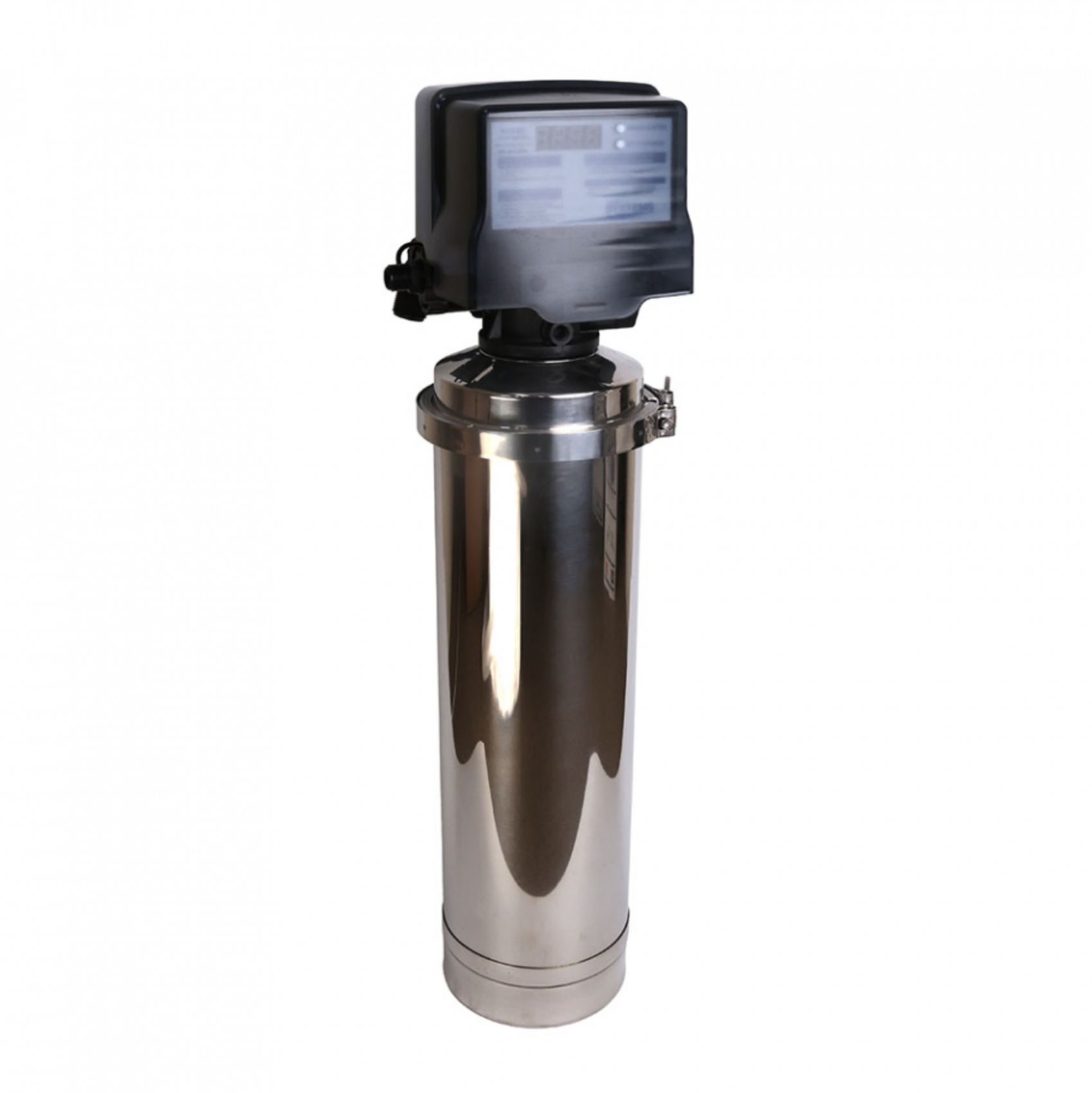
To put 0.015 microns in perspective: a human hair is about 70 microns wide. A UF membrane pore is roughly 4,000 times smaller than that. At this scale, UF membranes stop bacteria, most viruses, protozoan cysts like Cryptosporidium and Giardia, fine sediment, turbidity, and microplastics.
The NSF standards for water treatment systems recognize ultrafiltration as an effective technology for removing microbial contaminants when properly certified and maintained. Look for NSF/ANSI 244 certification on whole house UF systems — this standard specifically addresses protection against microbiological contamination in drinking water.
What Does a Whole House Ultrafiltration System Actually Remove?
Understanding what UF does and does not remove is critical before you buy. Many homeowners install a UF system expecting it to solve problems it was never designed to address.
What UF removes effectively:
-
- Bacteria — including E. coli, coliform, and other pathogens
- Most viruses — depending on membrane pore size and system design
- Protozoan cysts — Cryptosporidium and Giardia
- Fine sediment and turbidity — produces crystal clear water
- Microplastics — particles down to the membrane pore size
- Some tannins and color-causing organic compounds
- Colloids and fine suspended particles
What UF does NOT remove:
-
- Dissolved iron and manganese — these pass right through the membrane
- Hardness minerals (calcium and magnesium) — UF does not soften water
- Hydrogen sulfide and sulfur odor
- Nitrates, arsenic, heavy metals, or PFAS — dissolved substances pass through
- Chlorine, chloramines, or chemical contaminants
- Total dissolved solids (TDS)
This is the most important distinction for well water customers. If your well water has iron, hardness, or sulfur — and most well water does — UF alone will not fix those problems. Those require specific treatment upstream of the UF system.
👉 Read more: Ultrafiltration vs Reverse Osmosis — Which One Do You Actually Need?
Why Does Well Water Require Pretreatment Before a UF System?
This is the question that determines whether your UF system lasts for years or fails in months.
UF membranes are extremely fine. They block everything larger than their pore size — which is exactly what makes them so effective. But it also means that anything in your water that is not addressed upstream will accumulate on the membrane surface and foul it.
Iron is the biggest threat on well water. When dissolved iron passes through the UF system, it oxidizes on the membrane surface and forms iron deposits that are very difficult to remove. Even at relatively low iron concentrations, membrane fouling from iron accumulates quickly and causes rapid pressure drop and flow reduction.
Hardness minerals — calcium and magnesium — can scale on the membrane surface over time, particularly in warm water conditions.
High sediment loads can physically clog the membrane faster than daily backwashing can clear it, dramatically shortening membrane life.
The solution is proper pretreatment staged before the UF system. Your pretreatment removes the contaminants that would foul the membrane, so the UF system only sees clean water that it can handle effectively.
What Pretreatment Does a Whole House UF System Need for Well Water?
The right pretreatment depends on your water test results. Here is the standard pretreatment sequence for most well water UF installations:
1. Sediment pre-filter: A spin-down filter or backwashing sediment filter installed first removes sand, silt, and coarse particles that would rapidly load the UF membrane 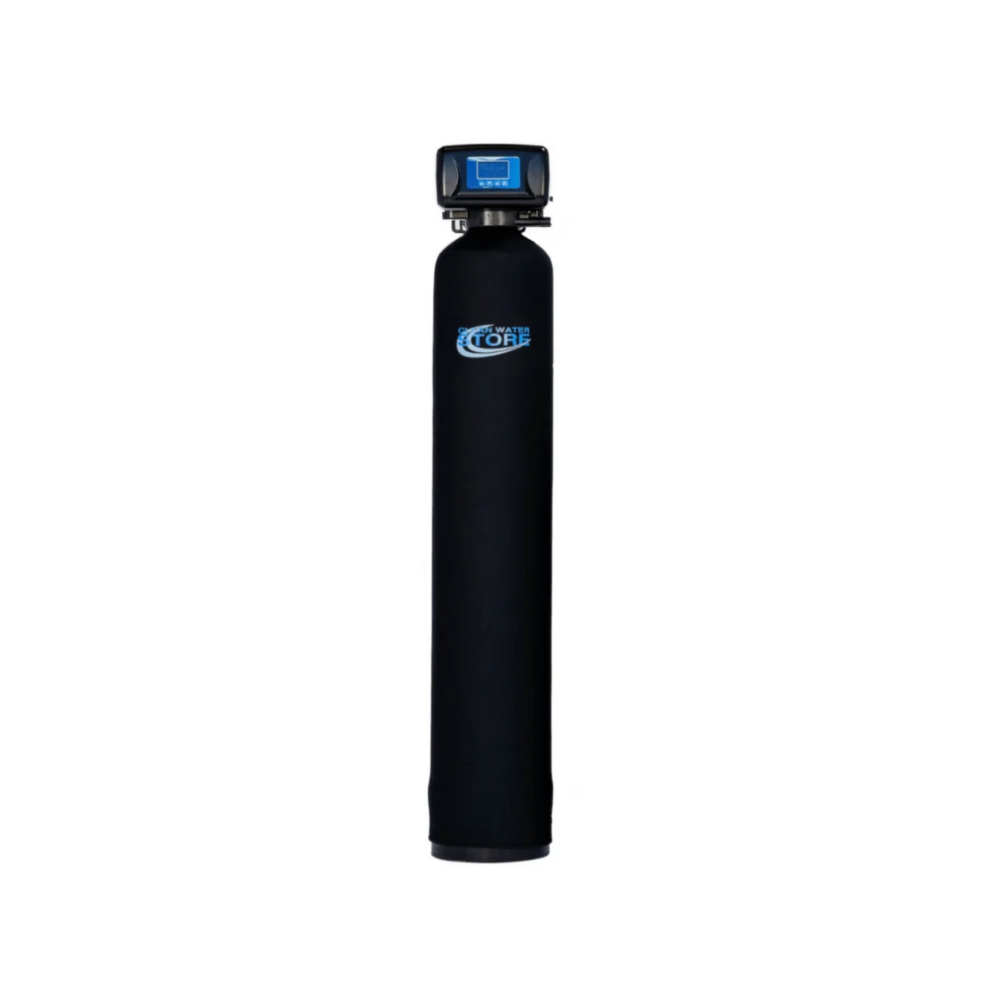
2. Iron filter: If iron is present — and it is in most well water — an iron filter must be installed before the UF system. This is non-negotiable. Dissolved iron will foul a UF membrane quickly

3. Water softener (if needed): If hardness is high, a softener upstream of the UF system reduces scaling on the membrane and extends its life
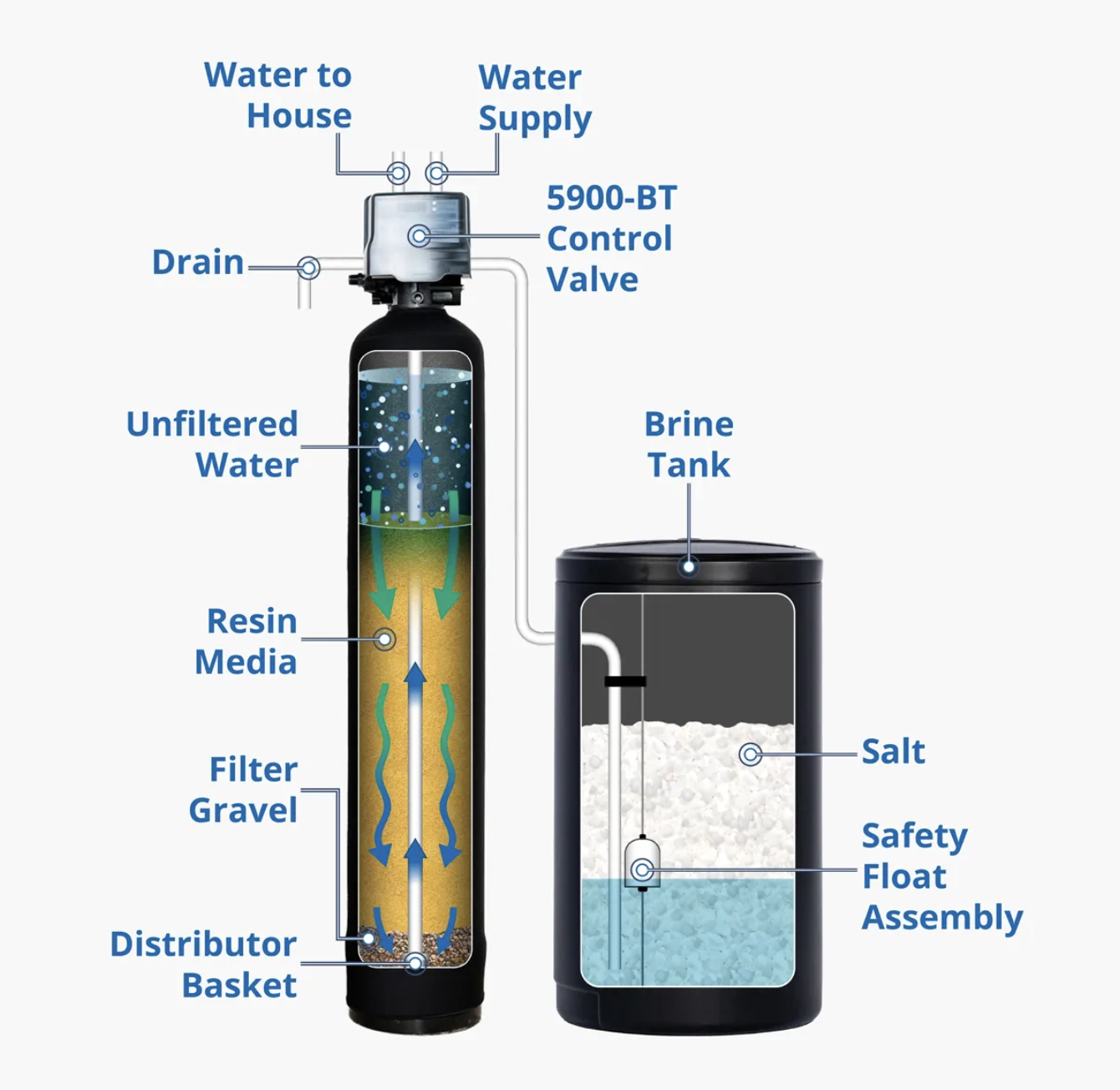
4. Carbon filter (if needed): If chlorine has been injected upstream for disinfection or bacteria treatment, a carbon filter before the UF system protects the membrane from chlorine degradation — most UF membranes are not chlorine-tolerant

5. UF system: Final stage, produces crystal clear biologically safe water at every tap
Not every property needs every pretreatment stage. Your water test tells you which stages are required. A property with low iron, low hardness, and no bacteria concern may only need a basic sediment pre-filter before the UF system.
Why Is Daily Backwashing Critical for a Whole House UF System?
Unlike cartridge filters that you replace periodically, whole house UF systems clean themselves through automatic backwashing. The system reverses water flow through the membrane to dislodge and flush away accumulated particles.
For well water installations, daily backwashing is not optional — it is essential. Here is why:
Well water contains fine particles, biological material, and organic matter that accumulate on the membrane surface during normal filtration. Without regular backwashing, this buildup forms a fouling layer that progressively reduces flow rate and increases pressure drop across the membrane. Left unchecked, the fouling becomes irreversible and the membrane needs to be replaced.
Daily backwashing keeps the membrane clean and maintains consistent performance. Most whole house UF systems have automatic control valves that can be programmed to backwash at a set time each day — typically late at night when water use is lowest.
Set your backwash time to run when no one in the household is using water. Running a backwash cycle while someone is showering causes a temporary pressure and flow reduction.
Does a Whole House UF System Replace a UV Disinfection System?
For most well water bacteria concerns, a properly maintained whole house UF system provides excellent biological protection — often equivalent to UV for bacteria and protozoa. However there are important distinctions:
UF membranes physically block bacteria and protozoan cysts through mechanical filtration. The membrane is an absolute barrier — if the membrane is intact and properly maintained, pathogens cannot pass through.
UV disinfection works differently — it uses ultraviolet light to destroy the DNA of microorganisms, rendering them unable to reproduce. UV does not remove particles or clarify water, but it is highly effective against viruses that some UF membranes may not fully retain depending on pore size.

For well water with confirmed bacteria contamination or where bacteria concerns are significant, combining a UF system with a UV disinfection unit downstream provides the most comprehensive biological protection. The UF system removes particles and most pathogens, and the UV unit provides an additional disinfection barrier specifically targeting any organisms that might pass through.
The NSF/ANSI 55 standard covers UV treatment systems certified to inactivate bacteria and viruses — look for this certification when selecting a UV unit to pair with your UF system.
👉 Read more: Does My Water Filter Actually Remove Microplastics?
How Do I Size a Whole House UF System for My Home?
Sizing is one of the most common mistakes in whole house UF installation. An undersized system creates pressure drop throughout the house and can cause the membrane to foul faster due to increased flux through insufficient membrane surface area.
Key sizing factors for a whole house UF system:
Flow rate: Your UF system must handle your household peak demand without significant pressure drop. For most homes with two to three bathrooms, a system rated at 10 GPM is a reasonable minimum. Larger homes or homes with multiple simultaneous users need higher capacity.
Membrane surface area: More membrane surface area means lower flux per unit area, which means less fouling and longer membrane life. Do not size too tightly.
Water quality: Well water with high turbidity, fine sediment, or organic matter loads the membrane faster than cleaner water. Higher-turbidity wells benefit from a larger system or more robust pretreatment to extend membrane cleaning intervals.
A simple way to estimate your peak flow rate: count your bathrooms and multiply by 2.5 GPM as a rough baseline, then add kitchen, laundry, and outdoor hose bib demand. Use our Filter Flow Rate Calculator to get a more precise number.
Do I Need a Pressure Tank with a Whole House UF System on Well Water?
In some installations, yes. Here is when it matters:
A whole house UF system creates some pressure drop as water passes through the membrane. On a well water system where pressure is supplied by a submersible pump and pressure tank, this pressure drop can affect overall system pressure if the incoming pressure is already near the lower end of acceptable range.
If your well pressure tank is set with a cut-in pressure below 40 PSI, you may see low pressure at fixtures after the UF system is installed. Adding a small booster pump or adjusting your pressure switch settings can address this.
Most modern well water systems with standard 40/60 PSI pressure switch settings have enough incoming pressure to comfortably handle a whole house UF system without modification. But it is worth checking your actual incoming pressure before installation, especially in older systems or systems with long pipe runs.
What Is the Correct System Layout for a Whole House UF on Well Water?
Here is the complete recommended sequence from well to tap for a whole house UF installation on well water:
-
-
- Well pump and pressure tank — water source
- Sediment pre-filter — removes coarse particles, protects all downstream equipment
- Iron filter — removes dissolved and particulate iron and manganese (required if iron is present)
- Water softener — reduces hardness if needed, extends UF membrane life
- Carbon filter — removes chlorine or hydrogen sulfide if chemical injection was used upstream
- Whole house UF system — final filtration stage, produces clear biologically protected water
- UV system (optional) — downstream of UF for additional virus protection and disinfection assurance
- Under-sink RO system (optional) — point-of-use, for drinking water requiring removal of dissolved contaminants like nitrates, arsenic, or PFAS
-
Not every property needs every stage. Your water test results determine which stages are necessary for your specific water chemistry.
The EPA recommends using certified water treatment products and notes that filters are only effective when properly maintained according to manufacturer specifications — which is exactly why daily backwashing and proper pretreatment are so critical for whole house UF systems.
How Does a Whole House UF System Compare to Reverse Osmosis for Well Water?
This is one of the most common questions we get. The short answer: they solve different problems and work best together rather than as alternatives.
A whole house UF system treats all the water in your home at the point of entry. It removes physical and biological contaminants — bacteria, cysts, sediment, turbidity, and microplastics. It retains minerals and does not waste water. It is the right choice for whole house biological protection and clarity.

A reverse osmosis system treats water at a single point of use — typically the kitchen sink — and removes dissolved contaminants that UF cannot: nitrates, arsenic, PFAS, heavy metals, and total dissolved solids. RO produces the highest purity drinking water available for home use.
The most comprehensive well water setup combines both: a whole house UF system for property-wide biological and particle protection, plus an under-sink RO system at the kitchen for drinking and cooking water that needs maximum purity.
👉 Read the full comparison: Ultrafiltration vs Reverse Osmosis — Which One Do You Actually Need?
How Do I Know If a Whole House UF System Is Right for My Well Water?
Start with a water test. Ultrafiltration is an excellent solution for well water with clarity, turbidity, or bacteria concerns — but it only works correctly as part of a properly designed system with the right pretreatment for your specific water chemistry.
At Clean Water Store, we review water test results every day and help well water customers across the country design complete treatment systems that work correctly from day one. We build systems modularly — so you can start with what you need now and add stages as your water or needs change over time.
👉 Order a water test
Read more:
Ultrafiltration vs Reverse Osmosis — Which One Do You Actually Need?
Does My Water Filter Actually Remove Microplastics?
Are Microplastics in Well Water? What Private Well Owners Need to Know

Article last updated by Author May 5th 2026.


